How to do B2B storytelling: A GTM agency’s guide to content that converts


In a world where B2B buyers are bombarded with content, storytelling isn’t just a nice-to-have – it’s a strategic differentiator. At our B2B go-to-market (GTM) agency Torpedo, we’ve seen how the right narrative can transform a brand from forgettable to unforgettable. But what does effective B2B storytelling actually look like? And how do you make it work for your business?
Let’s break it down.
Why storytelling matters in B2B
Storytelling humanises your brand, builds trust, and simplifies complexity. According to Edelman’s 2025 Trust Barometer, trust now ranks equally with price and quality in purchase decisions. And McKinsey’s 2023 research shows that emotionally resonant content can accelerate B2B buying cycles by up to 20%.
In short: data informs, but emotion drives action.
1. Start with strategy, not just a story
Before you write a single word, ask: what’s the goal?
- Are you driving awareness?
- Moving prospects through the funnel?
- Enabling your sales team?
- Reinforcing your positioning?
Storytelling is positioning in motion. Without a clear objective, even the best-crafted narrative will miss the mark.
2. Know your audience like you know your product
Every great story starts with the audience. Build a ‘story persona’ alongside your buyer persona. Understand:
- Who they are (roles, industries, seniority)
- What they care about (pain points, motivators)
- How they consume content (email, LinkedIn, video, podcasts)
This will ensure your story lands where it matters most.

Culture, purpose, and the power of internal stories
Don’t forget the stories inside your walls. Culture stories – like how your team rallied to launch a product in record time, or how a junior developer’s idea became a flagship feature – can be just as powerful as customer stories.
And purpose-driven narratives? They’re not just for B2C. Edelman’s research shows that B2B buyers are 4x more likely to purchase from brands that take a stand on issues they care about.
So tell the story of your mission. Why you exist. Who you’re here to help. And how your team lives that purpose every day.
At our GTM agency, we’ve seen how storytelling can do more than attract attention – it builds belief. It earns trust. It drives growth. If you’re looking to stand out in a crowded market, start with a story worth telling.
And if you’re not sure where to begin? That’s where we come in.
FAQs
A: A case study is a format. Storytelling is a technique. The best case studies use storytelling to make the content more compelling and memorable.
A: Absolutely. Even technical buyers respond to emotive narratives that deliver on clarity, context, and outcomes – just tailor the tone and detail.
A: We find that customer success stories, founder origin stories, product innovation journeys, and purpose-driven narratives tied to industry trends are all great ideas to explore.
Key takeaways
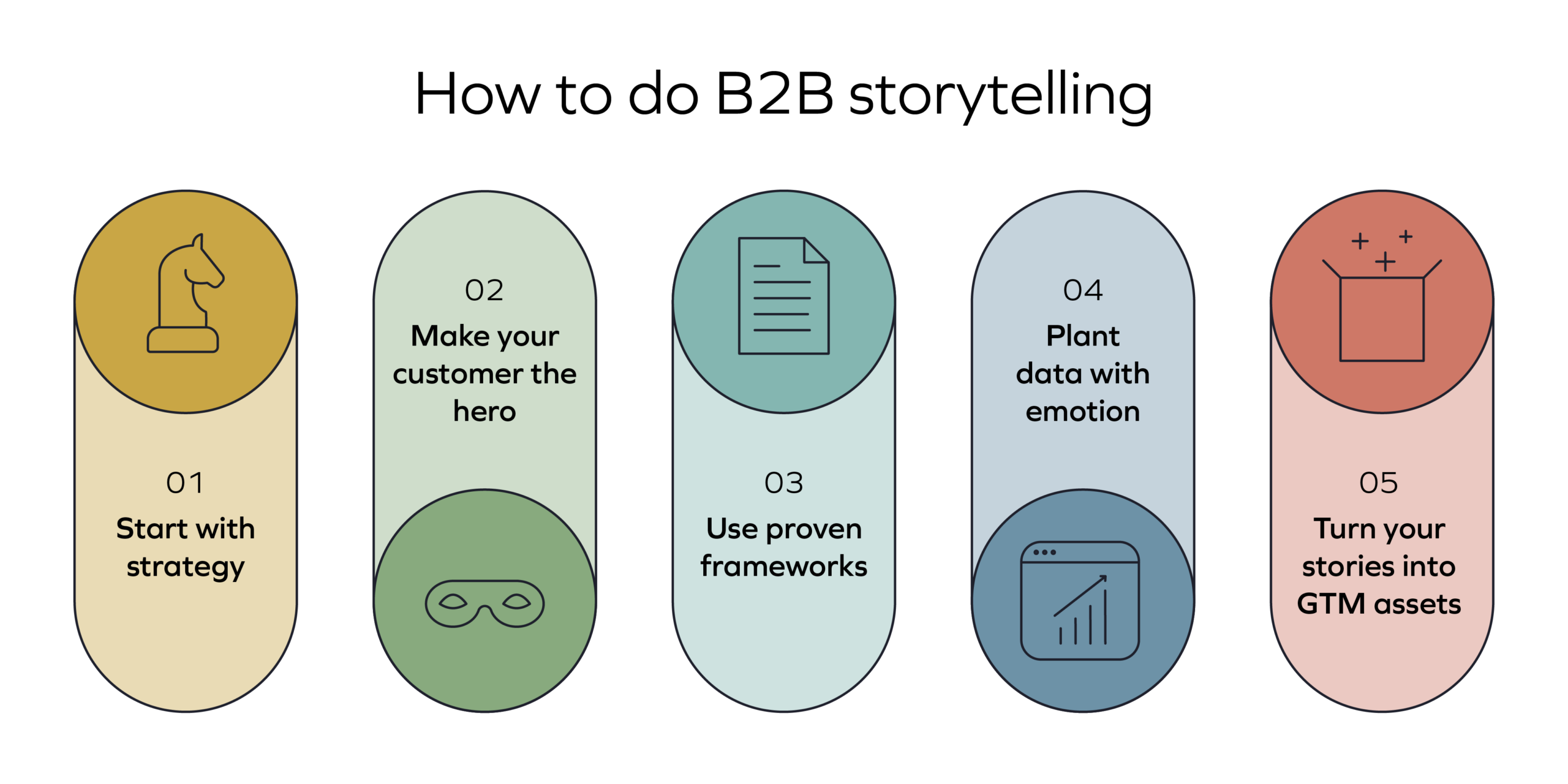
- Start with the strategy
- Make your customer the hero
- Use proven frameworks
- Blend data with emotion
- Turn your stories into GTM assets
Insights
More for you
Let's talk.
Want to create something extraordinary? Let’s have a chat. Set up a call with our CEO, Andrew.
Stay informed.
Get our latest thinking on how to maximise brand, GTM, pipeline growth and apply AI, plus our agency updates.