Data-driven storytelling: creating credibility, clarity, and commercial impact

Becky
Becky 1 min 18 Mar 2026

Working closely with B2B brands in the technology and industrial sectors at Torpedo, we see first-hand how integral data is to the modern economy.

From the data centres driving AI advancements, to the SaaS (Software-as-a-Service) platforms optimising industrial performance, organisations today have access to more information than ever before.

But abundance creates its own challenges. When every brand publishes charts, dashboards, and statistics, we risk overloading our audiences with information that doesn’t feel meaningful. Without context, data will overwhelm rather than persuade.

It’s only when we interpret the data that we can give it purpose and ensure it resonates. By creating a coherent narrative to support the data, we can transform it into a powerful tool of persuasion. This is the beauty of data storytelling.

What is data storytelling?

Data storytelling is about turning raw data into relatable stories. It’s about making complex information digestible and compelling, so that your target audience can gain true value from it. To do it well, you need to ensure you’re using robust, credible data, interpreting valuable insights, and bringing it to life within an engaging narrative.

Why data storytelling is so valuable in B2B marketing.

In industrial and technology markets, buyers are sophisticated. Engineers, procurement teams, and C-suite leaders are used to interrogating data. They don’t need more numbers. They want the clarity to be able to draw conclusions quickly. Numbers inform, but stories persuade.

  1. It builds credibility and authority.

When you add your own insight, you ensure your content stands out. Its value is far greater than ‘just another report’. You’re presenting the facts with context and a bespoke commentary, giving people a perspective that they can agree with – or challenge.

  1. It appeals to both sides of their brain.

We often treat B2B buyers as methodical, rational decision-makers. But research tells us B2B buyers actually form stronger emotional bonds with brands than their B2C counterparts. Storytelling taps into the right hemisphere of the brain, helping people parse factual information in a more idiosyncratic, intuitive way. Grounding this narrative with research ensures you’re appealing to their logical left side of the brain at the same time.

  1. It makes data complexity more accessible.

Buyer journeys typically involve several stakeholders – some are influencers, some are the final decision-makers. Each persona will likely evaluate your brand against a slightly different criteria. Numbers on their own can be confusing – even impenetrable. Contextualising them with a clear narrative and visualisation makes insights easier to digest, helping the diverse audiences act on them with conviction.

  1. It has a commercial impact.

Brands using advanced analytics and data-driven storytelling see higher ROI, improved conversion rates, and increased average order value. In fact, stories can increase perceived product value by up to 2,706%. By embedding storytelling within your content strategy, you build lasting trust, credibility, and that all-important brand equity.

What B2B stories can data tell?

The potential is almost limitless. But the best opportunities come when you can make use of proprietary data. This instantly adds value to your content and positions your brand as an authority. A few examples might be:

  • Combining proprietary data with historical industry information to highlight long-term trends and make confident predictions about future market change.
  • Sharing trends on how customers are using your software and demonstrating how you’re using these insights to shape your product roadmap.
  • Carrying out a survey within a niche market you’re looking to venture into and sharing these valuable insights with your channel partners to help them sell more effectively.

If you have unique insights in your content, you become a go-to source for industry knowledge. Simultaneously, your brand will build an affinity with your market so when they’re ready to purchase, your brand is top of mind.

Using high-value research to produce a year’s worth of content.

Data storytelling is at the heart of much of the work we do at Torpedo. Many of our projects start with raw data, which we then transform into narratives to inform, persuade, and drive action.

Take one of our technology clients that specialises in travel. Every year, they produce an annual trends report that includes a huge amount of new, proprietary data. We then help them to translate that raw, dense data into high-value assets. This might be analysing the numbers to identify the top trends for blog articles, or creating LinkedIn carousels and infographics to highlight key findings and make the content more digestible.

Each piece offers an opportunity to increase authority and engage the audience. We reuse this one dataset – with different narratives – across multiple campaigns throughout the year.

While conducting credible research requires investment, if you go about this in a smart way, you can extend the value of a single research project across a whole year’s worth of assets.

Building brand authority with valuable, proprietary data.

Against the context of a global skills gap in the job market, Hays wanted to position itself as a strategic talent partner. Our solution was a data-led report that combined Hays’ proprietary data with expert guidance on how businesses across different industries can navigate the difficulties of the talent market.

We analysed global data from Hays’ database, including job listings and applicant activity across five industries. This was then translated into a set of impactful, actionable insights.

The narrative highlighted the growing gap between available talent and open roles – including the intensifying effect of rapid digital transformation. Once the trends from the data had revealed themselves, we were able to interview the specialists at Hays to craft their supporting commentary.

It was common knowledge that there was a short supply of talent. But this report went deeper, highlighting which industries and countries were feeling the effects the most. With these more granular insights, Hays’ experts were able to explain how they can help organisations navigate these challenges more effectively.

And the results spoke for themselves. Within 48 hours of publication, the report generated over 30 pieces of press coverage. It also achieved 50% of our Q1 downloads target within the first two weeks.

As with all stories though, it’s about more than the metrics. The project positioned Hays as a trusted, authoritative voice in talent strategy, showing how quickly effective data-driven narratives can build brand credibility, influence perception, and have a commercial impact.

By turning complex datasets into structured, persuasive stories, Torpedo helps B2B brands in technology and industrial markets transform information into insight, and insight into influence.

Answering a few questions we hear from customers.

How do we prove credibility in a market where everyone claims to be data-driven?

Don’t just cite stats. Credibility comes from transparency and sourcing, but also from the insights you draw. Original research, proprietary datasets, and clear methodology demonstrate expertise.

How can our brand show leadership?

Lead with research, trends, and insight. Proactive analysis of your sector, backed by data, sets you apart from those responding to market noise. You should focus on insight over promotion, by highlighting trends, challenges, and actionable guidance in a way that actively furthers the goals of your audience, so they see you as a trusted advisor.

How do we engage technical and commercial buyers?

Relevance, accuracy, and clarity are simple principles – but they still work wonders. Buyers respond to content that respects their time, avoids unnecessary complexity, and shows that you understand their market and challenges.

More for you

See the blog

A creative perspective on B2B marketing trends in 2026

Joe
Joe 1 min 29 Jan 2026

With AI adoption accelerating around the world, it will come as no surprise that it’s influenced many of our Creative Team’s predicted B2B marketing trends for 2026. But rather than framing AI as disruptive or daunting, we see it as an exciting catalyst – one that deepens insight, elevates creativity, and expands what’s possible for us to create.

AI will be ever-more present – and firmly integrated – into our workflows in 2026. And that’s something we as a brand marketing agency welcome. The way that we’re choosing to integrate AI amplifies our ability to deliver extraordinary solutions for our clients.

Some headlines you may have read would suggest that AI prompts will replace creative thinking. We take the opposite view. Human creativity is the irreplaceable spark that makes AI outputs strategic, meaningful, and effective. And we shouldn’t lose sight of the fact that those outputs are still just one part of a wider, multifaceted B2B marketing ecosystem.

The digital landscape is increasingly becoming saturated by AI-generated content. It’s reshaping how organisations use video, design, and content to build trust and stand out. But just because it’s easier to scale production and publish more, it doesn’t mean you should.

The more strategic choice is to use AI to dig deeper – to truly understand your market, your prospects, and what they need from you. That’s how it can help us humans develop compelling creative that successfully captures the attention of your prospects. After all, right now countless communications are competing for it.

There are plenty of tempting use cases for AI, but it’s critical that you make sure you pick and choose them carefully. Churning out AI-generated content at scale won’t build your brand. In fact, it could even damage your reputation in the long run.

As we accelerate on our own AI adoption journey, our carefully considered AI-enabled creative workflows will empower our team – to amplify ideas, elevate executions, and extend the effectiveness of all our creative output.

Here’s how we see AI shaping B2B marketing trends in 2026:

1. Human-crafted creative with AI enhancements will shine.

AI has led people to savour unique perspectives and human connection more than ever before. Your audience is becoming more sensitive to what feels human. Authenticity and characterful creative is what will help you build valuable emotional connections and brand affinity with your audience.

AI won’t replace this, but it can enhance it. By blending human-crafted creative with AI-driven personalisation, brands can create deeply relevant, tailored experiences at scale. A single in‑depth master playbook can become a rich source of modular, personalised content – adapted for markets, industries, roles, and user needs with ease. Or a 1,000-word case study can quickly transform into an executive summary, an infographic, or even a podcast. AI helps creative work work harder.

2. Purposeful creative assets will drive stronger results.

Sometimes less is more. 2025 research from Netline shows that the content consumption gap is only getting bigger. Yes, the B2B buyer journey is often complex and requires many touchpoints to guide from awareness to consideration to conversion, but we need to be strategic and selective about what those touchpoints are. We need to make sure every single asset feels relevant to the user. Despite AI having the ability to scale content to infinity (and beyond), let’s remember our B2B audience’s attention is finite. Making sure every piece of content has a clear purpose will help to build your brand’s authority and show you respect your prospect’s time.

3. Scaling your brand ambassadors will become easier.

No more waiting for the perfect diary slot. By filming an executive just once, AI can now help us to scale their presence by more easily developing consistent, accessible content across multiple formats. All the while relying on expert human judgement to maintain authenticity, quality, and integrity.

Better still, AI-driven localisation with human oversight presents us with an opportunity to reach global audiences and ensure your brand’s thought leadership has the widest possible reach – and impact.

4. Brand creative will be braver and bolder.

Creative has always been a point of differentiation, but now more than ever, it’s key to achieving stand-out. With content saturation across every market, it’s critical to determine what makes your brand different and ensure all your assets deliver on this. AI can help brands uncover competitive insights faster and, with a clearer understanding of the market landscape, more confidently express who they are, what makes them unique, and how they can show up across every touchpoint in the most creatively-compelling way.

5. Stronger brands will be powered by flexible frameworks and design systems.

AI is only as effective as the data and guidance behind it. For branding, this translates into robust frameworks – built by specialists. It’s these frameworks that give AI the foundation to scale and amplify a brand, consistently. Comprehensive guidelines covering brand story, values, visuals, tone of voice, messaging, and more ensure that AI can become a powerful brand partner – rather than a risk to your hard-earned brand equity.

More for you

See the blog

How to measure your B2B brand’s AI performance

Andrew
Andrew 1 min 17 Dec 2025

Whether you’re familiar with the concept of GEO (generative engine optimisation) or in the process of investigating how to implement its best practices, one critical part of the exercise is establishing your starting position. What’s your brand’s AI visibility looking like today?

Essentially, you can’t optimise what you haven’t measured! In this article, we’ll share our advice on how to measure your AI performance, prior to implementing any GEO guidance – and on an ongoing basis.

We’ve compiled a list of tactics to help you track how often your brand is surfaced, how it’s positioned against competitors, and whether the sentiment attached to those mentions is helping or harming your reputation.

The following framework of manual tasks is designed to slot neatly into your existing analytics stack and get your brand up to speed in the realm of AI performance tracking – and benchmarking – without necessarily investing in an additional tool.

Of course, it’s also worth saying, the pace of AI adoption and platform evolution is crazy. This is just a starter kit. If you want more advice after reading our how-to guide, don’t hesitate to get in touch.

1. Manually track citation frequency across multiple LLMs.

Begin by manually creating a core set of queries (as many as you feel is appropriate for your brand). Think carefully about how you phrase these. The more you mimic the language and sentiment of your real buyers and prospects, the better. Take your time to align these prompts with your business goals and key moments of the purchasing journey.

Early-stage prompts:

“What are the leading XYZ platforms that could help my tech start-up?”

Mid-funnel comparisons:

“Compare XYZ and ABC’s features. Give me a clear breakdown, explaining which features me and my team will find most valuable. I run a busy, global manufacturing business.”

Late-stage proof-point requests:

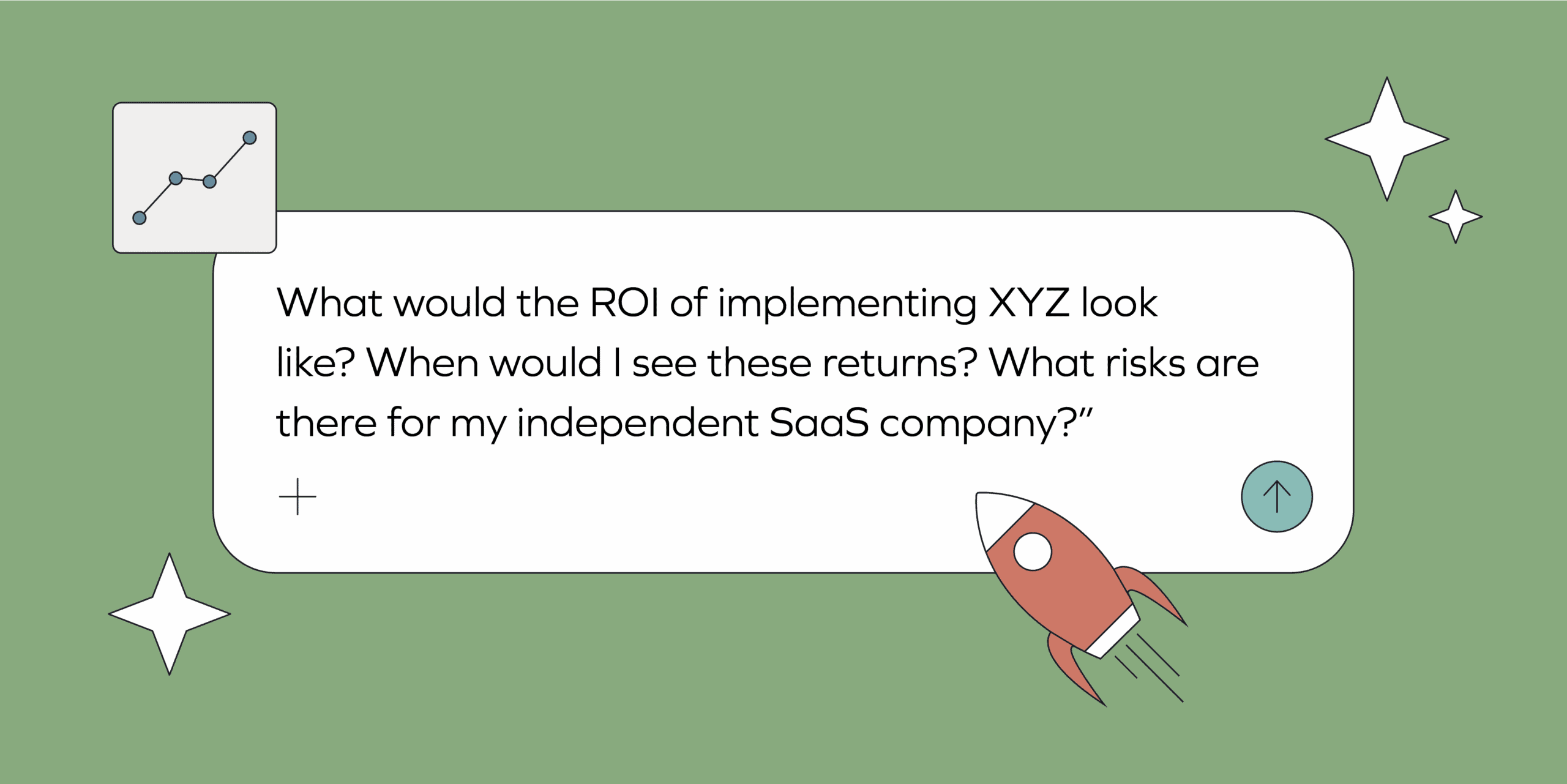
“What would the ROI of implementing XYZ look like? When would I see these returns? What risks are there for my independent SaaS company?”

How to measure your B2B brand’s AI performance

Run your prompts in leading LLMs and record whether your brand is cited, how prominently it appears within the response, and whether the answer links back to one of your owned assets. Be mindful to keep the prompt the same for each LLM. This will help set your benchmarks. Re-run exactly the same test/s at regular intervals. Monitor the results to establish a trend line and assess: is your brand’s presence rising or slipping?

2. Benchmark against competitors and calculate your ‘Share of Model’.

The true value of raw citations is better understood when placed in context. So, with the same query set, keep a tally how often each major competitor is mentioned. From this, you’ll be able to calculate your ‘Share of Model’ (SOM): the percentage of total answers (across all models and prompts) that include your brand name vs. competitors. As this metric mirrors ‘Share of Voice’ (SOV) in paid media, it’s easy to slot your findings into a typical reporting framework. Over time, your SOM will reveal whether content updates, PR wins, or schema tweaks are translating into more AI visibility, or showing that rival brands are pulling ahead.

3. Analyse the sentiment of LLM answers.

Earning citations alone isn’t enough – the tone of your citations matters. For every mention you log, note whether the assistant’s language is positive, neutral, or negative.

Armed with those insights, marketing and product teams can invest their efforts in tackling any issues and creating future collateral that builds on previously successful work.

Conduct a quick diagnostic.

Open an LLM and ask:

“What do you know about [Your Brand]?”

or

“Compare [Your Brand] and [Top Competitor].”

The adjectives and sources included in the response will give you an instant snapshot of current brand sentiment.

4. Monitor site traffic and brand signals.

Generative answers are beginning to drive measurable traffic back to source domains – particularly when the AI assistant supplies a citation link. Watch for sudden lifts in direct visits, increases in branded search volume, or fresh referrers such as chat.openai.com, claude.ai, and bing.com/chat.

Even if the numbers are modest today, their growth rate is an early indicator of how quickly buyer behaviour is tilting towards AI solutions. Where possible, tag those sessions so you can compare conversion rates against standard organic or paid-search traffic.

5. Adopt systematic prompt-based testing.

Finally, embed prompt testing into your optimisation workflow, as often as you might run scheduled keyword ranking checks. Use diagnostic prompts such as:

  • “Who are the top providers of [solution]?”
  • “What are the pros and cons of working with [Brand]?”
  • “List three case studies that show ROI for [type of technology].”

These open-ended questions mirror real buyer research behaviour and reveal exactly what the models have absorbed about your company. Think of each test that’s run effectively as a mini focus-group report. Did the assistant pull in your newest white paper? Did it use an outdated pricing figure? The answers highlight gaps in your public-facing content and signal where schema, press outreach, or on-page updates can have the biggest impact on your future SOM.

Will measuring SOM get any easier?

These methods to monitor and optimise SOM may sound fairly time consuming, but they’re a valuable first step in establishing benchmarks and familiarising yourself with the concept. Once you’ve done this legwork, you’ll have a clearer understanding of what kind of paid-for automatic solution you might want or need going forwards.

Fortunately, as the demand for this measurement grows, you’ll notice that there are many tools and platforms emerging to help automate this process. A few that are on our radar are: ChatBeat, PeecAI, RankScale, Knowatoa.

Imaginative and memorable campaigns will significantly amplify your brand and strengthen its market positioning. And if the bar is set low on platforms like LinkedIn, your creative ads are sure to have stand-out appeal.

In short, investing boldly at the top of the funnel is now a strategic imperative. Brands that prioritise creativity won’t just drive immediate awareness, they create powerful and lasting impacts on GEO visibility, effectively seeding their brand deeply into the AI-driven discovery ecosystem.

FAQs

What does AI visibility mean for B2B brands?

AI visibility refers to how often and how prominently your brand is cited by generative AI platforms such as ChatGPT, Gemini, Perplexity, Claude, or Bing Chat when users ask questions relevant to your industry. Essentially, it’s about how ‘discoverable’ your brand is in the AI-driven research phase of your prospect’s buyer journey. With a recent Forrester survey revealing that approximately 90% of B2B buyers are now using AI-powered tools to aid their purchasing processes, visibility in these environments is critical to success.

What is Share of Model – and how do I calculate it?

Share of Model (SOM) is a performance metric that will help you benchmark how your brand is doing against its competitors within the AI landscape. It’s the proportion of mentions you earn within AI responses versus the total number of mentions of all brands within your industry. When measuring this manually, it’s important that you run a defined set of prompts – that you can regularly revisit to track progress. It’s also valuable to conduct this research with several AI models as they all work slightly differently.

The basic SOM formula: To get your Share of Model as a percentage, you need to divide your brand’s total citations by the total number of citations for all your competitors and your brand. Then multiply this by 100 to convert it into a percentage. You should do this exercise for ChatGPT, Gemini, Perplexity, Claude, Bing Chat, etc. and then look at the average percentage too.

How often should I run AI visibility checks?

Treat AI visibility checks like keyword-ranking audits. For most B2B brands, monthly testing is sufficient to spot trends and benchmark progress. If you’re actively implementing GEO strategies or launching new campaigns, for more granular insights, you could make this bi-weekly.

What tools can help me track AI citations and visibility – can you do it manually?

Manual testing is a valuable (free!) starting point. Of course, there are automation tools out there to help you manage this workflow and give you these insights. But by doing the legwork at the beginning, you’ll not only build a greater understanding of your AI visibility first-hand, you’ll also be building a business case to invest in a tool, long-term.

Much like everything else AI-related, the landscape is constantly changing. AI performance tools are launching seemingly every week – so do your research to ensure you’re picking the right tool for your business needs.

Do I have to invest in a paid AI visibility tool or are there free methods?

As we’ve covered in this article, there’s plenty you can do without a dedicated AI performance tool. We recommend you start with manual prompt testing:

  • Create a set of buyer-intent prompts (early, mid, late funnel).
  • Run them across leading LLMs (ChatGPT, Gemini, Perplexity, Claude, Bing Chat).
  • Record citations, sentiment, and link attribution in a spreadsheet. Yes, this approach is time-intensive but it’s effective for establishing benchmarks. It will also give you insights into how your prospects are likely to be experiencing your brand.

Will AI visibility replace traditional search rankings?

In our minds, not exactly no. It’s simply broadening the scope of brand discoverability through user search. Old habits die hard, people are still ‘Googling’. It’s just unlikely to be their only method of research within the complex B2B buyer journey. What we can say for sure is generative engine optimisation (GEO) needs to be integrated into your business and marketing strategy – ASAP.

More for you

See the blog

How to integrate GEO tactics within your existing B2B marketing strategy

Becky
Becky 1 min 10 Dec 2025

Getting a brand, product, or service to surface in today’s search queries requires a change in strategy. The good news is, Google has lost its monopolisation on discoverability. The bad news is, your marketing strategy needs to evolve with user search behaviour.

It’s now necessary to look beyond search engine optimisation (SEO) and think tactically about generative engine optimisation (GEO). This means making your brand more visible to large language models (LLMs) such as ChatGPT, Gemini, and Perplexity.

Don’t worry, it’s not a case of ripping up the rulebook. Most of the tactics you’re already following for SEO are applicable for GEO. It’s just important to understand the nuances, find out what your current AI visibility is like, and implement adjustments to maximise reach in this AI era.

Whether your prospect is using their favourite Gen AI platform or their favourite search engine, if their query is relevant to your business, your brand should be surfaced.

Our step-by-step guide to implementing a GEO strategy.

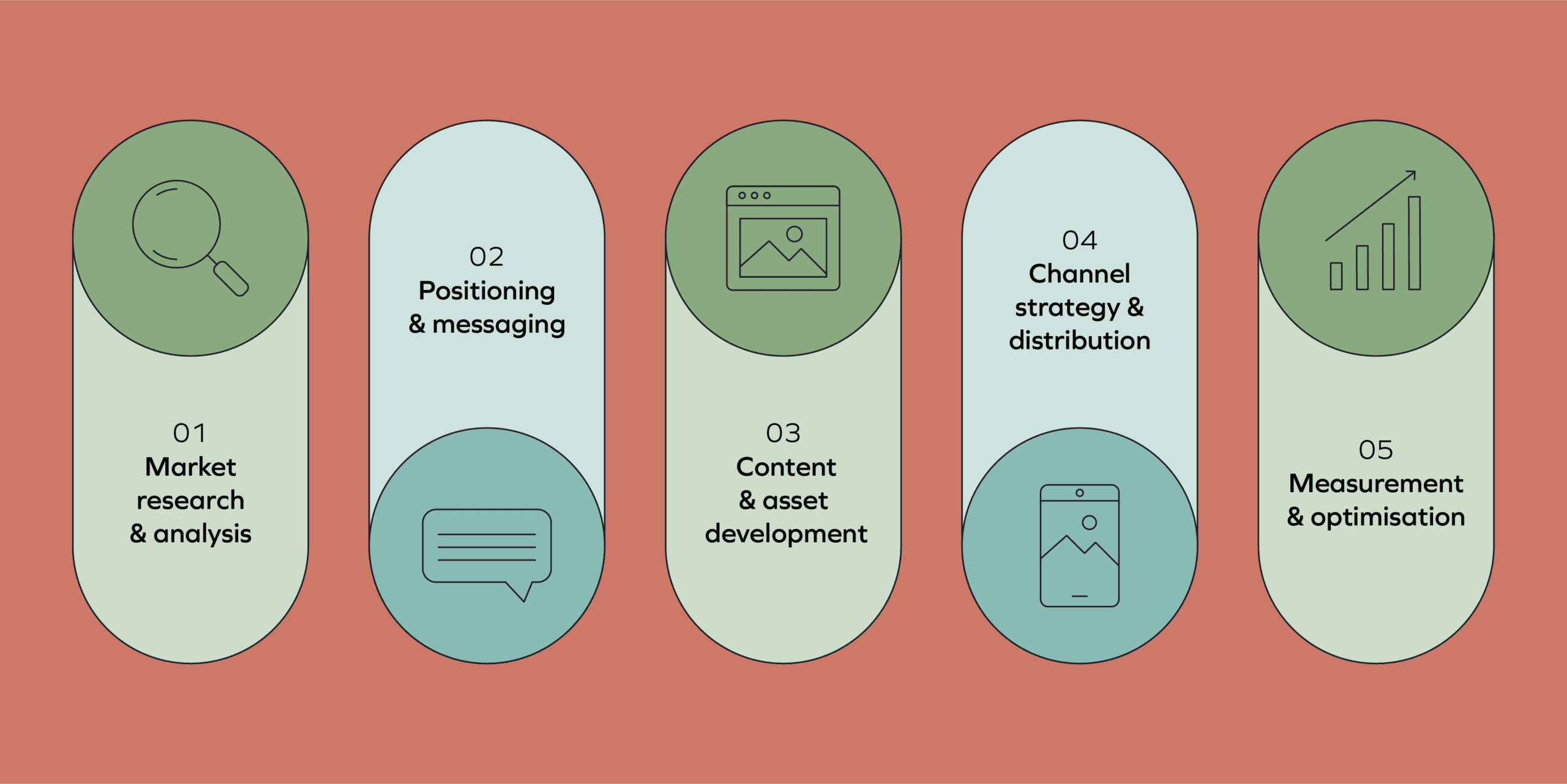
Stage 1: Market research and analysis.

Effective market research and analysis – in the context of GEO – involves deeply integrating an understanding of generative AI usage within your initial strategy.

  1. Determine your ‘core query set’: identify the specific industry-related questions that your target audience frequently asks. This doesn’t need to be queries that have come from LLMs, but ones that prospects are likely to ask LLMs in the future. Actually, the best way to curate this list is by using your CRM data or speaking with your sales team. It’s important you note the language prospects use. So, analyse sales calls scripts and build your understanding of what they want to know – and when. This should give you crucial insights into buyer intent and conversational patterns. In turn, it’ll allow you to structure your content and messaging in a way that mirrors your prospects AI queries.
  2. Competitor analysis: conduct a comprehensive competitor visibility analysis to gauge how well others are already performing within these generative AI environments. Identify competitors who regularly appear within LLM-generated responses and explore why their content or brand resonates with AI algorithms. This competitor analysis will help you pinpoint what GEO strategies and tactics are already working, providing a robust foundation for your GEO efforts.

Stage 2: Positioning and messaging.

Developing effective positioning and messaging within the GEO framework involves crafting content explicitly designed for conversational interactions typical of LLM queries.

  1. LLM-ready messaging: Your positioning statements and key messages should naturally fit question-and-answer formats, aligning seamlessly with user expectation.
  2. Keyword and phrase alignment: incorporate exact-match conversational phrases that your audience frequently uses, ensuring your messaging closely aligns with real-world user interactions. This careful linguistic synergy boosts your visibility in AI-generated responses.

“ AI algorithms learn from and prioritise content that’s frequently discussed and shared across diverse and authoritative channels. ”

Stage 3: Content and asset development.

To excel in GEO, content creation must focus on developing educational, authoritative, and comprehensive assets that directly answer essential buyer questions.

  1. GEO-aligned content creation: Prioritise content formats that are clearly structured, such as detailed FAQs, how-to guides, and insight-rich thought leadership articles. These formats – not coincidently – align well with your users’ needs and the content preferences of generative AI. These content types will enhance your chances of being surfaced and cited in LLM responses.
  2. Strategic use of data: Embed unique, original statistics and insights into your content to encourage citation and enhance brand SOM.

Stage 4: Channel strategy and distribution.

User-generated and organic content is regularly cited in LLMs. In fact, many favour this type of content. So, it’s important you get your valuable content shared as far and wide as possible. Inviting additional commentary from partners or colleagues will give you a boost too.

  1. Content syndication and PR: Ensure your core thought leadership and educational assets are shared across influential industry platforms, authoritative third-party websites, and high-visibility media channels.
  2. Forum and community engagement: If relevant, actively engage in professional communities such as LinkedIn, Stack Overflow, Quora, and Reddit. Getting involved in these communities helps seed your content in areas commonly referenced by generative AI models.

Stage 5: Measurement and optimisation.

From choosing your tools and metrics to working out your routine for monitoring and optimisation, it’s important to regularly review your content.

  1. GEO monitoring tools: Utilise specialised monitoring tools to continuously measure your brand’s ‘Share of Model’ (SOM) and sentiment across various LLM platforms.
  2. Iterative improvement: Regular analysis of these metrics allows you to identify visibility gaps and areas for improvement. Use these insights to iterate and refine your content and distribution approaches. This ongoing optimisation ensures your GEO strategy remains effective, adaptive, and consistently aligned with evolving generative AI algorithms and user behaviours.

Do all the above, but above all, be bold.

Generative AI engines pay close attention to broad signals of brand relevance and popularity. Social virality, active online discussions, media coverage, and proactive PR are all likely to boost your brand’s visibility. Why? AI algorithms learn from and prioritise content that is frequently discussed, shared, and mentioned across diverse and authoritative channels.

As such, the value of investing in creative and bold marketing has never been higher. Take LinkedIn’s paid ads as an example. They have a reputation for being expensive. We believe this is – at least in part – due to the monotony of the ads. We’re all human – boring and bland B2B ads just won’t attract attention and engagement. This can result in an eye-watering cost per lead. But it also presents an opportunity…

Imaginative and memorable campaigns will significantly amplify your brand and strengthen its market positioning. And if the bar is set low on platforms like LinkedIn, your creative ads are sure to have stand-out appeal.

In short, investing boldly at the top of the funnel is now a strategic imperative. Brands that prioritise creativity won’t just drive immediate awareness, they create powerful and lasting impacts on GEO visibility, effectively seeding their brand deeply into the AI-driven discovery ecosystem.

FAQs

What is an LLM?

A large language model (LLM) is a resource loaded with vast quantities of information or ‘big data’. This model is then used by AI-powered tools like Chat GPT. These tools rely on LLMs to respond to queries.

Some of the most popular LLMs in 2026 are Chat GPT, Perplexity, Google Gemini, and Microsoft Copilot.

Will LLMs surface sales and promotional content?

Highly unlikely. Copy containing marketing hyperbole is typically filtered out, with priority given to more educational resources.

Plain-language explainers, industry glossaries, and data-driven articles are much more likely to be surfaced by an LLM. So, prioritise content formats that are clearly structured, such as detailed FAQs, how-to guides, and insight-rich thought leadership articles. These align well with your users’ needs and the content preferences of generative AI.

What is SOM?

Share of Model (SOM for short) is now a widely recognised term in the marketing world. It’s the metric that shows you what proportion of a Large Language Model’s (LLM) answer you have.

Essentially, every time someone asks the likes of ChatGPT, CoPilot, Gemini, or Perplexity a query that’s relevant to your industry and business offering, how much (or how frequently) is your brand and its content cited. Similarly, who are you sharing the space with? And what brands are dominating the SOM?

These insights should help you determine what actions to take to ensure your brand earns a larger slice of the pie in future.

For B2B marketers, it’s critical to monitor brand visibility and representation in AI – and get ahead of competitors with these rapidly-evolving discoverability tools.

More for you

See the blog

After you launch: The true value of iterating and optimising your content

Andrew
Andrew 1 min 26 Nov 2025

It’s easy to breathe a sigh of relief when a new go-to-market (GTM) strategy finally makes its way out of the meeting room and into the world, and while it can feel like you’ve crossed the finish line, in truth, it’s only the starting point. All the pre‑launch work that has taken place to understand your audience and analyse competitors gives you a strong foundation, but now that your new website, content hub, or campaign is in the hands of a genuine audience, it’s time to really see how those plans hold up.

The performance data that comes in will reveal whether your assumptions hold up in practice. Are people engaging? Is it being shared in the right places? Are the formats working? Post‑launch optimisation is where you can dive deeper into the metrics, uncover answers, and refine your approach. Find out how to keep on top of it after you’ve hit the publish button.

Why post‑launch optimisation matters.

As your content spreads its wings, algorithms evolve and audiences shift, which means any assumptions made during planning may need to change their course – not just once, but habitually. This is where data becomes invaluable, often speaking louder than the words themselves; it will show where your content is landing well and where it needs refining.

In 2025, that shift has been (and continues to be) accelerated by generative engine optimisation (GEO). With AI results now shaping how buyers research and shop, the GEO market has surged into a multi-billion-dollar industry, projected to grow at a 34% annual rate.

The numbers surrounding GEO are clear: content optimised for AI delivers up to 40% higher visibility and better conversions compared to traditional SEO, and with 58% of searches now ending in zero clicks thanks to Generative AI tools, optimisation after launch isn’t optional; it’s essential for keeping your content visible, relevant, and revenue-generating long after the initial go-live.

The performance metrics that matter.

Click‑through rate (CTR) has long been a favourite metric, but it’s not always the best indicator of success. With search engines and generative AI platforms delivering your content directly in their results, fewer users may land on your site. Yet, those who do are often better informed and closer to conversion.

Think of it as a filter; casual browsers may get what they are looking for from surface-level, AI‑driven summaries, while more committed customers are more likely to dig that bit deeper. By the time they land on your page, they have likely already engaged with your brand elsewhere, which means they’re already invested and more likely to convert.

This shift flips the age-old obsession with volume on its head. Think quality over quantity, just like organic strawberries from the expensive farm shop around the corner; there may be fewer per punnet compared to the supermarket, but the taste and nutrition when they’ve been grown with care is incomparable.

Instead of chasing vanity numbers, focus on these instead:

  • Whether your content is being shown in AI‑generated answers.
  • The role your content plays in pipeline growth
  • And for those that do land on your website: how long people spend engaging with your content, and how far they scroll
  • Content‑to‑lead conversion rates (benchmark: 2–4% for B2B, Airops)

Bounce rate and CTR show you the most insightful data when analysed together; a high bounce rate suggests your content isn’t meeting expectations, while a low one means fewer clicks could still translate into high‑quality leads.

Using AI to gain insights – faster.

AI is transforming the way marketers in all sectors work, and according to the Content Marketing Institute, 72% of B2B marketers utilise generative AI tools when it comes to time-consuming tasks such as trend-spotting, streamlining reports, or summarising research.

AI can also take the pressure off teams by analysing performance data at scale and spotting patterns faster than most busy marketing departments can. This makes it easier to spot which content drives engagement, where audiences tend to drop off, and any topics that consistently hold attention. By bringing these insights to light quickly, teams can make smarter decisions about what to spotlight, repurpose, or retire.

Turning data into content.

Optimisation isn’t just about polishing what already exists on your website, but also about using data to shape the future of your content plans. When an asset performs well, an opportunity arises to extend its reach by reimagining it in new formats; think video, infographic, or even a podcast. At the same time, analytics will highlight areas of the customer journey that are underperforming, providing direction on where fresh content could be effective.

Insights can also guide you to adapt messaging for specific industries or regions, ensuring that what you produce feels relevant and targeted. DemandSage found that 60% of B2B buyersmake their final purchase decisions based on digital content, which means that every round of optimisation becomes a new opportunity to influence how people move through the funnel and experience your brand.

How to build lasting momentum.

Optimisation is a process that’s in a constant state of refinement – a little tweak here, a small wiggle there. It should be seen as a project in motion rather than a one-and-done job. Campaigns that are revisited regularly – we recommend every quarter – stay aligned with changing audience needs and expectations, while those left untouched risk losing relevance.

It can be tempting to focus on vanity metrics, especially since those numbers often appear impressive in reports, but they rarely tell the whole story. What matters more is building a clear picture of how your content is performing. This requires documenting processes so insights aren’t lost, and improvements can be carried forward.

The rise of AI means that its governance is becoming increasingly important. With the Content Marketing Institute reporting that 61% of organisations lack clear guidelines for how AI should be used, there is a real opportunity to establish frameworks that ensure AI supports creativity and decision-making responsibly.

Launching your GTM plan is just the beginning.

The real value lies in what you learn on the road afterwards. By iterating based on performance data, focusing on meaningful metrics, and combining AI insights with human creativity, you can ensure that your content continues to deliver impact long after going live.

How we delivered measurable SEO impact for our travel client.

When our travel client set out to boost the visibility and engagement of their B2B content, our team knew that a data-driven, collaborative approach would be key. Building on insights from a previous competitor research project, we began by conducting comprehensive keyword research and SEO performance analysis to identify 50 high-potential articles for optimisation.

Working seamlessly with our client and internal teams, we established a precise measurement framework, reflected in a custom Looker dashboard, to track progress and ensure transparency. The optimisation process focused on enhancing meta data, headlines, and calls to action – always balancing SEO best practices with customer-centricity. We were conscious to avoid keyword stuffing. Instead, we prioritised readability and engagement, and recommended visual aids (such as infographics and videos) to make content more digestible.

The results spoke for themselves: organic impressions surged by 161% year-on-year, clicks increased by 178%, and ranking keywords rose by 91%. Five optimised articles ranked among the top 10 performers, and the project came in under budget, securing a follow-up engagement. Our work positioned us as trusted SEO consultants, opening doors to further projects and workshops.

By combining rigorous analysis, close client collaboration, and a relentless focus on measurable outcomes, we helped our client achieve standout results in a fast-evolving digital landscape.

FAQs

What is content iteration?

Content iteration is the process of refining and improving your content over time, rather than treating it as finished once it’s published. This means using performance data, audience feedback, and evolving trends to make small adjustments in line with statistics, customer behaviour, and sales team insights.

What’s the average lifespan of a piece of content?

This depends on the type of content and the platform it’s on. Campaign‑driven assets may peak within weeks, while evergreen articles can deliver value for years. The key is to track performance and refresh regularly.

Does evergreen content need to be optimised too?

Yes! Evergreen doesn’t mean that once it’s set live, it can be forgotten about. Search algorithms and audience needs evolve constantly, so revisiting evergreen pieces ensures they stay visible and accurate.

How often should I revisit my content?

At least quarterly for high‑impact assets, and annually for evergreen content. But don’t wait for a calendar reminder, let the data guide you. If engagement drops or search visibility changes, it’s time to review the statistics and refine.

More for you

See the blog

Crafting the perfect B2B go-to-market value proposition

Becky
Becky 1 min 18 Sep 2025

In today’s competitive technology and industrial landscape, standing out from the crowd when you go to market requires more than just a great product. You may have the most innovative solution available, but if you can’t clearly articulate why it matters to your customers, you’ll struggle to gain traction. This is where a strong value proposition comes into play.

For complex B2B products, the challenge is even greater. Multiple decision-makers, long sales cycles and technical considerations mean that a generic pitch won’t cut it. You need a clear, compelling value proposition that resonates with your audience and highlights the tangible business outcomes you deliver.

As a leading B2B go-to-market agency, we know a thing or two about crafting a compelling value proposition. And if you’re interested in what we do and how we do it, read on.

Why do I need a value proposition anyway?

A value proposition is the most succinct way of explaining the value a brand can offer its customers. Ideally, it should address an audience insight, and balance user needs with the brand’s key differentiator. It’s all about finding the sweet spot between the brand’s business strategy and the audience’s pain points.

In B2B in particular, it’s not always simple to distil down to the true value of a product or a service. Being able to condense internal strategy decks and every stakeholder’s input into a value proposition isn’t a job for the faint-hearted. It requires a deep understanding of a brand’s vision and mission, its market, competitors, and ICP (Ideal Customer Profile).

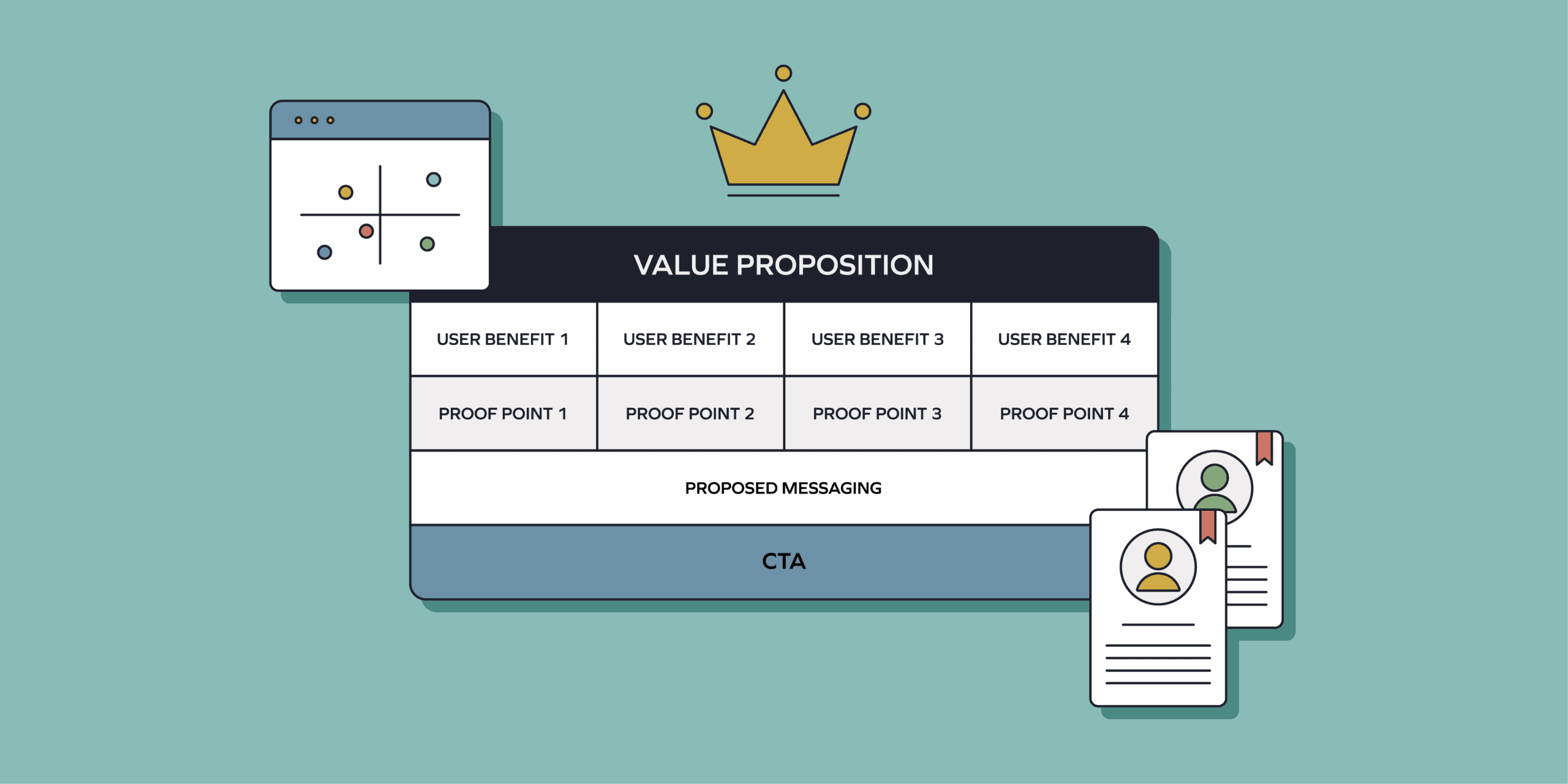
With all these insights gathered, the next challenge is how to structure the information. In terms of hierarchy in a messaging framework, the value proposition is right at the top. The first consideration. It should feed into all the messaging that follows, and everything else in the messaging framework should justify and support the value proposition.

A strong value proposition is clearly aligned to the brand’s proof points and there should always be a logical flow. You should always be able to trace the train of thought. With that in mind, every value proposition we create for clients includes a rationale to explain our thinking and why it works for the brand and its customers.

Why complex B2B products need a different approach.

When selling in consumer markets, value propositions often focus on emotional appeal or immediate gratification. In B2B, the picture is more complex.

Here’s why:

  • Multiple stakeholders – Users, managers, procurement, operations managers and C-suite executives may all be involved in the decision-making process.
  • Technical complexity – Your solution might be innovative, but if it’s difficult to explain, you risk losing your audience.
  • Long-term investments – Customers want to see reliability, scalability, and a return on their investment, not just a flashy feature.

That’s why your value proposition must strike a balance. It needs to be technically credible, but still focused on the business outcomes that matter to decision-makers.

The rational side of a B2B value proposition is important. But don’t forget that B2B buyers are still human – you also need to affect how people ‘feel’ about your proposition and brand. This is where the nuanced skill of using language to combine technical credibility and commercial relevance with language that’s approachable, ownable, and memorable comes into play.

Ultimately, you want the value proposition to impact both sides of the human brain – the rational and the emotional – so that audiences understand how you can solve their challenges and believe that you are a credible brand. This is what drives brand recall, and determines whether or not you’re included in their day-one list of potential suppliers once they’re ready to buy.

The best approach to developing a compelling value proposition.

  1. Understand your audience.

The first step is to know your customer inside out. Go beyond demographics and dig into their priorities, pressures, and pain points.

  • What operational challenges do they face?
  • What KPIs are they measured on?
  • How do they define success?

The more you can map your solution to these drivers, the stronger your value proposition will be.

  1. Identify your unique strengths.

What makes your solution different? In the industries we specialise in, we often find that the points of differentiation, although sometimes nuanced, include:

  • Resiliency
  • Future-proofing
  • Cost savings
  • Efficiencies (often the result of automation and advances in AI, etc.).

Be specific. Statements like “we improve efficiency” lack impact without context. Make sure that the value proposition has substance, and truly reflects what the business offers and what the audience needs. If you don’t know your business strategy or audience needs in detail, then you shouldn’t be looking at developing value propositions at this stage.

  1. Translate features into benefits.

Customers don’t buy features – they buy the outcomes those features deliver. Technical specifications matter, but they don’t sell by themselves.

For example:

  • A faster production line isn’t just about speed – it means shorter lead times and increased revenue potential.
  • An automated quality control system isn’t just about technology – it means reduced waste, compliance assurance, and cost savings.

Always ask: “So what?” after each feature until you get to a tangible business impact. Ideally, you would also group them, and work out which features support the same overarching benefits. The way that we categorise features and services is specifically tailored to every client we work with. In B2B, decisions are influenced by trust, confidence and reduced risk. We believe in building strong brands that establish brand affinity (emotional response) and brand equity (credibility).

  1. Make the value proposition clear and concise.

In complex industries, it’s tempting to pack a value proposition with technical jargon. Resist that temptation. Instead, always use a simple, conversational tone. A value proposition should be easy to grasp in seconds. Aim for one sentence, with a supporting sub line. Taking the time and effort to distil a value proposition to its essence makes it much more memorable and likely to be repeated by any member of the client’s team.

Crafting the perfect B2B go-to-market value proposition

How we crafted an impactful go-to-market value proposition for Workshop XR.

When we helped Autodesk go to market with a next-generation VR workspace tool, developing the right value proposition was vital to the project’s success. After conducting a comprehensive competitor analysis, looking for insights and opportunities that Workshop XR could leverage, we invested time in really getting to know the key influencers who would benefit from the product – architects, engineers, BIM/VDC managers, and directors of tech. Delving into their current workflows through one-to-one user interviews, we built a strong understanding of what was working and what wasn’t. Particularly when it came to how they collaborated with their team.

Using our findings from the in-depth market research and stakeholder interviews, we identified the key user benefits and Workshop XR’s points of differentiation, such as alignment, fluidity, and accessibility. As we started to agree on our product and user benefits, we built out a messaging matrix, detailed value propositions, and narratives to essentially refine Workshop XR’s ‘elevator pitch’. There was plenty to say, so the key challenge was making it as concise and compelling as possible – based on what we knew the audiences cared most about.

With a ground-breaking product to showcase, the value proposition had to pack a punch. After exploring all kinds of angles, and running longlists and shortlists by the Autodesk team, we agreed on, “Change your perspective. Elevate your understanding.” This value proposition distilled the product offering down to why it’s revolutionary (the first-person, human-scale experience) and the value it brings to design reviews (the ability to catch issues, sooner).

Read the full story of how this value proposition helped drive the go-to-market strategy for Workshop XR.

What questions should you ask about value propositions?

When you start to have discussions about developing value propositions for go-to-market projects, there are some of the burning questions you’ll want answered:

  1. How long should a value proposition be?
    Ideally, no more than a couple of sentences. Preferably just one. It should be short enough to remember, but impactful and intriguing enough to spark interest.
  2. Can we have more than one value proposition?
    Yes – but keep a consistent overarching message. You may need tailored propositions for different target audiences, sectors, stakeholders or products.
  3. How do we make it credible?
    Back up your claims with data, case studies, or independent validation. Specific figures or success stories are way more persuasive than vague statements or promises.
  4. What if our competitors say the same thing?
    You need to dig deeper into your brand’s unique strengths. Look for differentiators in your approach, service model, integrations, or customer support.
  5. How often should we review our value proposition?
    At least once a year, or whenever market conditions, customer needs or your own offering changes significantly.

More for you

See the blog

Building a GEO strategy based on the leading LLM – ChatGPT

Andrew
Andrew 1 min 19 Aug 2025

The ways in which people discover your brand are changing. Traditional search engine optimisation (SEO) strategies are simply no longer enough on their own.

The search for, say, a SaaS product for a small tech company use to begin with, “best CRM SaaS solution”. Today, thanks to Large Language Model (LLM) tools like Gemini, Claude, or ChatGPT, it can be, “recommend a CRM SaaS solution for a small technology enterprise that leverages AI to optimise workflows and has powerful features that enable remote collaboration“ – and chances are, you’ll get all that information (and more) back in one concise paragraph – or better still, within a comparison table!

That means planning a GEO (generative engine optimisation) strategy to ensure your brand, product or service is the one that surfaces among the search results. And if there’s one LLM you should prioritise your GEO strategy around, it’s ChatGPT.

The growth trajectory of the leading LLM has been nothing short of extraordinary, solidifying its position as the most widely adopted tool of its type to date. As of May 2025, ChatGPT boasts approximately 800 million weekly active users and around 122.58 million daily users, processing over 1 billion queries daily. This rapid rate of adoption underscores its deep integration into users’ daily routines and its prominence in the AI landscape.

In comparison, other LLMs are far behind in terms of their share of AI search. For instance, Google’s Gemini has garnered about 450 million monthly users as of July 2025. Notably less than ChatGPT’s user base. Then there’s an even greater drop off for popular tools like Claude and Perplexity (approximately 18.9 million and 22 million monthly active users respectively). This disparity highlights ChatGPT’s dominant position.

While the results for LLMs are impressive, however, it’s not time to abandon your SEO strategy just yet.

What’s comforting to know is that since Gemini’s (and the AI Overviews’) own algorithms are likely to be more closely aligned to Google’s search algorithm, if you prioritise ChatGPT for your GEO strategy, and Google for your SEO, you should have a really strong reach.

So, let’s look at the main considerations for a ChatGPT-based GEO strategy…

“ When ChatGPT generates answers using its browsing tool, it retrieves content through Bing Search – not Google. ”

1. ChatGPT uses Bing to generate answers.

This is a fundamental – and perhaps surprising – point. When ChatGPT generates answers using its browsing tool, it retrieves content through Bing Search – not Google. The model looks at Bing’s website and content ranking, summarises the information, and cites or references brands based on what it finds.

Why is this so important? Because if you don’t rank on Bing, you’re invisible to ChatGPT’s real-time answers. In essence, just as SEO was once all about Google, GEO for ChatGPT is now largely about Bing. B2B marketers who optimise for both engines can increase their brand’s visibility across the most important discovery pathways available today – and tomorrow.

“ If you don’t rank on Bing, you’re invisible to ChatGPT’s real-time answers. Just as SEO was all about Google, GEO for ChatGPT is largely about Bing. ”

2. If people talk about your brand, AI is more likely to give you a shout out.

ChatGPT and other LLMs are trained on vast text corpus, scraped from the public web. During training, these models ‘learn’ word associations and frequencies. If your brand is consistently mentioned near key industry terms, your name becomes statistically entangled with those topics. For example, if the phrase “best enterprise CRM” frequently appears with the word “Salesforce” in the training data, the model learns to associate them. This matters because LLMs don’t rank links – they predict language. If your brand has been part of the public dialogue around a subject, the model is more likely to include you in its generated answer.

“ LLMs don’t rank links – they predict language. If your brand is part of the public dialogue around a subject, the model is more likely to include you in its generated answer. ”

3. Retrieval-augmented generation (RAG) models look beyond the top link.

Most leading LLMs – including ChatGPT, Gemini, and Perplexity – integrate live search to fetch current content. They rely on retrieval to complement their training. In these cases, LLMs extract answers from top-ranked, recent, and contextually relevant web content. Studies show that when they cite content, the majority of these sources come from the top 20 search results. This means your organic ranking still matters and, crucially, you don’t need to be one of the first few links to be scanned and cited by LLMs. Overall, pages that rank well are more likely to be seen and selected by AI.

“ Studies show that most sources come from the top 20 search results. Organic ranking still matters and, crucially, you needn’t be one of the first few links to be scanned and cited by LLMs. ”

4. ChatGPT surfaces content that demonstrates expertise.

Beyond simply grabbing the top-ranked search results, LLMs like ChatGPT evaluate each potential source through a wider lens of relevance and authority. They favour content that is comprehensive and organised with clear headings or FAQ-style sections. This makes it easy for them to extract key information. If this content is published on domains already recognised for expertise and trustworthiness, its chances of being chosen increase further. Essentially, pages that meet these criteria – depth, clear structure, and proven authority – stand a far better chance of being surfaced in ChatGPT’s answers.

“ Pages with depth, clear structure, and proven authority stand a far better chance of being surfaced in ChatGPT’s answers. ”

5. Choose helpfulness over hype – use utility-first, non-promotional content.

Promotional fluff is largely ignored. LLMs give priority to material that puts utility ahead of salesmanship. Copy laden with marketing hyperbole is typically filtered out, whereas educational resources that answer a user’s question are prioritised. Well-researched thought-leadership pieces, plain-language explainers, industry glossaries, and data-driven articles provide the kind of concrete, non-promotional value an LLM is designed to surface. As a result, content created with a ‘help-first’ mindset is far more likely to be summarised or cited in an AI-generated response.

“ Well-researched thought-leadership pieces, plain-language explainers, and data-driven articles provide the non-promotional value an LLM is designed to surface. ”

6. Originality and data points are the key to earning mentions.

LLMs actively seek out content that offers something new. This could be proprietary frameworks, fresh analysis, or hard-to-find data points. When you publish original statistics, you give the model a concrete fact it can cite verbatim and attribute back to your brand. Imagine your white paper reports that: 34% of manufacturers plan to reshore production by 2026; if that figure is novel and starts circulating, LLMs are likely to repeat it and credit you whenever the topic arises. In short, the more distinctive your insights, the greater your chances of becoming the authoritative source an AI surfaces and cites.

“ When you publish original statistics, you give the model a concrete fact it can cite verbatim and attribute back to your brand. ”

And finally, keep it fresh…

What the above tells us is that ChatGPT and other AI models are constantly seeking credible sources with original data to cite. But as AI-generated content becomes more prevalent, a new challenge emerges: will originality become harder to find?

Essentially, as AI-generated content floods the web, brands risk being lost in a sea of sameness. If you don’t at least give the model some net-new information to work with, the waters will soon be muddied with everyone citing the same few original sources.

The point is: if you’re using AI to create content, do so cautiously. Human-generated content will be key for GEO. If you need to use AI as a tool to optimise content written by humans, great. But if you’re using it to churn out content without human input and insights, it’s unlikely to be valuable to humans, and it’s unlikely to help you on your GEO mission either.

FAQs

What is an LLM?

A large language model (LLM) is a resource loaded with vast quantities of information or ‘big data’. This model is then used by AI-powered tools like Chat GPT. These tools rely on LLMs to respond to queries. Some of the most popular LLMs in 2025 are Chat GPT, Perplexity, Google Gemini, and Microsoft Copilot.

Where does ChatGPT retrieve content from when generating answers?

When ChatGPT generates answers using its browsing tool, it retrieves content through Bing Search. The model looks at Bing’s website and content ranking, summarises the information, and cites or references brands based on what it finds. This is important, because if you don’t rank on Bing, you’re invisible to ChatGPT’s real-time answers.

What is RAG?

RAG is an acronym for Retrieval-Augmented Generation. Essentially, it enhances the capabilities of LLMs like ChatGPT by integrating them with external sources of information and content. By allowing LLMs to access and incorporate info from web pages, databases, documents and other sources, the models provide more accurate, up-to-date and contextually relevant answers to searches.

Will LLMs surface sales and promotional content?

Highly unlikely. Copy containing marketing hyperbole is typically filtered out, with priority given to more educational resources. Plain-language explainers, industry glossaries, and data-driven articles are much more likely to be surfaced by an LLM like ChatGPT.

How do other LLMs rank compared with ChatGPT?

Figures released in May 2025 showed ChatGPT had around 800 million active users every week. By comparison, the next most popular LLM, Google’s Gemini, had only half that number – and that was per month (April 2025 figures). Likewise, competitors Claude and Perplexity showed approximately 19 million and 15 million, respectively.

More for you

See the blog

From idea to launch: a step-by-step GTM blueprint for B2B brands

Andrew
Andrew 1 min 30 Jul 2025

No matter how earth-shattering your idea, product or service is, turning it into something that’s commercially viable is no mean feat. Especially in the B2B world. Here, long sales cycles, complex buying committees, and an increasingly competitive landscape can stall momentum before you’ve even begun. A clearly defined go-to-market (GTM) strategy isn’t just helpful – it’s essential.

Whether you’re launching a SaaS platform, tech solution, or specialist service, having a structured GTM plan ensures your positioning, messaging, and channels are aligned for maximum impact. It’s how you transform all that smart thinking into sustainable business growth.

So, we’ve put together a step-by-step blueprint – one that should guide you through the key milestones on the journey to getting your solution off the ground, and into the hands of the right buyers – efficiently, effectively, and with confidence.

1. Get to know your market and customer

Begin by gaining clarity on who your customers are. Look into their motivations, and where they live – both geographically and in terms of the buyer journey. This important groundwork ensures your messaging and targeting have real relevance in your market.

  • Ideal customer profile (ICP): define your customer by industry, company size, buyer persona (e.g., procurement, IT, finance), etc.
  • Market trends and competitors: look at what your peers are doing and identify any gaps that exist in your region.
  • Pain points and buying signals: work out what challenges your ICP are trying to overcome and where these decision-makers look for solutions – is it LinkedIn groups, trade events, specialist forums?

2. Craft your positioning – thoughtfully

Now it’s time to craft your brand narrative in a way that ensures you stand out from the sea of B2B sameness. You need to be able to distil your offering down to a compelling value proposition that captures what your brand is about and how it adds value to your customer’s business.

  • Core brand truth: establish what problem you’re solving and who will care.
  • Content strategy: determine the best way to tell your story. How does this need to be segmented? What creative assets will bring this narrative to life?
  • Messaging framework: create clear, short-form statements and proof points to define user benefits and guide content creation.

3. Bridge the gap between marketing and sales

Aligning everyone in the business – especially the marketing and sales teams – will be critical to success. Consistency between your teams will build trust and minimise the risk of potential friction – both with internal politics and within the customer’s journey.

  • Speak regularly: set catchups every week, if possible.
  • Agree on the MQL to SQL journey: define what qualifies as a good lead for both sides.
  • Share assets: make sure your marketing content supports sales conversations and vice versa.

4. Think about how you can maximise reach

Create a channel strategy that carefully considers formats and platforms. Where are you likely to build the best connections with your target market? What sort of content lends itself to be shared – boosting your organic reach?

  • Content formats: focus on formats that demonstrate expertise, provide practical insights, and encourage interaction.
  • Channel selection: prioritise channels where your audience will naturally ‘hang out’. Think about where they might go when searching for trusted information.
  • Publishing cadence: maintain a regular flow of valuable content that aligns with relevant industry developments and buyer interests.

5. Tailor content to your audiences

Create content that feels relevant to your local audiences. Find the sweet spot between what will resonate best with your audience and what meets your business goals e.g., explain how your SaaS solution will address their common business challenge.

  • Approachable tone: be clear and direct, but always human.
  • Style choices: if you’re targeting the US, adopt US terminology, idioms, spellings, and punctuation.
  • Topic relevance: if you’re speaking to a British audience, think about what regional topics will resonate best. For instance, UK legislation or market trends.

6. Build a compelling campaign

Assemble the core assets that will support an effective and engaging launch. Consistent application of your brand guidelines will be essential to maintain alignment, coherence, and professionalism across all materials. Remember to think about the buyer’s ongoing journey – go beyond the initial ‘big splash’ touchpoints.

  • Digital presence: ensure you have a central, well-structured online destination to direct audiences and capture interest.
  • Sales enablement materials: equip teams with clear, persuasive tools that communicate value and address buyer needs.
  • Campaign collateral: develop a range of creative assets that can drive awareness, engagement, and amplification across key channels.

7. Set your campaign up for soft launch

A soft launch protects your budget. It enables you to get initial insights sooner, so you can learn and adapt – before you scale. Done well, it will help make your budget go further, as you’ll know what channels, assets, and messages deliver the best results.

  • Pilot campaigns: run sponsored LinkedIn posts, send targeted emails to a small segment of your target audience.
  • Key performance metrics: determine the most relevant KPIs based on your business goals: CTR, form completions, engagement rates, uplift in branded search, etc.
  • Adaptations: be prepared to adjust language, imagery, or CTAs based on any early insights.

8. Launch with confidence

Knowledge is everything when you’re launching a new B2B brand. Armed with performance insights – before you go big with your campaign – will give you the confidence to enter the market with a bang.

  • Press outreach: aim for coverage in trade and appropriate vertical media; local industry newsletters.
  • Budget allocation: redistribute and scale budget to channels and content that are proven to perform – based on your soft launch results.
  • Employee advocacy: encourage your team to share content organically. A personal voice builds trust, credibility and it’ll extend your reach.

9. Continue to iterate and optimise

Focus on measuring performance and adapting as you learn. Remember, launch is only the starting point – continuous learning and thoughtful optimisation will ensure your approach stays effective and relevant to your audience.

  • Key metrics: identify meaningful indicators of engagement and impact across channels and activities. See our blog on measuring ROI for more depth on this topic.
  • Regular reviews: build in short, frequent review cycles to spot opportunities for refinement.
  • Iterations: take the time to evaluate the success of any adjustments and set future priorities.

Frequently Asked Questions (FAQs)

What is a go-to-market (GTM) strategy?
A B2B go-to-market strategy is a carefully structured plan that defines how a business will reach, engage, and win its target customers – balancing market insight, positioning, channels, and tactics to drive sustainable growth. It goes beyond just launch activity, aligning marketing, sales, and customer success teams around the customer journey to ensure relevance, efficiency, and differentiation in a competitive landscape.

How do I identify my ideal customer profile (ICP)?
Identifying your ideal customer profile (ICP) involves analysing the attributes of organisations most likely to benefit from and derive long-term value from your product or service. It requires a thoughtful mix of data analysis, market segmentation, and qualitative insight to pinpoint the firmographics, behaviours, and needs that define your best-fit customers – ensuring your go-to-market efforts are focused, efficient, and aligned to real demand.

What’s the difference between a soft launch and an official launch?
A soft launch is a controlled, limited release of a product or service, designed to test positioning, gather feedback, and refine the experience before a broader rollout. An official launch is the full public debut, typically accompanied by a coordinated marketing push, with the aim of driving widespread awareness, adoption, and growth from day one.

What channels work best for B2B go-to-market (GTM) strategies?
The best channels for a B2B GTM strategy depend on your product and audience, but LinkedIn tends to be a core channel due to its unique ability to reach and engage business decision-makers and influencers in a professional setting. Other effective channels – such as display advertising, paid search, email marketing, events, ATL channels, etc. – should be selected based on how niche your audience is and where they actively seek information. For example, a platform like Reddit can be highly effective for technical or community-driven audiences who value peer discussion.

How do I measure success after launch?
Measuring success after launch means tracking both immediate commercial outcomes – like leads, conversions, and pipeline growth – and longer-term brand metrics such as awareness, preference, and engagement. True impact often unfolds over time, so it’s important to monitor not just short-term gains but the cumulative brand equity your activity is building. For more detail, see our blog on the ROI of brand building.


How Torpedo can help you go to market.

The aim of our GTM blueprint is to support and empower you to launch new products and services, incubation projects, and startups with clarity and confidence. Ultimately, it’s about building momentum for your brand.

Of course, it’s a complex journey. So, if you’d like our team’s help in navigating it, we’d love to play a part in your exciting venture. Wherever you are on your journey to go live, bring us along for the ride.


How to do B2B storytelling: A GTM agency’s guide to content that converts

Andrew
Andrew 1 min 3 Jul 2025

In a world where B2B buyers are bombarded with content, storytelling isn’t just a nice-to-have – it’s a strategic differentiator. At our B2B go-to-market (GTM) agency Torpedo, we’ve seen how the right narrative can transform a brand from forgettable to unforgettable. But what does effective B2B storytelling actually look like? And how do you make it work for your business?

Let’s break it down.

Why storytelling matters in B2B

Storytelling humanises your brand, builds trust, and simplifies complexity. According to Edelman’s 2025 Trust Barometer, trust now ranks equally with price and quality in purchase decisions. And McKinsey’s 2023 research shows that emotionally resonant content can accelerate B2B buying cycles by up to 20%.

In short: data informs, but emotion drives action.

1. Start with strategy, not just a story

Before you write a single word, ask: what’s the goal?

  • Are you driving awareness?
  • Moving prospects through the funnel?
  • Enabling your sales team?
  • Reinforcing your positioning?

Storytelling is positioning in motion. Without a clear objective, even the best-crafted narrative will miss the mark.

2. Know your audience like you know your product

Every great story starts with the audience. Build a ‘story persona’ alongside your buyer persona. Understand:

  • Who they are (roles, industries, seniority)
  • What they care about (pain points, motivators)
  • How they consume content (email, LinkedIn, video, podcasts)

This will ensure your story lands where it matters most.

Animation of a superhero
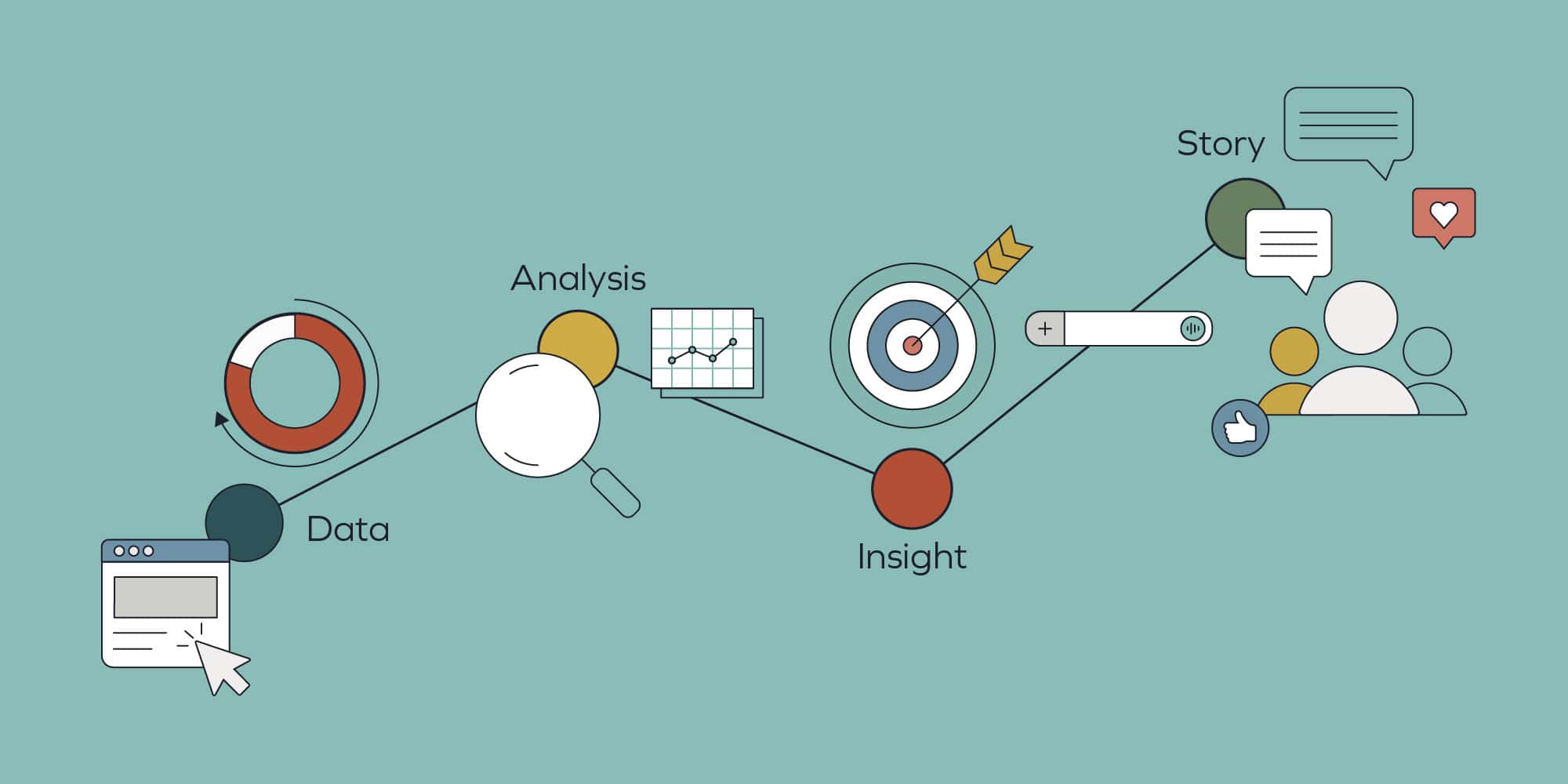
Diagram showing the stages of brand storytelling

Culture, purpose, and the power of internal stories

Don’t forget the stories inside your walls. Culture stories – like how your team rallied to launch a product in record time, or how a junior developer’s idea became a flagship feature – can be just as powerful as customer stories.

And purpose-driven narratives? They’re not just for B2C. Edelman’s research shows that B2B buyers are 4x more likely to purchase from brands that take a stand on issues they care about.

So tell the story of your mission. Why you exist. Who you’re here to help. And how your team lives that purpose every day.

At our GTM agency, we’ve seen how storytelling can do more than attract attention – it builds belief. It earns trust. It drives growth. If you’re looking to stand out in a crowded market, start with a story worth telling.

And if you’re not sure where to begin? That’s where we come in.

FAQs

Q: What’s the difference between storytelling and a case study?
A: A case study is a format. Storytelling is a technique. The best case studies use storytelling to make the content more compelling and memorable.

Q: Can B2B stories work for technical audiences?
A: Absolutely. Even technical buyers respond to emotive narratives that deliver on clarity, context, and outcomes – just tailor the tone and detail.

Q: What types of stories perform best?
A: We find that customer success stories, founder origin stories, product innovation journeys, and purpose-driven narratives tied to industry trends are all great ideas to explore.

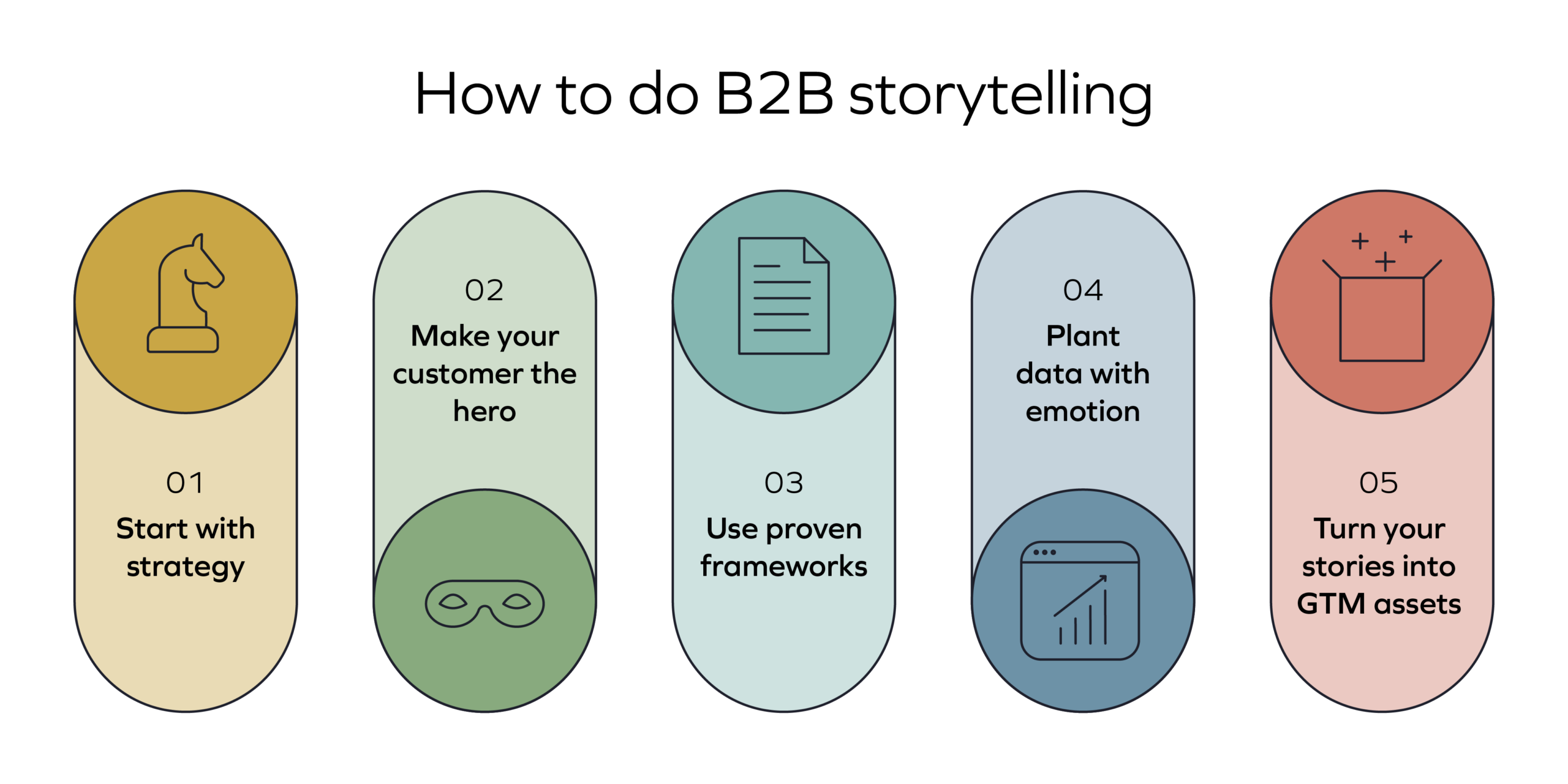
Key takeaways

  • Start with the strategy
  • Make your customer the hero
  • Use proven frameworks
  • Blend data with emotion
  • Turn your stories into GTM assets

More for you

See the blog

The ROI of brand building: Why investing in your brand pays off

Andrew
Andrew 1 min 22 Apr 2025

These days, it can feel like brand building gets a raw deal. Out there in the crowded B2B landscape, performance marketing can often steal the spotlight, upstaging brand-building activities when these are often the real key to long-term growth.

The trouble is, while performance campaigns are great for driving immediate results, it’s brand that underpins lasting commercial growth. Too many people spend untold resources on complex programs desperately trying to find the 5% of people who are in-market at any given moment, and convert them. That’s not a growth strategy, it’s an optimisation strategy.

That’s not to say performance marketing isn’t important – its role within a broad customer acquisition strategy is clear – but it’s your brand that plays into the human psychology behind how B2B buyers make decisions, targeting 100% of your audience to become a familiar and memorable brand. Planting a seed in the potential buyer’s mind that will grow to make your business the go-to choice once they’re ready to purchase. Generally, people think of up to three brands when beginning a strategic B2B purchasing journey, and the data shows that the majority of the time it’s one of these brands that tends to win.

So how do you move towards becoming one of the three? What ensures you are front-of-mind and on that initial shortlist? What exactly are brand-building marketing activities and why are they so important? How should you budget for them – and most crucially – how do you measure their success?

Let’s break it down…

What are brand-building marketing activities?

We’re simply talking about activities primarily focused on creating a strong, memorable presence in the mind of your target audience – one that resonates emotionally as well as rationally. Such activities will not be directly tied to short-term sales. Instead, they’ll be crucial for building brand recognition, familiarity, trust, and loyalty, over time and naturally bring more people through your door over the long-term.

This means blending clear positioning and high-impact creative ideas that grab attention with go-to-market strategies that amplify their reach, sustain engagement, and leave a lasting impression. While digital media remains central to brand-building campaigns, traditional channels such as out-of-home, sponsorships, events, print, and even TV extend visibility and deliver significant impact, remaining highly relevant even in B2B contexts.

  • In short, brand building is about making your brand relevant and unforgettable, and not about driving immediate customer transactions.

Why is an unforgettable brand important?

In any B2B market, building equity into your brand is essential for long-term growth. Brand-building campaigns enhance:

  1. Brand recall: ensuring your brand is one of the first that comes to mind when a need arises.
  2. Trust and credibility: building a perception of familiarity, reliability and quality.
  3. Market leadership: positioning your brand as a leading option within your niche (even if it isn’t!)

Together, these enhancements can move your business from being just another option, to the brand that’s top-of-mind and the default choice. Even in a highly competitive market, the stronger your brand presence, the more likely prospects are, psychologically, to favour your offering first. It’s about affecting the way audiences subconsciously feel about you, as well as what they think about you.

How much should I invest in brand-building?

There’s always a need to balance strategy, creative and media spend. Obviously, budgets differ from business to business. Much will depend on your growth targets, revenues, and general appetite for investing in marketing. Plus, you don’t have to be a marketing genius to know that generally, the more you spend relative to your competition, the greater your brand impact and share of voice in the market (the two critical components that underpin growth).

However, when it comes to brand building, there is a basic formula for finding the right budget balance between creative development and media spend.

The best practice ratio for brand building campaigns:

  • 60-70% media spend: to ensure your message reaches as many people as possible in the most effective formats that bring the best out in your creative.
  • 30-40% creative spend: to ensure that the underlying positioning, creative idea and messages are captivating, influential, and memorable.

And here’s why this ratio works:

  • Brand-building campaigns: since the whole point is to make a lasting impact, investing more in out-and-out creativity (or creative quality) to achieve this is crucial. There’s a lot of noise in the B2B landscape, so your positioning needs to be spot on and the creative needs to be unignorable
  • Maximising the effectiveness of media spend: To optimise the effectiveness of your media spend, creative investment is essential. An integrated media strategy is pointless if the messaging and creative isn’t up to scratch—no matter how advanced your targeting, it won’t deliver meaningful results.
  • Longevity and reusability: If your creative assets have a long shelf life, investing more in brand content upfront means you can continue to benefit from them over the long-term, enhancing the value and return that you receive for the original investment in creativity.
  • There’s oodles of research on this subject, but it all points to adopting a balanced approach to maximise both reach and creative effectiveness when allocating budgets. One prime example comes from a BCG and Google report, this revealed that over time, mature brand-driven strategies yield significantly higher return on marketing investment (ROMI), compared to purely performance-driven efforts. As does every other study conducted on this subject.

In contrast, short-term performance marketing campaigns usually lean towards 80% – 90% media spend, as the goal is less about creative impact and more about identifying businesses that are already in-market, and converting them efficiently. However, this is an optimisation strategy, not a growth strategyone of the biggest misconceptions in B2B marketing. Importantly, demand generation and performance marketing activity will always be most effective when there is existing, strong brand familiarity and credibility to build upon.

What does positive ROMI look like when investing in brand?

Measuring the return on marketing investment from brand-building activities is notoriously challenging. That’s because the effects are felt over the long-term and less instantly than lower-funnel tactics. Unlike performance marketing, where conversions and revenue are directly trackable, brand-building impacts are often perceptual, gradual, and compounding. And while brand campaigns undoubtedly enhance the effectiveness of performance tactics, this impact is often mistakenly credited to lower-funnel communication optimisations.

However, below are some of the methods and metrics you should employ to measure success, and gauge whether you’re making an impression or not.

  • Brand awareness:
    • Branded search volume: see how many people are searching for your brand. You can do this with traditional tools that analyse Google searches, but there are also emerging tools like Chatbeat that measure how effectively you appear for AI searches.
    • Share of voice: monitor your brand’s presence relative to competitors, which is a very clear indicator of increasing market share when SOV is higher that SOM.
    • Social listening: monitor your social media channels for mentions of your brand, or when someone offers feedback.
  • Brand engagement:
    • Website traffic and engagement: monitor changes in organic and direct visit trend data and how long visitors are spending on your site
    • Content interactions: track how audiences engage with brand-focused content on social media and your website.
  • Brand demand:
    • Attributable leads: look for growth in leads, particularly in acquisition trends that surpass previous benchmarks, as these are strong indicators of success. This could result directly from the campaign or reflect a general uptick in new leads attributable to brand-building efforts.
    • Influenced pipeline: benchmark your historical pipeline volume so you can identify a fuller sales funnel compared to before brand-building activities began, clearly linking it to heightened brand awareness.
    • Attributed revenue: Similarly, benchmark historical revenue data to identify any upward trends that can be attributed to the initiation of brand activities.

While it’s possible to directly link some leads and sales conversions to brand-building campaigns using traditional analytics, the real power of brand-driven growth shines when you visualise the results. Try plotting commercial trend data on graphs and overlaying the initiation of brand activity—you’ll be amazed at what you see!

What is a reasonable expected return?

In the world of B2B, the decision-making process can be longer and more complex than in B2C. So your brand-building campaign should aim for a positive, long-term ROMI with a model that combines brand awareness, brand engagement, and brand demand metrics. Trend data is core to this and best way to prove ROI. The reality is, building brand relationships and nurturing prospects takes time.

The good news, however, is that commitment to a long-term investment in brand building has a compounding effect. In other words, by establishing a strong and consistent brand presence, you increase the efficiency and effectiveness of any future media spend, ultimately leading to higher levels of in-market impact. In short, as brand equity rises, the cost of acquiring new customers reduces, and existing customers become more loyal, further improving ROMI over time.

What is the compounding effect of brand investment?

Building brands is like planting seeds: you’ll see nothing overnight, but careful watering and nurturing will result in strong, sustained growth. Likewise, the more you invest in creating awareness and positive associations now, the stronger and more enduring your brand will become. Over time, this will bloom into:

  • Increased conversion rates: customers are more likely to choose familiar, trusted brands.
  • Lower cost per acquisition (CPA): the marketing spend needed to win business will be smaller.
  • Greater media efficiency: campaigns now perform better because audiences are already aware and positively predisposed.
  • Easier sales conversations: by creating familiarity and trust in the brand, you make it easier for sales teams to convert more prospects into customers and shorten sales cycles.

Investing in brand building has been proven to significantly enhance ROMI over time – and there are many notable studies supporting this. Here’s some further reading that could help:​

Boston Consulting Group (BCG) and Google’s Joint Survey: this found that companies with advanced brand marketing capabilities experienced a ROMI increase of approximately 46% compared to less mature counterparts. ​BCG Global

Kantar and WARC’s Research on Creative Quality: a report that showed high-quality, creative ads can generate over four times more profit than less creative ads, underscoring the financial benefits of investing in strong brand-building initiatives. ​Kantar

The Multiplier Effect Report: according to this, integrating brand and performance marketing can boost ROI by 25% to 100%, with an average increase of 90%. The report recommends allocating 40-60% of marketing budgets to brand marketing to achieve this balance. ​The Australian

Collectively, these studies (which are just a small selection) deliver a powerful demonstration of the way a strategic investment in brand building could not only enhance you market presence, but also lead to measurable financial benefits.

Building a brand that endures

If you’re serious about brand-driven growth (like we are), then as important as immediate results are, don’t forget about laying the foundation for sustained long-term growth.

By investing wisely in positioning, creative and media, and measuring success through a combination of short-term engagement and long-term brand equity, there’s every chance that your brand will be front-of-mind when those strategic B2B purchasing journeys begin.

Your goal isn’t simply to be seen – it’s to be remembered. In a world saturated with competing messages, making your brand unforgettable is the ultimate path to long-term success.

More for you

See the blog