Adopting a revenue-driven marketing strategy

Andrew
Andrew 1 min 17 Jan 2024

As the pressure to do more with less becomes greater, marketers have an opportunity to refine their strategy by allocating resources and budget to tactics which are directly linked to revenue. Many B2B businesses are already trending away from performance metrics which might not always correlate with the actual ROI their campaigns produce, and this is driven by a heightened focus on what a strong growth strategy looks like. By embracing contemporary demand generation strategies, businesses can empower their growth plans with a clear focus on how to strengthen and drive revenue.

Measuring success beyond the usual metrics

So-called ‘vanity metrics’ do provide value and tell us much about how engaging our content and messages are. However, it’s also important to recognise the fact that KPIs like downloads, traffic or followers don’t automatically translate into paying customers. So, how does your business build a growth strategy around revenue-orientated metrics to provide a clearer picture of success while also proving the value of what you do?

As a starting point, LTV (Lifetime Value) should become a key measure of success as it enables you to evidence the true value of your campaigns by considering not just the initial sale but also the potential for upsells, cross-sells, and long-term loyalty. Understanding the LTV of your customers is paramount as it allows you to allocate resources more effectively, ensuring that you invest in marketing strategies, channels and content that yield a higher ROI, taking into account how this grows over a longer period of time.

This should be balanced against your CAC (Cost of Acquisition) if you truly wish to understand the relative value of conversions. By tracking CAC alongside LTV, marketers can assess the sustainability and scalability of their marketing efforts. Reducing CAC while maintaining high-quality leads is a sign of a robust demand generation strategy.

The LTV:CAC ratio is the ultimate litmus test for your marketing efforts to determine whether your channel tactics and content are generating a positive return on investment. This is where the true goldmine of demand generation strategy lies, and a healthy benchmark to aim for is typically 3:1 or better. And this is what B2B marketers should optimise.

Linking ROI to strategies and content

Shifting to measurables like LTV and CAC still isn’t enough to guarantee success. It’s essential to go one step further and link these revenue-oriented metrics with the specific strategies, campaigns, and content you are running. This will provide invaluable insights into what is working and what needs adjustment. Then, by connecting the dots between successful tactics and tangible outcomes on revenue, you can refine your strategy for maximum ROI.

More than ever before, B2B marketing demands a focus on revenue-driven strategies. Avoiding an over-reliance on vanity metrics while prioritising ROI measures like LTV and CAC is the first step on the path to more profitable demand generation. Linking these metrics directly to your campaigns and even the individual ads that you are running will enable you to truly understand where ROI is coming from and optimise towards that.

2024 is likely to be a tough year for marketing budgets, but by investing in strategies that are true drivers of ROI, your marketing teams can truly show the value they bring to the bottom line and therefore the growth of the business.

And if you’d like to see how Torpedo can help out, just get in touch below.

More for you

See the blog

Why demand generation should be more in-demand

Sandra
Sandra 5 min 11 Oct 2023

The lack of alignment between marketing and sales is common in a B2B environment. In an ideal world, these two departments should act like siblings – clearly different, but part of the same family, and therefore aligned on the bigger picture and united in their efforts to succeed. Instead, in many instances, they are often at war – blaming each other for lack of sales delivered against the target.

Where this occurs, KPI alignment must be reconsidered. B2B marketers must shift from measuring their marketing efforts with the usual vanity metrics such as; content downloads (which can often become a source of low intent ‘leads’), website traffic, or social media followers to considerations such as; customer lifetime value (LTV), customer acquisition cost (CAC) and LTV:CAC ratios, which are tangible, revenue-oriented outcomes. Moreover, marketers must learn how to tie these metrics to the specific strategies, campaigns, and content that they are running to truly identify where the most ROI is coming from.

To encourage this change in thinking, B2B organisations must start planning for the long-term. Lead targets are generally calculated on the volume rather than the quality of leads received, which often results in high numbers of low-intent leads. For this reason, it’s essential for B2B marketing teams to move away from lead generation campaigns and concentrate more on demand generation and lead qualification.

In the B2B world, where buying processes can be lengthy and complex, this is particularly true. According to Gartner, a typical sales cycle can take up to six months, not surprising with the number of different parties involved (from influencers to procurement) which can range anywhere from 8 to 11 stakeholders.

In addition to this, 95% of B2B prospects aren’t actively looking for a product or service, so it’s imperative to catch their attention at an early stage so they can convert in the future.

Why is lead quality important?

As contentious as it sounds, what constitutes a good lead is often a cause for disagreement between departments. It may appear that a person downloading a free eBook in exchange for their personal details is interested because they’re consuming content, but in reality, their buying intent is extremely low (how do we even know if that person even read the eBook?). These ‘leads’ are often passed onto sales teams who attempt to convert them into paying customers, but they fail miserably as they’re not ready to purchase.

This causes frustration because what’s the point of owning 1000 leads at a low cost if the sales team is unable to convert them into sales, let alone sift through the volume to find the potential one! Ultimately, this is an inefficient allocation of time, resources, and budget.

Implementing a demand generation programme

This is where a successful demand generation programme can help. Brands can use demand generation programmes to reach prospects with high-quality, educational content that they can consume at their own pace. Content should be tailored according to where the user is in the buying journey – whilst giving them the freedom to enter or exit the funnel at any time as the journey is no longer linear. For example, if someone has yet to realise their problem, top-level content that guides them toward it might help. If someone is already deep into the buying process, they may need instant access to all content to help them evaluate the options available. No matter where your prospects are in the buying journey, make sure they have easy access to your content.

It’s important to make demand generation content ungated. Many businesses have reservations about ungated content, but we believe that not asking people for their personal information in exchange for a free piece of content improves marketing effectiveness over time, since it removes barriers from raising brand awareness and trust.

A demand generation campaign also offers the advantage of a lower advertising cost. Companies often focus on short-term marketing activities like paid ads to source potential customers faster, which can be expensive when running them on cold audiences who have little brand recognition. In contrast, a demand generation campaign designed to warm up the audience can generate higher quality leads with a lower cost per acquisition over time, making the marketing campaign more profitable.

As prospects interact with your content, they become more mature and educated about your brand – resulting in a very high level of buying-intent when they’re ready to contact a sales representative. As a result, the sales process is sped up and the lead-to-opportunity ratio (an important marketing metric), increases.

What should a demand generation program include?

Think high-quality content. This includes user-centric content that satisfies the user’s intent, addresses their existing challenges, and is SEO-optimized. There are still lots of examples in the B2B world where companies use their content to sell their services. Instead they should be serving their users’ needs, for example:

  • Thought leadership & insight
  • Videos & podcasts that tackle problems
  • Ungated eBooks/reports/whitepapers that share wisdom
  • How-to and solution comparison blogs
  • Email newsletters with editorial content
  • Communities of like-minded companies or peers
  • Guest posts by industry evangelists
  • Brand ambassadors on LinkedIn

As part of content distribution, demand generation engines should be well planned and led by content strategy, aligned with SEO and MarTech, and supported by paid ads. Content should also be as tailored as possible, especially if you are targeting different industries or niches – which will also lower the cost of paid advertising over time. The most important thing is to build a content hub that will host all content produced – and will be used later to capture demand.

Furthermore, it is crucial to create a seamless journey that allows users to discover all available content without engaging with sales – meaning all content should remain ungated, and then only asking for details once the buyer is ready to speak to sales.

More for you

See the blog

Professional video marketing: 7 benefits to boost engagement and attention

Damian
Damian 3 min 18 Jul 2023

In today’s digital landscape, captivating your audience and standing out from the competition is crucial for business success. In this blog post, we’ll explore the benefits of involving an experienced team of specialists in video production, animation and 3D within your marketing strategy.

Professional quality

Quality matters, and never more so than in video production. A skilled video team ensures that your content is professionally produced, polished, and aligned with your brand’s identity. Their expertise in lighting, sound, camera work, framing and editing techniques guarantees that your videos leave a lasting impression on your audience, reflecting your commitment to excellence.

Engaging storytelling

Creating both a captivating video to tell a story and crafting compelling narratives are essential to resonate with your target audience, and capture viewers’ attention from the very first second.

Viewers understand the power of great storytelling and have come to expect it over time. Combining visual elements, voiceovers, and music will evoke emotions with your viewers and help create a memorable connection with your brand.

camera pointing at seated people in the background

Enhanced brand visibility

Video has become one of the most popular and shareable forms of content across social media platforms, and has a considerably higher ROI than any other media format. It’s a valuable tool for increasing brand visibility. Engaging and shareable videos like this one from Adobe, have the potential to go viral, reaching a wider audience and boosting your brand’s exposure in the digital realm.

Increased audience engagement

Motion has the power to captivate and engage viewers like no other medium. By incorporating well-crafted videos into your marketing strategy, you can enhance audience engagement and create a deeper connection to your target market.

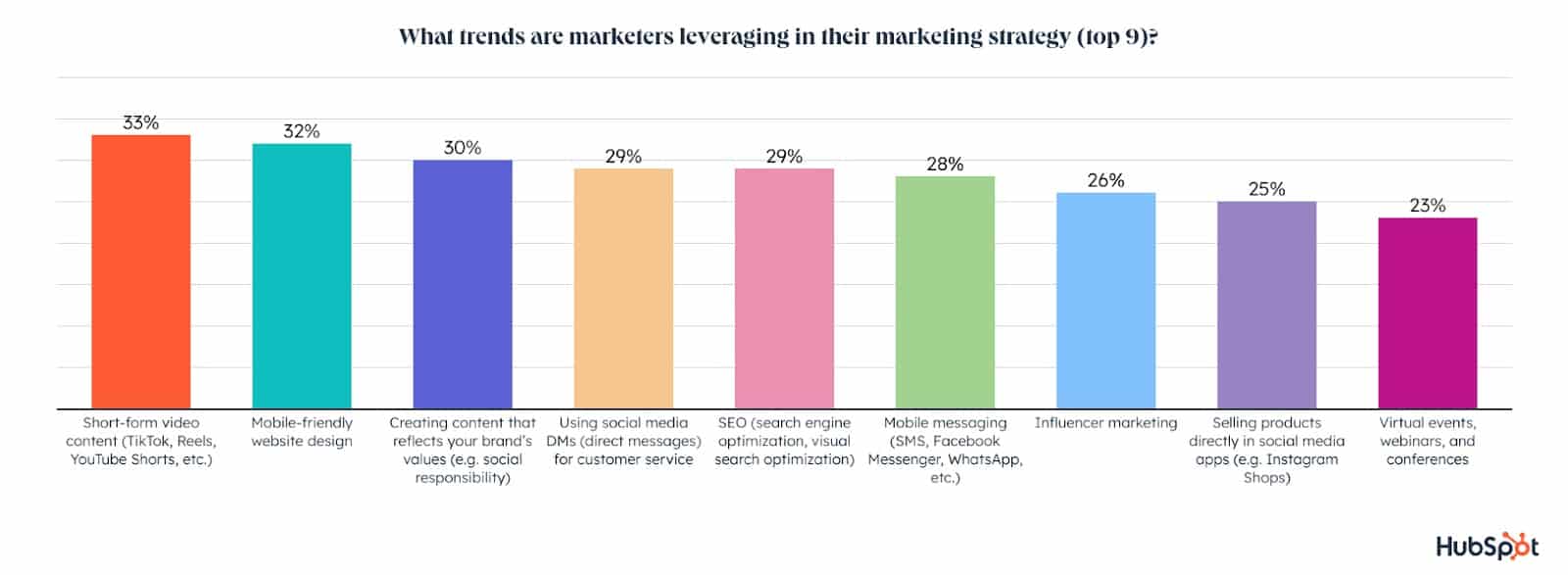
Engaging visuals, compelling narratives, and expertly edited content keep viewers hooked, prompting them to take desired actions such as liking, sharing, and commenting on your content. User’s social engagement with your video content is rated as one of the top three most important metrics that marketers use to measure the effectiveness of their content marketing strategy.

graph showing marketing trends
Source: HubSpot Blog’s 2023 Marketing Strategy & Trends Report

Versatility across platforms

It’s vital that video production teams understand the importance of tailoring content to different platforms. Videos should always be optimised for various channels, such as social media, websites and email campaigns. Whether it’s a short promotional clip, an educational tutorial, or a brand story, an effective, professional video team use their expertise to ensure that your videos are optimised for maximum impact and effectiveness on every platform.

woman editing a video at a computer

Time and cost savings

Producing videos in-house sounds like a good idea, however the reality is it can often be time-consuming and costly and is more likely to produce poor quality results. By involving a professional video production team, their wealth of experience and efficient processes mean that they can deliver professionally produced videos, within your budget and timeline – providing valuable time and resources back to you.

Next steps for video content production

Incorporating video into your marketing strategy is no longer an option but a necessity. If you need to kick-start video production but lack the resources and expertise for your next video project, the Video & Motion team at Torpedo can help!

We offer guidance on video marketing best practices, trends, and strategies that align with your business goals, whilst also providing insights that can help you optimise your video content for maximum impact and ROI.

More for you

See the blog

LinkedIn Content Creation for Personal Branding Success

Sandra
Sandra 7 min 21 Jun 2023

Personal branding, by definition, aims to promote you as a thought leader and expert in your niche. Plus, if executed correctly, it can also significantly benefit your business as it helps to promote your vision, services or product in a natural, non-salesly way.

In our recent blog, we explored the complexity of the modern B2B procurement process, and discovered that 90% of B2B buyers start their buying journey with online research. By creating the right content strategy for your LinkedIn presence, you’ll be able to proactively create demand for your product or service, helping prospective buyers realise that your solution could help solve their problem.

Staying consistent with your LinkedIn content will also help to educate your prospects about your offering. This means that the leads you get from LinkedIn will be higher in quality and the sales team will find them easier to close (once your prospects are ready to buy).

Find your LinkedIn voice

Although your LinkedIn presence usually relates to your company or the company you work for, it’s important that not everything you say is purely promotional. The best way to craft an effective communication strategy is to explore and define the top content pillars you’ll cover with your LinkedIn posts, as they’ll rely heavily on your expertise and the niche your business operates in.

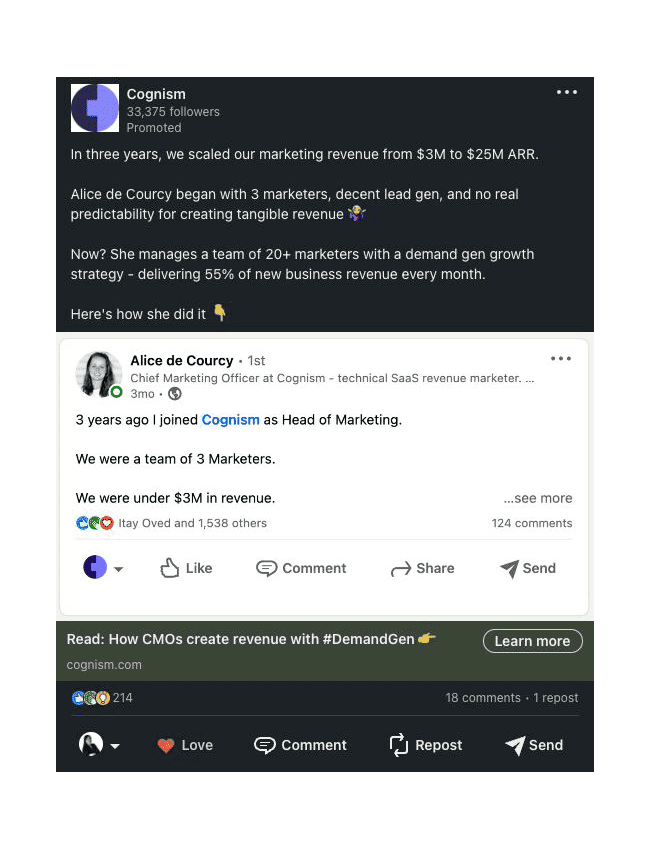
A great example could be employees of Cognism, a sales intelligence platform. Cognism is well known in the sales and marketing space for ditching the traditional playbook of lead generation and swapping it for demand generation. Therefore, education about demand generation and its benefits is the primary topic covered by Cognism internal experts.

Because my LinkedIn feed is now constantly filled with posts from Cognism employees (I follow them all because their LinkedIn content is SO good), whenever I think about demand generation, I think about Cognism. It’s a brilliant way of creating awareness and strengthening brand recall!

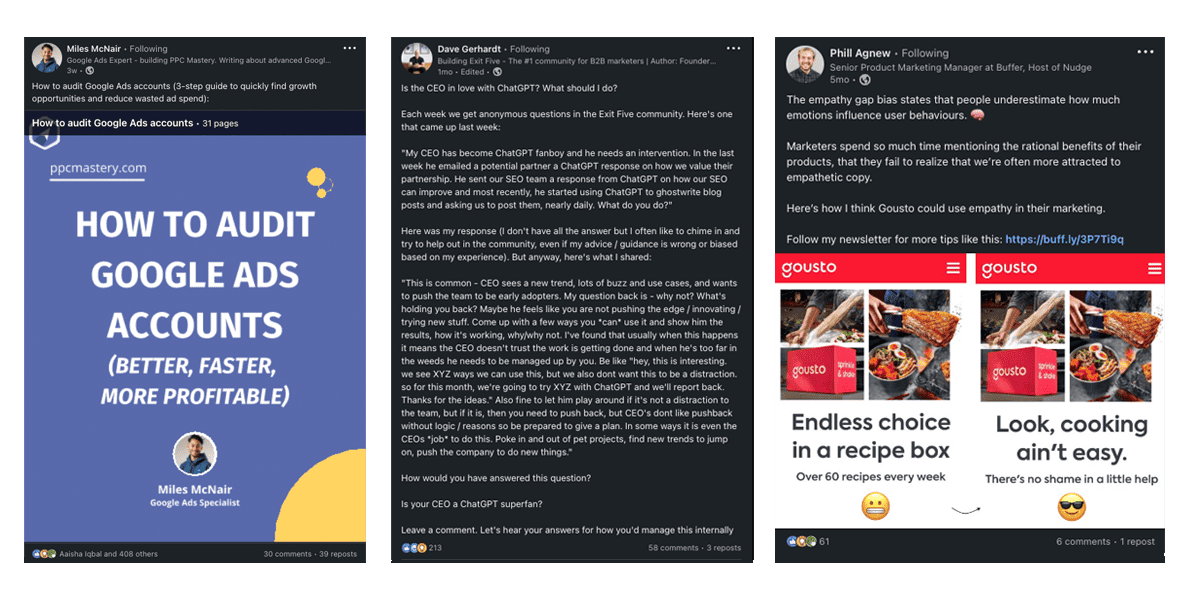
Below: Example post from LinkedIn.

LinkedIn Content Creation for Personal Branding Success

LinkedIn content creation

When it comes to LinkedIn content, there are many ways to approach native content creation for LinkedIn. One of the most common challenges that we observe, especially with busy stakeholders, is that they have little time or the skills to become LinkedIn content creators.

To aid these challenges, the services of a ghostwriter could prove invaluable (and is popular amongst start-up founders and entrepreneurs). These are particularly helpful for people who don’t believe they have great copywriting skills or who simply don’t understand the intricacies of LinkedIn. At Torpedo, we can help you craft LinkedIn content that resonates with your audience.

However, if you’d like to give it a go yourself, here are the most effective LinkedIn content frameworks to help you get started…

Six examples of content frameworks that work

1. The List Post

  • A great way to share a set of rules, steps, benefits etc.
  • Provide the reader with insightful information presented in an easy-to-read format.
  • Top tip: To make this format more engaging, try using carousels – these will make your content much more digestible!

2. The Conversation Post

  • Provides an opportunity to present your story in a more engaging ‘conversational/chatty’ tone.
  • Top tip: These posts work well because they allow readers to imagine the situation and play it out in their mind, meaning that they are likely to remember it.

3. The Promo Post

  • Gives your audience a flavour of what to expect when they click on your link. Lead with upfront value as this keeps the engagement high and maximises your efforts to promote external content.
  • Top tip: Don’t go overboard and be too promotional!
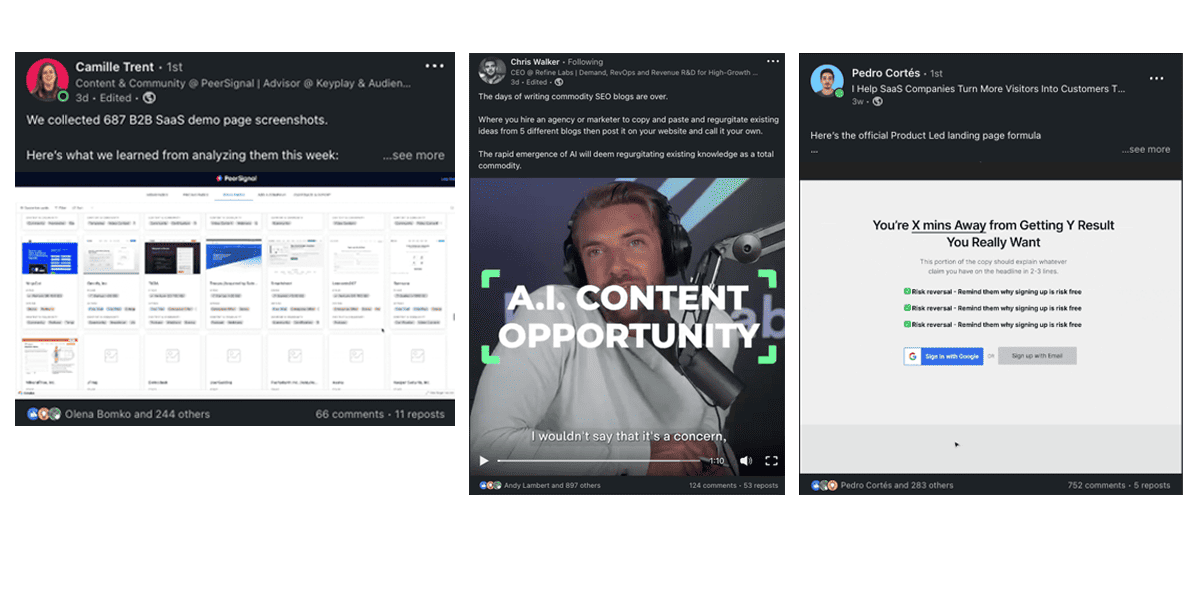
1. The List Post 2. The Conversation Post 3. The Promo Post

4. The Teardown Post

  • A simple format proven to show enormous engagement as it’s used to break down the success of something.
  • These posts are widely used by growth marketers to showcase case studies, analysis, in-depth breakdowns of success stories, or observations that yield meaningful results.

5. The Video Post

  • An excellent way to build a strong, sustainable following and position yourself as a credible industry expert.
  • Top tip: To create great performing video content, you can use a short snippet of a vodcast, a “story-like” video, top takeaways from a webinar, or even a TikTok video. If you need professional help with editing as part of a marketing campaign, reach out to our video team at Torpedo and we will help you create engaging video content for LinkedIn.

6. The Experimental Post

  • A great way to establish your voice in a specific niche.
  • An excellent example of an experimental post: A video of landing page teardowns based on UX best practices (this could be used by UX experts).
  • Top tip: Be creative! Always A/B test different types of content to define your LinkedIn content strategy!
4. The Teardown Post. 5. The Video Post. 6. The Experimental Post

Engaging with your audience

Michael G. Scott, the infamous Regional Manager of a fictional B2B paper company, Dunder Mifflin (The Office nerd alert!), once said: “People will never be replaced by machines. In the end, life and business are about human connections. And computers are about trying to murder you in a lake. And to me, the choice is easy.”

Today, this is more relevant than ever. With all the buzz around AI and new technologies, it’s harder than ever for people to create meaningful interactions.

The same goes for building business relationships. Chances are, your prospects already feel overwhelmed with the amount of information they are being exposed to every day, especially when it comes to B2B content. White papers, ebooks, and webinars are perfect for self-conducted research towards the bottom of the funnel. However, when it comes to learning about the brand, your prospects are more likely to rely on personal recommendations or engaging with something interesting that they saw on their LinkedIn wall.

With LinkedIn, the real power of the personal brand lies in those one-to-one interactions that you make with your audience.

Don’t just reply to comments shared by your audience but also comment on posts your prospects are sharing, to give your profile an immediate boost. You can also continue interesting conversations via direct messages – which could be a great start to a business relationship.

It’s important to always remember that LinkedIn engagement is a two-way street. A common mistake seen with LinkedIn creators is that they often rely on others to follow and engage with their content. In reality, they should be proactively reaching out to others. There isn’t much point in creating content if no one knows you exist. Therefore, it’s incredibly important that you comment on other users’ posts to gain visibility of your own profile (did I also mention how much you can learn from them?!).

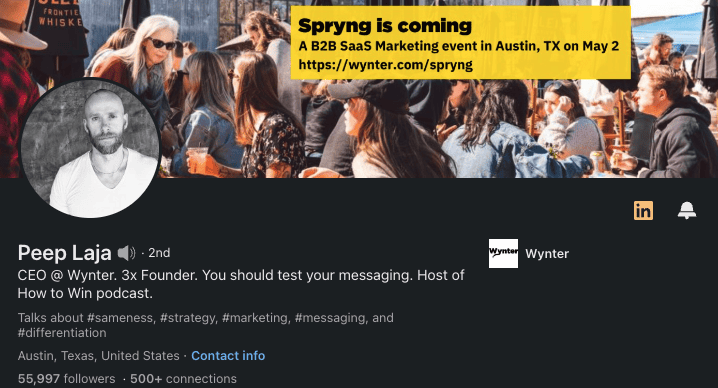
Below: Peep Laja is an excellent example of how to interact with the audience and provide added value. Source: LinkedIn.

LinkedIn Content Creation for Personal Branding Success

Employee advocacy programs

It’s a known fact that social media users engage more with personal content than they do with company updates, which is why many businesses have now deployed employee advocacy programs to organically distribute branded content via their employees personal accounts.

LinkedIn recommend this strategy: “People follow brands on LinkedIn, but they engage with the people behind those brands. Encourage your employees to become advocates and ambassadors for your LinkedIn presence – when an admin posts on their Page, 30% of the engagement comes from their employees, who are 14x more likely to share that content vs. other content types.”

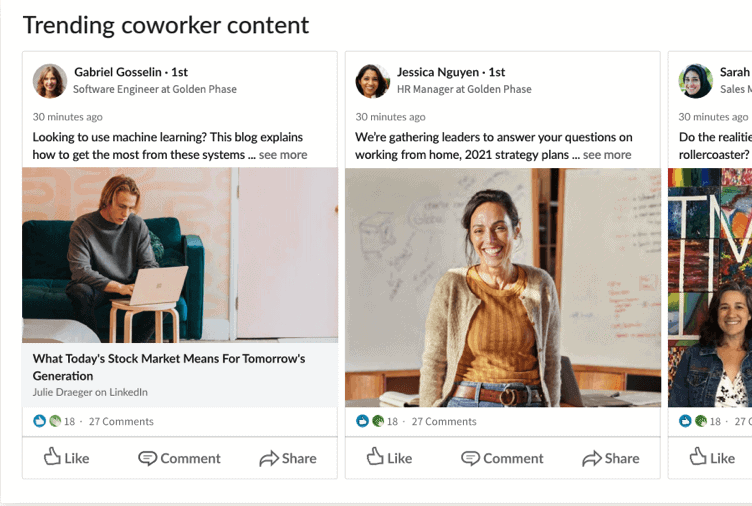
LinkedIn quickly recognised this opportunity as they now provide all the tools you need to leverage the power of employee advocacy via the My Company tab. This means that business employees can use the tab to share posts curated by the marketing team and join in on important conversations.

Source: LinkedIn
Source: LinkedIn

Next steps for LinkedIn content creation

If the content creation ideas above sound great, but you need some expertise in setting up or boosting your LinkedIn personal brand, the Digital Marketing Team at Torpedo can help. Our in-house experts can conduct an audit of your profile, work with you to create a LinkedIn/Personal Branding strategy, generate engaging content, and define your LinkedIn presence to help you get the best results possible as part of a highly effective B2B lead generation strategy.

More for you

See the blog

Mastering LinkedIn Personal Branding for B2B Success

Sandra
Sandra 9 min 7 Jun 2023

Personal branding used to promote mainly public figures and celebrities, but in recent years it has taken the world of modern business by storm. A strong personal brand helps modern B2B leaders stand out in competitive fields.

People buy from people – and this is particularly true for B2B organisations, where the average deal size is significantly higher than its B2C counterparts. Your personal brand can help establish trust and build relationships, which could be a deciding factor when it comes to converting a sale. In simple terms, an established personal brand can help you drive revenue.

When it comes to branding yourself, there are many online mediums you can use to build your presence. But, none can match the advantages of LinkedIn – a social media platform that enables you to reach 900M professionals in 200 different countries and regions worldwide.

In this blog, our Personal Branding expert will walk you through the foundations of establishing a strong personal brand on LinkedIn and how you can best leverage it to drive B2B marketing success.

Definition of a personal brand

A personal brand is a unique value proposition that you bring to your organisation and the wider industry. A personal brand is intentional, and it’s all about how you want to be perceived. It involves establishing your expertise, values, and personality in a way that reflects positively on your company and helps you stand out in your industry.

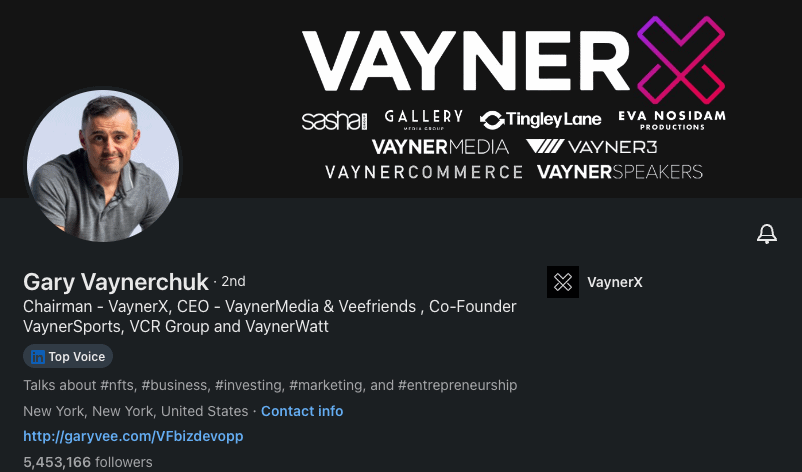
A great example of a strong personal brand in the marketing world is Gary Vee.

Gary’s personal brand is a great example of a “founder’s brand”, where brand awareness and positioning of an organisation are generated through a personal profile of its founder/top executives. This practice is especially popular in tech start-ups and niche companies.

So, if you are a business leader focused on spreading the word about exceptional leadership skills or a B2B Marketing Director who could talk about successful GTM strategies for hours, LinkedIn gives you a platform to bring your personal brand to life and expand it globally.

Source: Gary Vee on LinkedIn

Importance of LinkedIn in B2B sales and lead generation

Now that we know what a personal brand is, where does it belong in a B2B lead generation strategy?

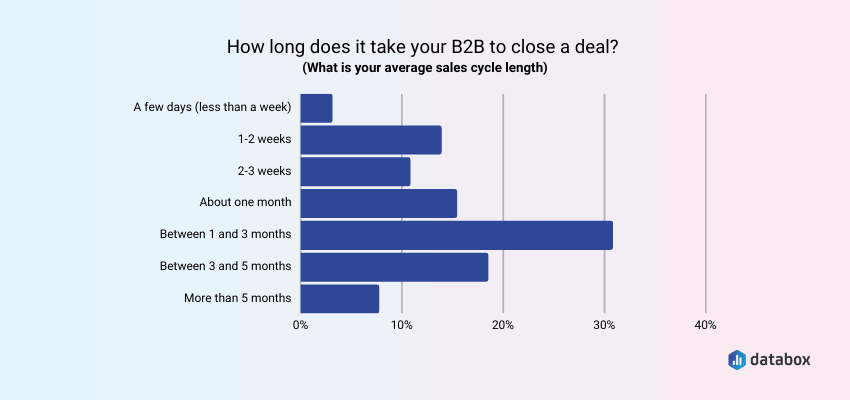
Building credibility and trust in B2B is crucial, especially as the sales cycle is notably longer. According to Databox, the median value of a B2B sales cycle length is 2.1 months. In some instances, it can take up to six months for a company to decide on whether to buy (or not) from you.

Source: Databox B2B Sales Cycle Length

What happens during this time?

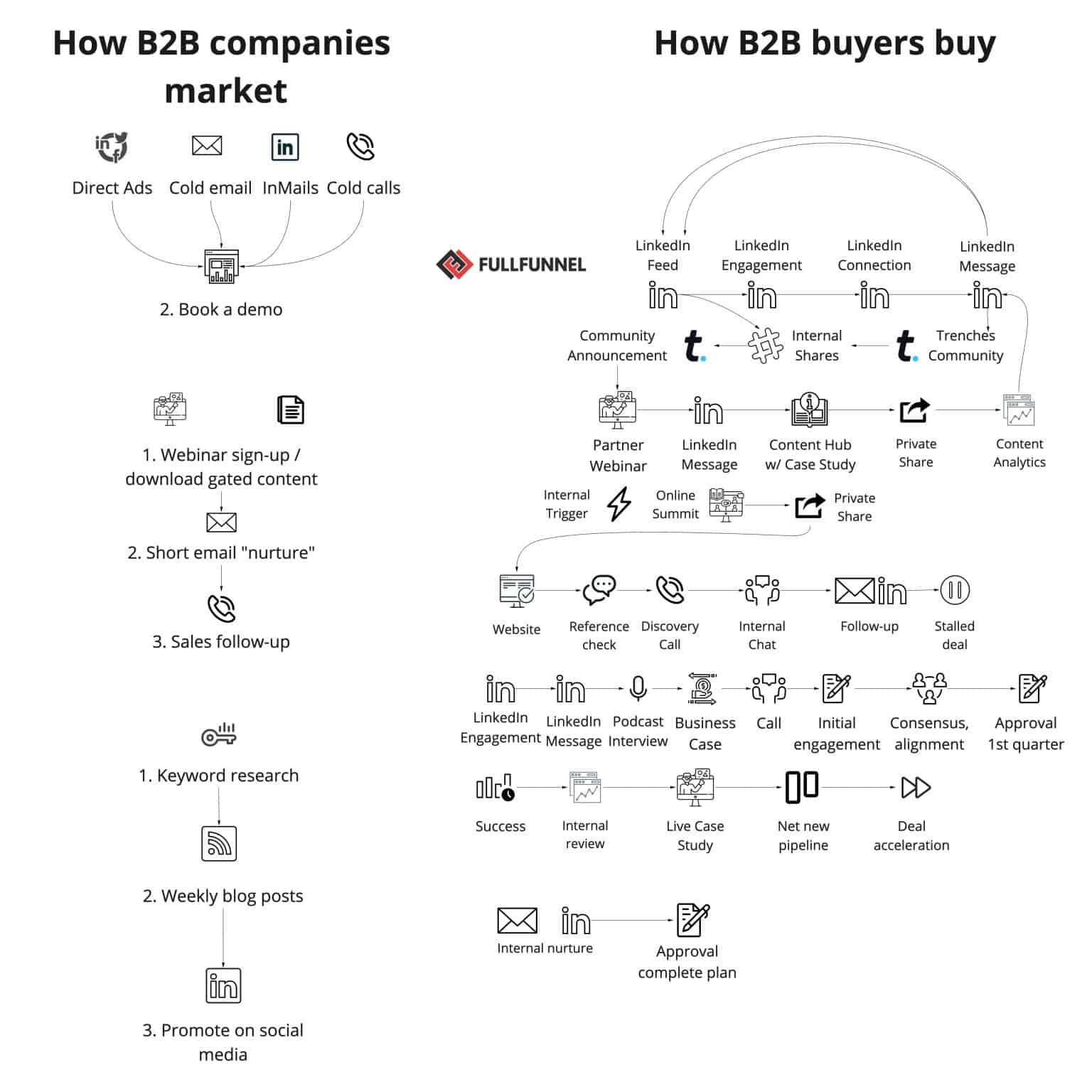
First off, your solution will be evaluated by multiple stakeholders. From process influencers through procurement, financial teams, and budget holders, there is a good chance every person involved in the buying process will carry out their independent research. And LinkedIn is one of the places they will go to for help.

The diagram below accurately illustrates a modern B2B buying process:

Source: fullfunnel.io

Have you heard about the 95-5 rule?

LinkedIn’s definition of the 95-5 rule is that 95% of your potential buyers aren’t ready to buy today. This 95% are “out-of-market” today but will be “in-market” sometime in the future – so it’s important that you create a demand for your product before they are ready to buy.

Once potential buyers are in the market for a solution like yours, Gartner’s research discovered that B2B buyers loop around different stages multiple times before making their decision. The same research also showed that salespeople have only 5% of customers’ time during their buying journey – so it’s important that you become that go-to person when your prospect is ready.

How LinkedIn comes into play

LinkedIn allows you to effectively connect and engage with B2B decision makers before they are even aware of their challenge, let alone your product. An established personal brand will help you become a go-to expert once your buyers recognise their challenges. They may even bring you qualified leads outside your audience as referrals.

Having an established personal brand can also increase your perceived value. As you grow your personal brand and you become an expert within your niche, people will start thinking about you on a more emotional level and will connect with you more deeply, increasing your value to them.

When it comes to choosing the right platform to build your personal brand on, LinkedIn is an obvious choice. The platform describes itself as a place “where professional relationships are forged, careers are developed, and business is done.” According to research from Kurve, 80.33% of B2B leads are generated through LinkedIn.

What makes LinkedIn truly unique when compared to other social media platforms is its authenticity and business focus. In contrast to fun-focused social channels, LinkedIn’s feed is filled with substantive, in-depth content, which is often curated by thought leaders with strong personal brands.

Company page vs. Personal profile

Now, you might argue – why do I need a personal brand if I have a company page?

The answer is easy: LinkedIn, like any other platform, has a complex algorithm and in LinkedIn’s case, it favours personal content.

If you log in to your LinkedIn account, chances are that 80% of your feed will be filled with posts from people you follow or are connected to. The remaining 20% will be split between paid ads and content from companies you follow – which explains the lower engagement rates that can be observed on business pages.

To succeed in the LinkedIn environment, you need a personal profile that combines the best of both worlds – business content and personal touch. This can be achieved with a personal brand.

Mastering LinkedIn Personal Branding for B2B Success

Think of LinkedIn as a massive networking event – where people meet and exchange ideas, which can eventually turn into fully-fledged business opportunities. However, to make those deals happen, you need to have an established personal brand.

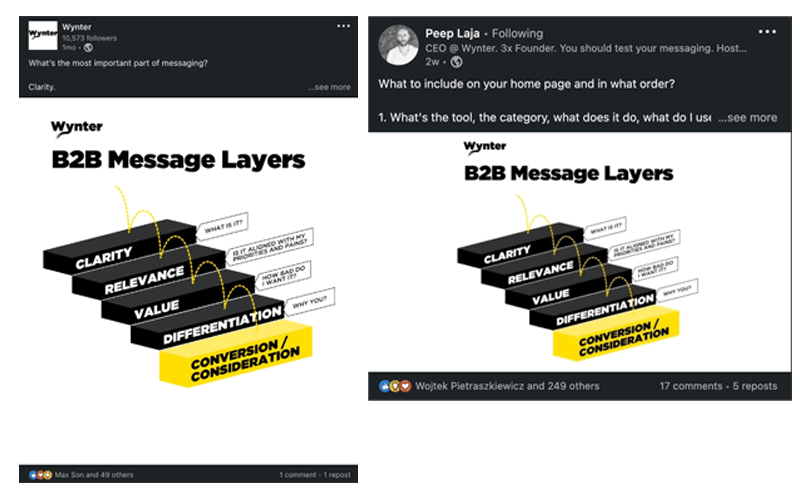
A great example of a B2B tech brand that understands the importance of personal brands and their role in B2B marketing is B2B messaging testing platform, Wynter. As a part of its social media strategy Wynter not only distributes informative content through its own profile, but also works with its employees to promote the content through their networks. Although Wynter’s LinkedIn profile consists of an excellent content mix, the truth is they wouldn’t reach as many people if it wasn’t for Laja who amplifies it through his personal account.

Mastering LinkedIn Personal Branding for B2B Success

The biggest difference between business and personal profiles is that individual accounts see a massive spike in engagement and interactions when it comes to promoting business content.

In the example below, it’s clear that although Wynter and Peep shared the same image and similar message, the overall engagement varies significantly between business and personal profiles. This is something worth considering when it comes to planning a B2B content distribution strategy.

Source: LinkedIn
Source: LinkedIn

Building your personal brand on LinkedIn

Optimising your LinkedIn profile for personal brand…

Starting a personal brand on LinkedIn can be challenging, especially if you are low on spare time or you don’t have enough knowledge about LinkedIn and how it works. However, before we move to strategy, let’s make sure that you have the foundations right.

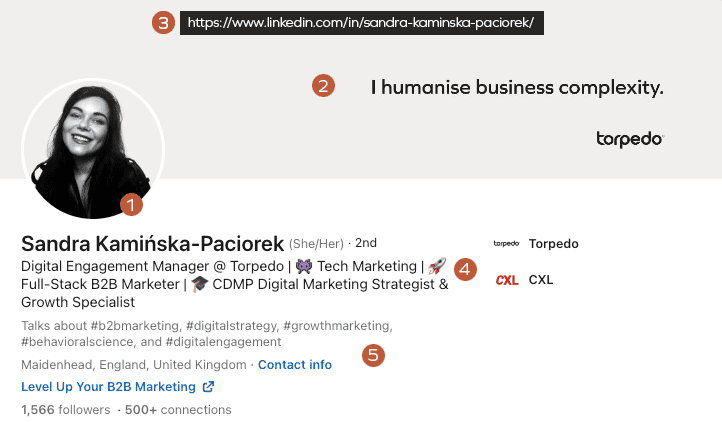
To get your profile visible on LinkedIn, it must be properly optimised. Here’s what you should be paying attention to:

Mastering LinkedIn Personal Branding for B2B Success
  1. Profile picture – a key part of your profile. A professional, clean, and high-res picture creates trust and gives your profile credibility. A cut-out photo from a family event or a party is a big no-no. Make sure that your profile picture accurately represents your industry and character.
  2. Cover photo – be as creative as you’d like! If you’re looking to build an audience around your personal brand, use this space to highlight your skills or topics you cover. If you are in sales, for example, the cover photo can be used to showcase your product/service and your contact details.
  3. Profile URL – when you first sign up to LinkedIn, the platform will provide you with a URL that contains both your name and randomly assigned characters to differentiate your profile from other users. You can, however, customise this URL to make your profile more findable. You might choose to only include your first name, or you can add a unique differentiator to it (for example, linkedin.com/in/sandra-kaminska-paciorek-growth-marketing-expert).
  4. Title – don’t just settle for your job title. Use this space to optimise your profile for both your audience and the LinkedIn algorithm. Use the keywords you want to be known for, such as: Growth Marketing, B2B Marketing Expert, Tech Marketing. By writing your headline in this way, you’ll give your profile visitors an overview of your expertise so they can make an informed decision on whether they should follow you.
  5. Creator mode – a profile setting that can help you grow your reach and influence on LinkedIn. By enabling it, you can benefit from an added section to talk about your expertise, a “Follow” button, and an option to add a customisable link to your website. Creator mode also helps with the discovery of your profile as you will become eligible to be featured as a suggested creator to follow. Another notable benefit is the entirely new suite of tools that you can leverage to build and engage with your community including LinkedIn newsletters and advanced analytics.

Creating and sharing valuable content

It’s not only about optimising your personal LinkedIn profile though. You also need to consider your content strategy.

Imagine you are selling a MarTech tool – how do you make people want to trial it, especially if awareness levels of your product are low? You certainly don’t want to force it down your prospect’s throat by sending a link to it via a direct message as soon as they accept your connection invite. Instead, you should be consistently sharing content that explores the benefits of your tool and how it helps to solve the challenges your audience might be facing.

If you want to be successful on LinkedIn, you need to be consistent. Unfortunately, this isn’t always the case, especially for busy executives. So how do you come up with a LinkedIn content strategy that generates conversions?

LinkedIn content strategy

LinkedIn is a fast-growing platform with new features added regularly. And, as with any other social media platform, it might be challenging to keep up.

If you are thinking about generating a LinkedIn content strategy, our upcoming blog LinkedIn Content Creation for Personal Branding Success will provide you with expert knowledge on the content frameworks available in LinkedIn.

To help you leverage all the core capabilities of LinkedIn, you can seek professional help from a B2B marketing agency like Torpedo which can conduct an audit of your LinkedIn activity to date, other influencers in your niche, and what you can do to outperform them. If you are planning to roll out an idea of personal branding to your entire team, we can help too.

Conducting a LinkedIn audit will present you with multiple opportunities including content gaps, topics other influencers cover, and how you can align your LinkedIn strategy moving forward so it supports your brand’s values. Based on the audit findings, you will then be able to define an effective LinkedIn content strategy.

More for you

See the blog

Abracadabra! Is martech magic?

Marie
Marie 1 min 27 Mar 2023

Is martech magic? You’d be forgiven for believing it is. But the truth is there’s no magic when it comes to strategic marketing. However, there is a lot of clever technology, and there’s a right way to use it to create bigger, better impacts.

It takes more than buying new tech to pull the rabbit out of a hat. Like all ‘tricks’, the real magic lies in understanding the basic principles, having access to the right tools, knowing your audience, putting in lots of practice, and tweaking things when they don’t work so well.

We’ve partnered with B2B Marketing to produce a report on martech in 2023. It’s called B2B martech: The marketing leaders’ perspective, and it’s the combined insights of top CMOs from a variety of sectors.

Their thoughts include:

  • Making the most of the martech stack
  • The need for martech skills in your team
  • Martech ROI and why it matters

Want to know the magic behind successful martech strategies in 2023? Download our spellbinding report today.

Download your copy of the report today!

More for you

See the blog

Approaching content research from an SEO perspective

Richie
Richie 1 min 30 Jan 2023

Content is one of the most important aspects of SEO. It conveys what sites are about and helps with indexing. So it’s not only helpful for users, but also for search engines. The problem is everyone knows this, and competition is fierce – especially for more popular queries. This article explains how to approach content research with SEO in mind.

Millions of websites regularly churn articles in the hope of getting more visibility and traffic. However, that’s not always what it’s about. Sure, having more visibility on Google will increase your chances of being seen by potential clients, but what if the traffic you’re getting isn’t what you need? I.e., users that will convert.

In this blog we explain how to approach content creation and reach the right people, without wasting valuable resources such as manpower and money.

1. Know your goal!

Not all companies have a clear vision of what they want to achieve. Do you want more visibility? Do you want to squash a specific competitor? Do you want to sell a service or a product? All these different types of goals mean a different approach to research.

2. Know your existing clients

A user-centric approach goes hand-in-hand with SEO. This is a valuable resource because it’s a user group you know more about. Often, companies aren’t maximising all the potential ways to gain information from this source. You know what they bought and what they needed. But are you actively logging their questions and issues with your product? Any positive feedback they might have? What are their wishes? You should also be actively seeking feedback from these clients. This will not only improve your services and products, but also ensure you supply relevant content to potential new ones.

3. What other search queries are coming in?

Are you getting questions from some of your leads? Do the same questions appear repeatedly? What’s stopped them from using your services or products up to now?

4. Check Google results and search bar

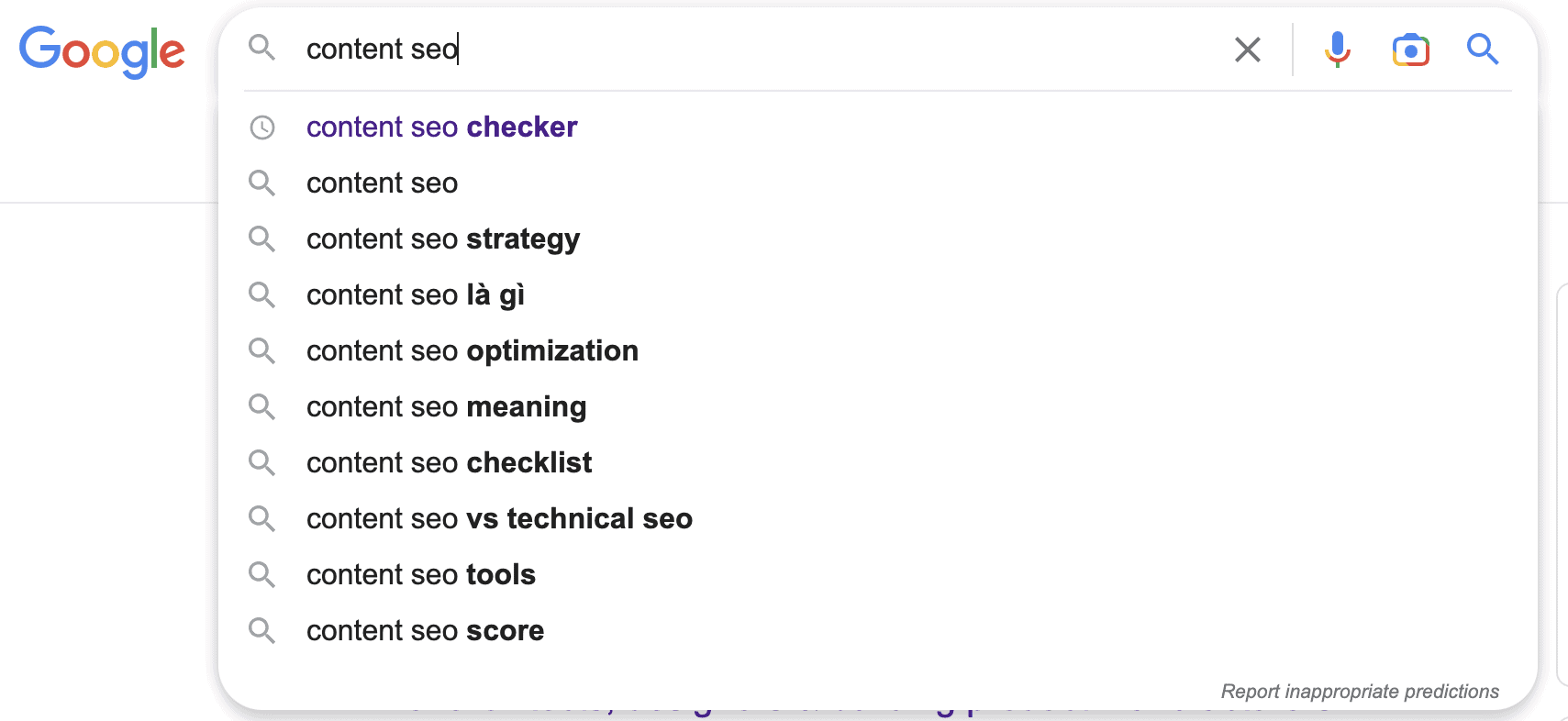
Google itself supplies a lot of info already. For example, if you start typing a search query, it suggests commonly entered keywords. You will also see the top-ranking results for the entered query and can use them as inspiration for your content (but we’ll get to this later). Your query depends on what you want to be seen for. If it’s digitalisation services for the financial sector, then type that.

Suggested search results in Google search bar
Suggested search results in the Google search bar are helpful for content research.

5. Wikipedia

Ok, this is a bit of a weird one, but hear me out: Google LOVES Wikipedia. The encyclopaedia ranks in the top positions for pretty much every query under the sun. Why do they like it so much, you might ask?

Wikipedia’s content success factors:

  • Unique and plentiful content
  • Fresh content every day
  • User intent is well-answered
  • Domain-authority – this is partly due to the age of the site, but also because of millions of backlinks
  • Logical internal linking
  • Many articles are very in-depth and most importantly, well-structured. So, despite the text being long, the user does not get tired of reading it.

6. Keyword research using keyword tools

There are many keyword tools on the market. Some are free but they can have limitations. Others require a subscription such as SEMrush or Ahrefs. These offer a very comprehensive view of the keyword environment including search volumes, search intent, competition, SERPs (Search Engine Results Pages), keyword variations, whether they’re broad or phrase matches, and insights into which keywords domains/sub-domains/sub-folders individual URLs are ranking for. Furthermore, you can also check further areas of SEO such as backlinks. Some of these tools offer great content-writing guides too.

7. PPC

Yes, paid search insights are very helpful for content research. SEO works best if other marketing sources play into it. In this case, PPC is a great way to gain insights into search queries that users have entered and led them to visit a particular page. The click-through and conversion rates can give great insights into whether content is useful and good. You can also decide whether you’d rather target a specific keyword via paid channels or organic ones. Sometimes, your brand name will make you appear very high up in search results anyway and you might be wasting money if you additionally use PPC to boost your search appearance.

8. Competitor research

As mentioned earlier, search engines such as Google can show you competitors that are ranking for the same search queries. Go to their site and find out why they are ranking well. Again, it might be due to a great content structure – helpful and thorough content that answers important questions that users might have. Of course, the age of the site can play a role too. Get inspiration from these sites, but NEVER ever copy it. This is not only morally questionable but can also lead to strikes from Google!

The competitor content also offers an opportunity to look for gaps. Are there any relevant keywords they didn’t use? It’s easier to use an SEO keyword research tool for this – they offer specific reports to help identify keyword and content gaps.

9. Web analytics tools

Tools like Google Analytics or Adobe Analytics can show you important information on how much time users spent on specific pages, how far they scrolled, and how many have bounced. You can use this information to make your content more engaging by adding infographics, expressive images, tables, and bullet points. Indirectly, they also show which content pulls the most valuable customers.

10. Trends tools

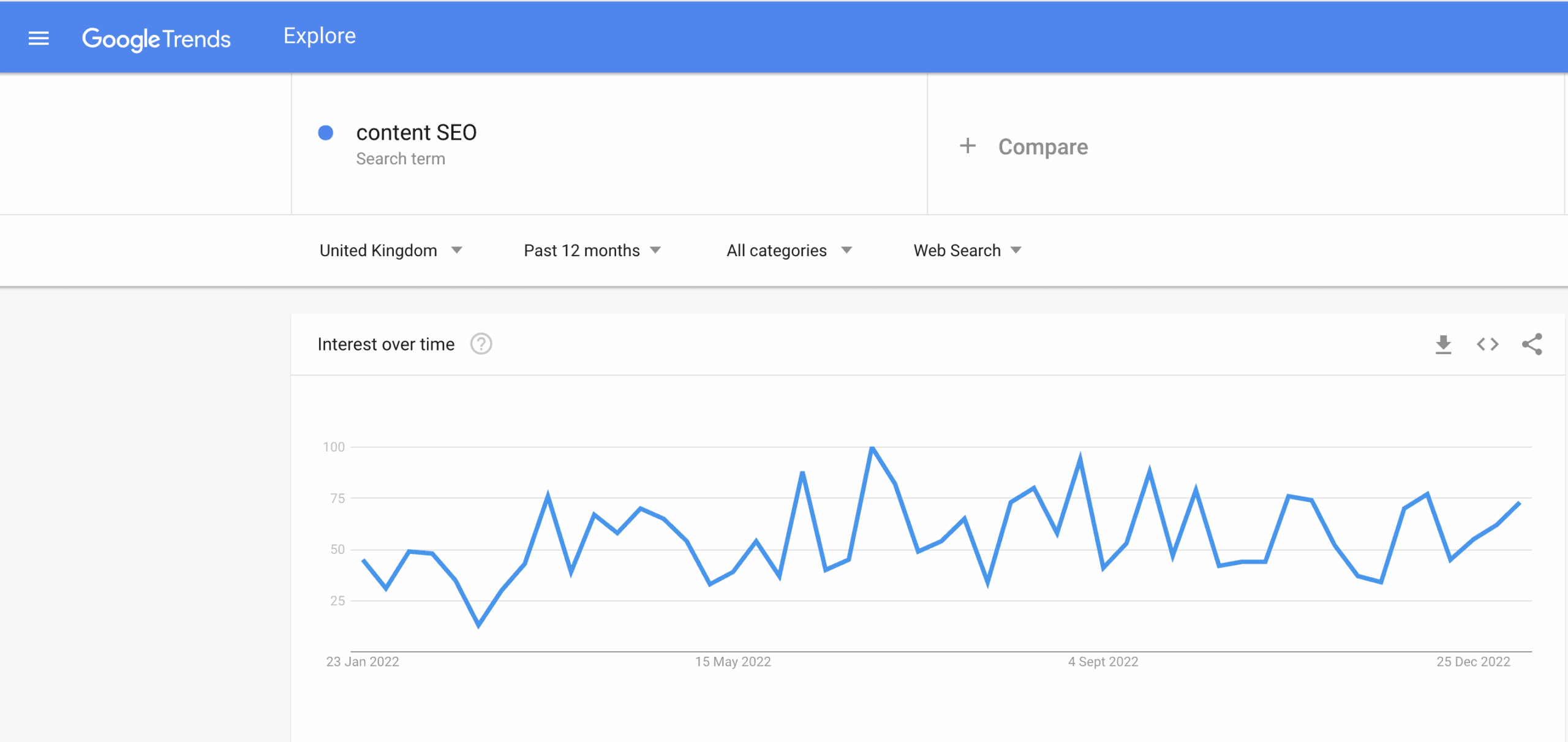
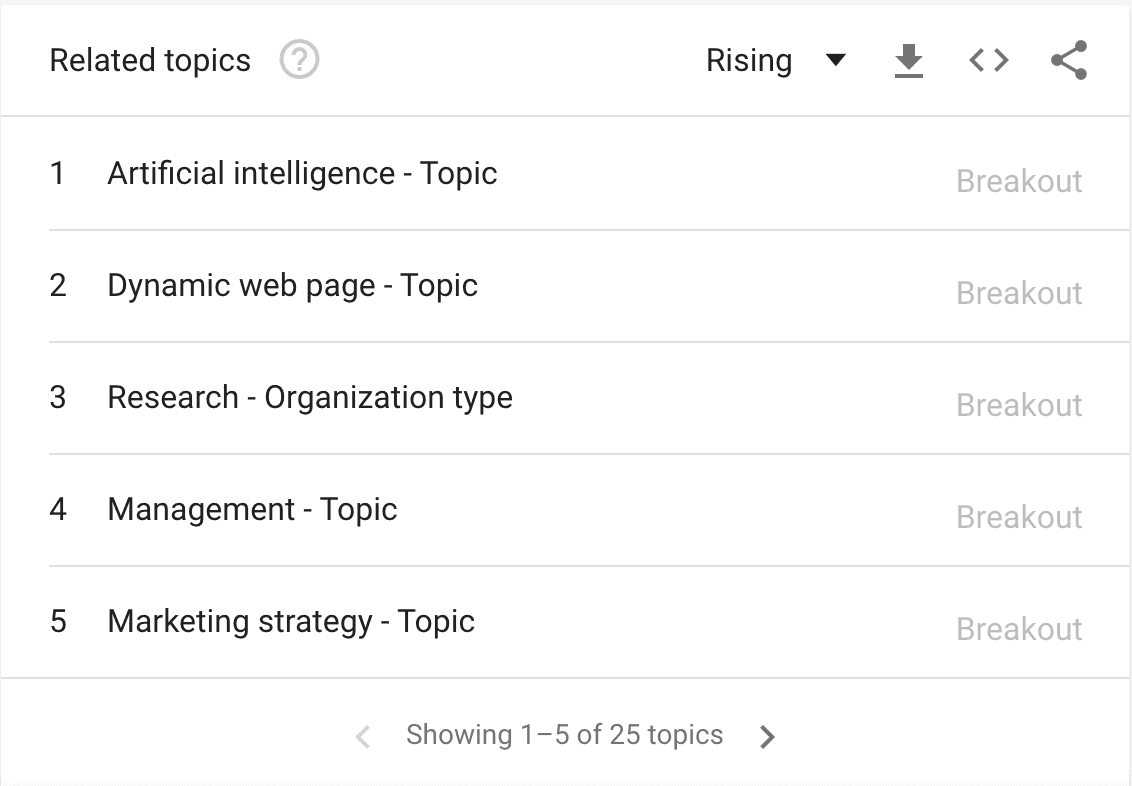
Multiple trends tools such as Google Trends show us how much traction each topic is gaining and in which countries, within a specific time frame. Search for your industry topics and see what’s currently relevant and what has potential.

Google Trends overview for the query
Google Trends overview for the query “content SEO”
List showing Google Trends rising related topics for
Google Trends rising related topics for “content SEO”

11. Decide what is evergreen and what is temporary

The best content to garner rankings and traffic is evergreen content. Evergreen content stays relevant and fresh for a long time period. It keeps and maintains its backlink value – unless the backlink is removed – and signals to search engines that your site is relevant.

12. And lastly, Google Search Console!

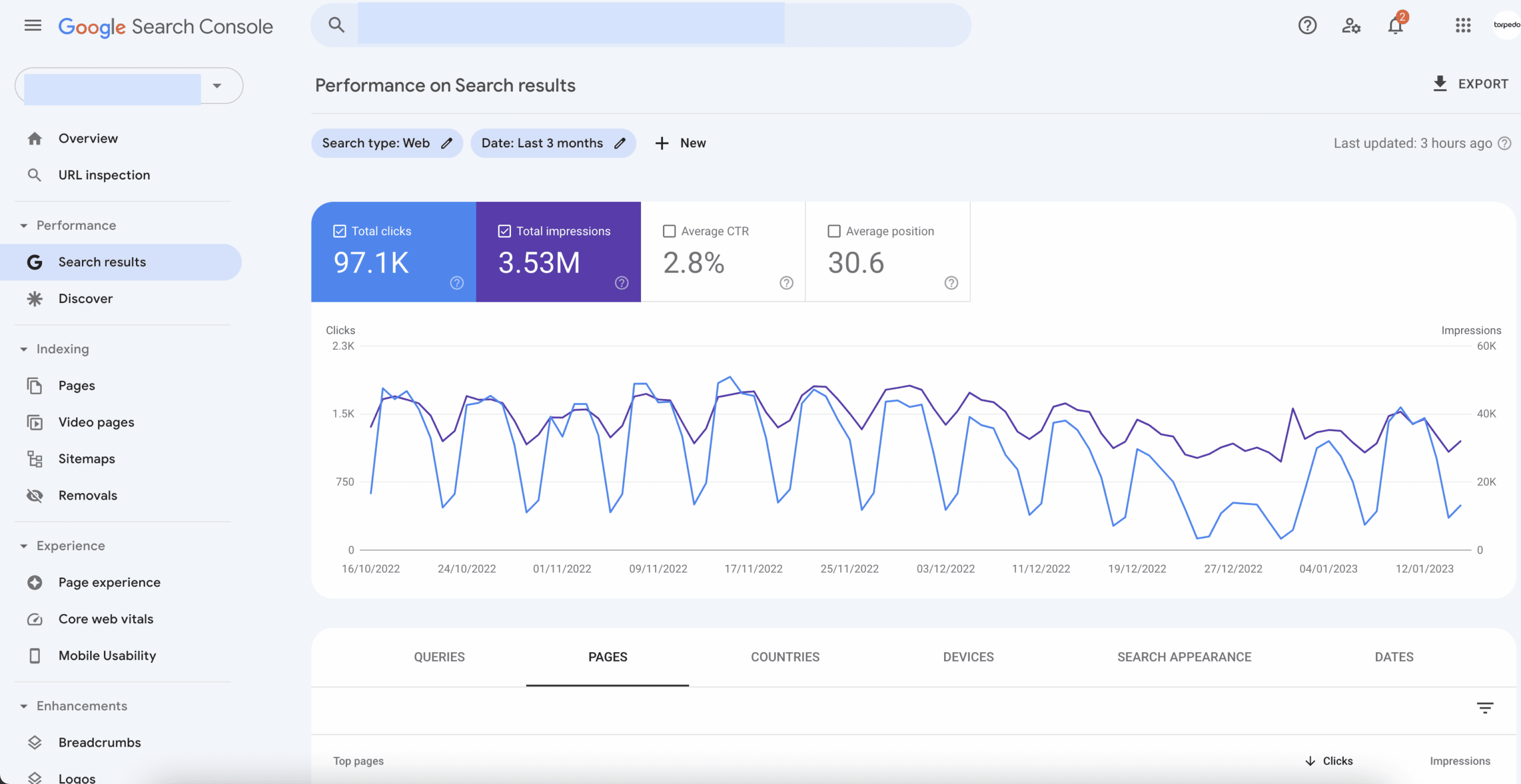
You won’t get more reliable organic search query information anywhere else! Make sure you connect it to your property, and Search Console will not only ensure your site is technically sound and your content is indexed, but it will also give you info on which search queries users entered to visit specific pages. It’s like PPC, but specifically about organic users. You can also get insights into page speed which is important if you have images and videos in your content.

Do you need help with your content? Check out our content marketing service.

Google Search Console Overview
Google Search Console performance overview page

2023 Web Design Trends

Katie
Katie 6 min 25 Jan 2023

Another year has flown by and we’re back in January again! Which means it’s time to have a look at what has been popular, and what will be making an impact in the upcoming months, in the world of web design.

Motion Design

Life in 2023 is always on the move, and this includes how we digest digital content. Whereas social media used to be Facebook posts and Instagram photos, these days it’s Insta reels and Tiktoks. On the whole, users are comfortable with the constant animation style of content delivery that has become the norm, and this is being reflected in web design.

It’s unusual to visit any website these days and not find at least a hint of animation; loading content in, hover states, user interactions – everything moves, and making this happen is becoming a key task in the design process.

The Bloom website has used the flowery theme linked to their name to create a lovely animated experience scrolling through the site, without impacting the content they are delivering.

Screenshot of the Bloom website

Similarly, the use of animation to draw the user in and curate their journey on the Chrysler Building website is a beautiful example of animation and design working together.

Of course, where animation is used, it’s important to include reduced motion fallbacks for those users who prefer a more static experience, and to provide an accessible website, so the design should always accommodate these.

The role of the designer in setting out the motion expectations and designing that experience is becoming more prevalent, and working together with developers to bring everything to life is becoming an important part of web projects.

Screenshot of the Chrysler building website

Container Queries

Although this won’t make a difference to how websites look per sé, it will see a shift in thought from both the designers and developers, and should, in theory, allow for more fluid and responsive layouts at all device sizes, with less effort involved.

Container queries give developers the ability to determine the appearance of an element, and apply styles, according to the width of the container it is inside, rather than the width of the screen it is being shown on.

In real world terms this is like having a sofa, and depending on what room of your house you put it in determines the layout – in your lounge it may be a 4- seater, but moving it to your kitchen it might only work as a 2-seater, even though the width of your house hasn’t changed.

In web terms, it means we can put use the same element in multiple places, and it looks different depending on where it is placed, without the determining factor being screen size.

Browser support has officially caught up and this is now good to use in production websites.
Gradients

This one hasn’t dropped in popularity over the past few years, especially with the aurora gradient trend that has crept in. Gradients aren’t just for backgrounds anymore – they are effective for large standout typography as well as borders and icons.

This example from a 128 design webflow theme shows how using the same gradient for icons as well as headings can keep the brand colours subtly running through a page layout

Screenshot of 128 Design webflow template showing use of gradients on headings and icons

Retro

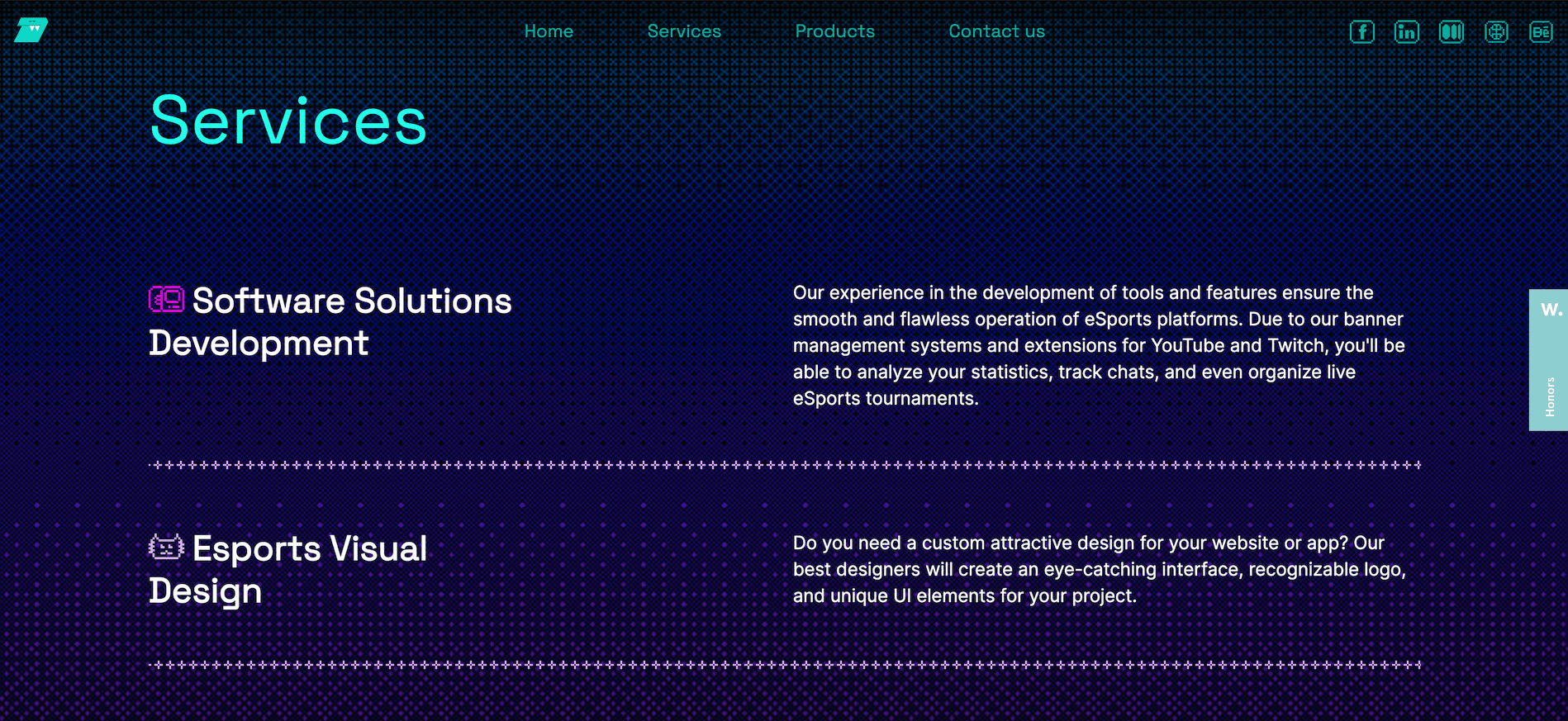
‘Retro’ is an aesthetic that comes around every few years. In fashion terms this annoyingly serves as a way to remind us we’re getting old, when vintage retro to you means 60s, but is now apparently 90s, (which was only 10 years ago right?). Luckily in web design the most retro you can get is 90s, and always seems to stay 90s.

There are differing degrees of how in your face retro you can go. There’s a nice minimal, classic UI style on Chloe Digital which serves well as it allows the design to deliver unique, early 90s operating system vibes, while still functioning as expected. It also has the added fun bonus of allowing you to move the OS ‘windows’ around on the page, like an actual operating system.

One of the biggest mistakes with retro design is to get caught up in the fun design and style, and forget the purpose of the page to begin with. Form over function occurs a lot in attempts to do cool retro.

It is also essential to have the right product for the style – retro simply doesn’t work for everything and could damage trust in your product if used with the wrong intended audience.

Screenshot of Chloe Digital website showing early nineties operating system design style
Screenshot of the 27 nreds website showing pixelated background design and neon colours

27 nerds is another example of retro done well. Perfect target audience, brilliantly executed. Subtle nods like the old school 90s hand and pointer cursors, as well as the lovely pixelated colours backgrounds and neon blue colour, suit the style without detracting from the content. Definitely worth a scroll through to high-five the staff profile pictures.

Screenshot of the 27 nreds website showing pixelated background design and neon colours

AI

There’s little doubt that the increasing influence of artificial intelligence and machine learning on the world of design will continue apace in 2023. Read our recent article to explore some of the positives, negatives and possible dangers of using AI in creative design.

Large Typography

Large text over full screen images and animations, as well as over highly contrasting coloured backgrounds.
Landa is a perfect example of different ways to incorporate large typography into a site. They have it on its own with bright backgrounds, as well as curving and looping around while animating on and off screen as you scroll down the page.

Screenshot of the Landa homepage showcasing effective use of large typography

Overlapping Text

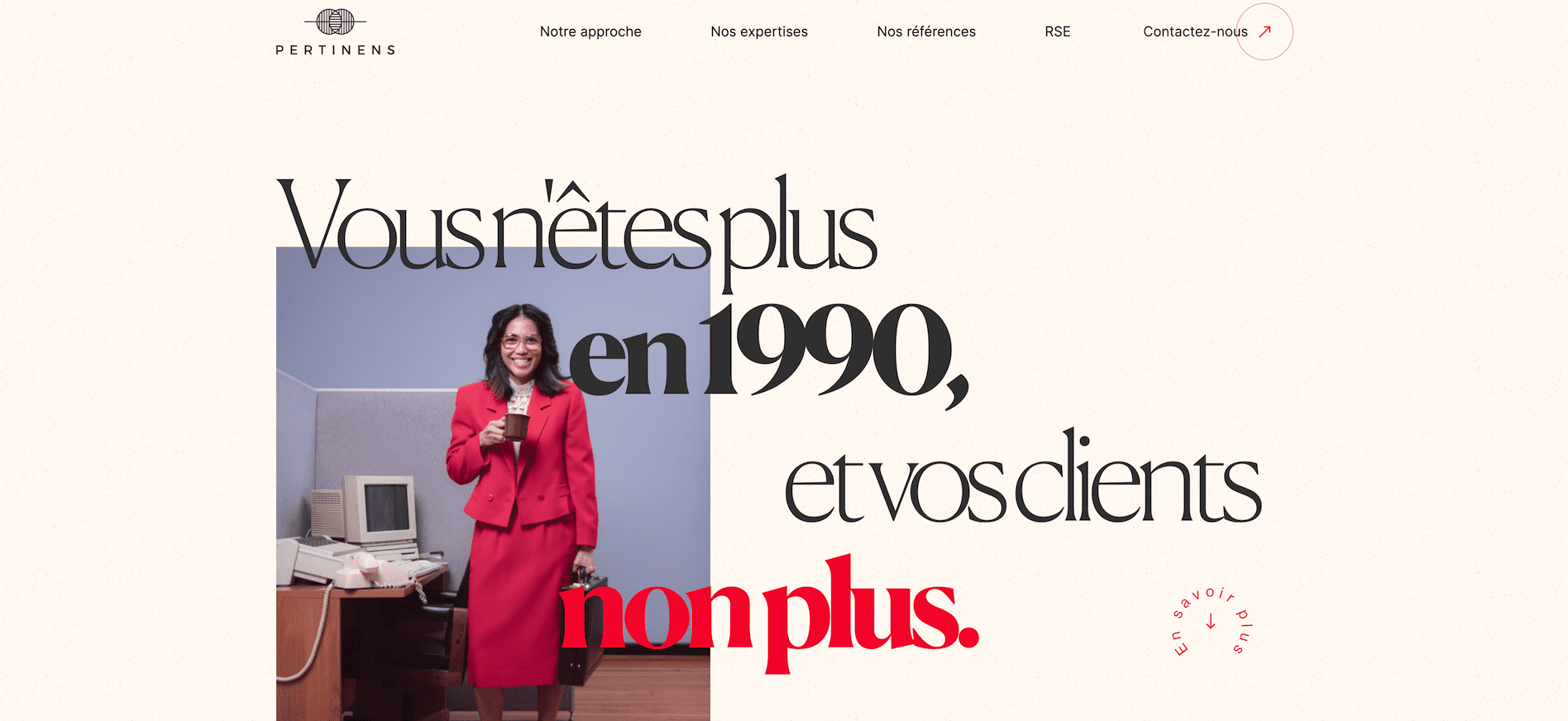
With newer techniques in CSS and sufficient browser support, it’s now easier than ever for us to mimic print layouts or magazine type layouts, while keeping content responsive and accessible, and not having to rely on heavy use of text in imagery.

Screenshot of pertinens website showcasing multiple lines of text overlaping the right 25% of a photo

The Pertinens site has a great example of this, using different colours and font weights across multiple lines, which have a parallax effect applied to them on scroll as they disappear from view.

The Anderson Supply site uses it in a number of ways, both overlapping text above images, and also a lot of large typography and numbering. This once again gives more of a design-led, print feel to the content.

Screenshots of Anderson Supply website showing text overlapping images and large numbered typography

Keep It Simple, and Responsive

Clean, minimal, easy to navigate and find the information you came for quickly (whether on desktop or mobile screens) – these are still the keys to good web design. You can’t go wrong with a well executed, clean and simple page.

It’s easy to get caught up with trying to give your latest design the wow factor, fully loaded with content and imagery. But sometimes less is more, and it’s important to step back and assess whether you need all that content to be shown at the same time. It’s not always about grand gestures, full-screen animation and scroll takeovers, but instead lots of small and subtle micro interactions throughout a site that add consistency and enhance the user experience.

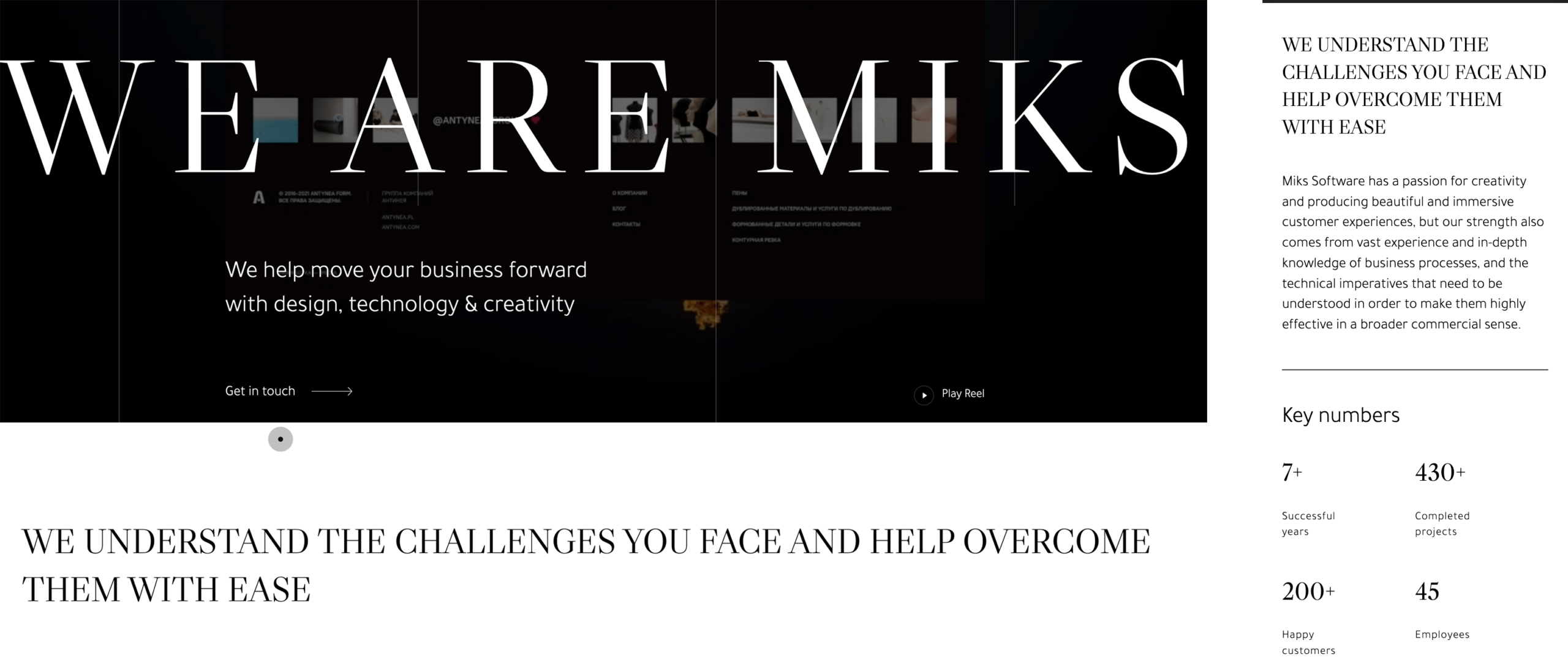
Screenshots of We Are Miks homepage showing desktop and mobile versions

Miks website showcases how a nice content layout may appear simple but is very effective at communicating the facts, and also lends itself to a similarly good experience on mobile screens.

There’s still lots of nice animations and touches that convey quality, but in a more understated fashion that an all-singing, all-dancing website.

More for you

See the blog

9 things you need to know ahead of the Google Analytics 4 deadline

Richie
Richie 7 min 12 Oct 2022

While some marketers are already up to speed with the forthcoming switch from Universal Analytics to Google Analytics 4, and have measures in place, not everyone out there is clued in. If you’re one of them – or you’re just concerned and would like to know a little more about what this means for you – Torpedo has put together 9 questions you should ask yourself about the move from Universal Analytics to GA 4. And to be extra helpful, we’ve provided answers, too.

Content:

  1. What is Google Analytics 4?
  2. What are the differences between GA4 and Universal Analytics?
  3. What’s all this about machine learning capabilities?
  4. Why is this switch happening?
  5. Does this mean a cookie-less future?
  6. Google Tag Manager – what are the benefits?
  7. What about Google Data Studio and the GA4 exploration reports?
  8. What happens with Universal Analytics Data after the tool disappears?
  9. How can Torpedo help you?

1. What is Google Analytics 4?

Google Analytics 4 (or GA4) is the latest major version of Google’s tracking software. From July 1st, 2023, it’ll become the sole option for data tracking from Google for standard customers. For users of 360 – the premium version of Universal Analytics – the equivalent deadline is 1 October 2023. This means businesses must transition ASAP. If you want direct year-to-year data within one report, the best time to have transitioned was back in July – at least for standard users. However, there are still ways to offer this via other avenues.

2. What are the differences between GA4 and Universal Analytics?

The main difference is that GA4 uses a different tracking and data measurement model. In Universal Analytics an event has a Category, Action, and Label and represents its own hit type, whereas in GA4 every hit is an event. In GA4, events don’t have Category, Action, and Label and thus don’t display these. Another difference is that the latest Google Analytics version can track website and app data within one property, instead of separating those into different ones.

Some UA metrics don’t have equivalents in GA4, and vice versa, so there’s a limit to which users can compare the two. Both UA and GA4 are based on different data models and many metrics are calculated differently. Some UA metrics don’t even exist on GA4, but the metrics library is gradually being updated.

Conversions and Goals

In UA, conversions were created when a goal was achieved, and users were only able to use up to 20 goals per property.

Goals are not available anymore in GA4. Instead, it is possible to mark any event as a conversion and there is no limit to how many you can mark.

Users

Confusingly, despite being different, the same name is used for some metrics in both versions of the analytics software. Users are seen as active users in GA4, whereas UA considered them to be the total users.

Bounce rate

Bounce rate was only added to Google Analytics 4 at the end of July. Google has tweaked it a bit. In UA, it was the percentage of sessions with only one pageview or interaction (event). Now three different conditions are measured for a visit to not be deemed as a bounce:

  • a user stays on a page for at least 10 seconds
  • a session consists of two or more page view events
  • the session produced a conversion.

At least one of the above has to be met to be considered an engaged session. If none are met, it’s a bounce. This actually makes more sense now, as users who got what they wanted after only one interaction aren’t considered bounces.

Google also allows you to expand the session timeout (the minimum amount of time a user has to stay on a page to not be considered a bounce). You can do this easily on the new GA4 interface.

Conversion rate

Conversion rate is divided into two types now:

  • Session conversion rate – which is equivalent to the UA version of the conversion rate
  • User conversion rate – here, we divide users who converted at least once by all users

Google Analytics 4 is still in development and, as mentioned before, new metrics (or old ones from UA) are being added continuously. The new analytics software also collects a lot of data right from the start, without needing them set up specifically, such as Page Views, Scrolls, Site Search and Video Engagement. Google offers a helpful overview of all metrics across GA4 and Universal Analytics.

3. What’s all this about machine learning capabilities?

GA4 has been created with machine learning in mind. It fills in data gaps where data may be compromised by privacy settings while keeping users anonymous. The dashboard gives you helpful predictive insights based on these learnings, so you can act accordingly.

4. Why is the switch happening?

The release was a response to regulatory changes such as GDPR, which impact how data can be collected and used.

Browsers and hardware providers such as Apple have already stopped tracking third-party cookies with the use of Intelligent Tracking Prevention. This uses machine learning and on-device intelligence to fight cross-site tracking.

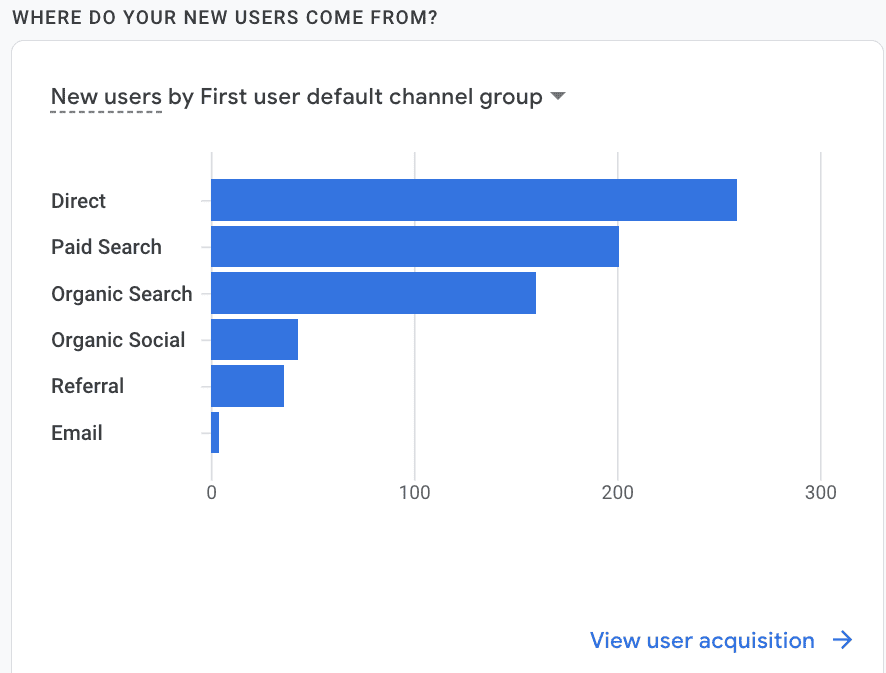
GA4 user source chart

5. Does this mean a cookie-less future?

Following Google’s plan to eliminate third-party cookies in its Chrome browser by 2024, this action marks a shift in the digital landscape. However, the path to a future without cookies has been a rocky one.

The plan was initially announced way back in 2020, but the death of cookies has been postponed several times/yet cookies have had a stay of execution several times. For one thing, Google hasn’t yet found a worthy replacement for them. This newest iteration of the analytics software offers a foundation for a completely cookie-less future, while respecting privacy regulations.

6. Google Tag Manager – what are the benefits?

There are two ways of implementing analytics – you can either add the Google Analytics tag directly to your website, or use a tracking management platform like Google Tag Manager. The advantages with GTM are plenty. The main benefit is, you don’t need extensive coding experience to implement, edit and remove tracking. This eliminates the need to involve developers (for the most part) and thus saves you time. Google Tag Manager offers flexibility and the scope for experimentation, and you can quickly check if tags are working or not, in the preview mode. Make sure to use it together with the GA4 debug mode for a more comprehensive check. GTM also offers a lot of built-in tags for easier implementation, plus, you have a better overview of all the tags, rather than having to look for code snippets on a website. Read our blog post on understanding and implementing Google Tag Manager (GTM).

7. What are the advantages of Google Data Studio and the GA4 Explore reports?

Explore and Google Data Studio (which has now been rebranded Looker Studio) are extremely useful for making sense of the plethora of information GA4 offers. Google Data Studio (GDS) is especially intuitive, and produces easy to read and attractive reports. Although Google Data Studio or Looker Studio gets updated regularly, it’s still a familiar environment to view the measured data. It’s easier to calculate metrics that don’t exist in the standard GA4 reports, and it’s recommended that you use it in parallel.

8. What happens to Universal Analytics data after the tool disappears?

Now for the important bit. UA won’t be updated with new data from next year. You’ll have access to the historical Universal Analytics reports for at least six months, but after that it will be completely retired.

It’s important to extract all historical data from Universal Analytics. Our recommended method is to transfer this data into Google Sheets, then connect this file to Google Data Studio to turn it into amendable reports.

9. How can Torpedo help you?

We can set-up Google Analytics 4 properties for you, and implement custom measurements according to your specific needs – then manage the ongoing tracking. To get you access to your historical data, we can offer you easy-to-use Google Data Studio reports. These can be custom-made for any stakeholder.

More for you

See the blog

Are your sustainability efforts going unnoticed?

Andrew
Andrew 5 min 12 Jul 2022

There’s a lot of talk about sustainability in the business world. Business leaders are realising that they must take appropriate action to reduce their CO2 emissions and to contribute more positively to a net zero environment. Some businesses are more intentional than others – putting in place active changes and measures to reduce their impact and making clear commitments about how they will manage and run their businesses sustainably in the future.

Leaders also know that audiences are wising up – everyone from customers to investors now has an expectation that the business is taking sustainability seriously, committing to action and delivery. Above all they are looking for organisations that are doing, not just talking.

To build and maintain a leading position in your market, you need to make sure that your sustainability commitments are deliberately made part of every conversation and communication, providing a foundation to your business strategy. The last thing you need is to be accused of ‘greenwashing’ – the practice of suggesting you are doing a lot to support sustainability when actually your actions are small or even non-existent. So how can you make sure your sustainability approach gets noticed?

What are your audiences demanding?

Assuming you are taking the time to really listen to your stakeholders, what do they expect of you? What matters to them? Ask yourself, ‘How are we showing our stakeholders that we are genuinely making an effort and that our efforts are making a difference?’ Sustainability must be led from the top of the organisation. It’s imperative you demonstrate that your board genuinely cares about sustainability issues and is committed to making decisions that support a better way of doing things.

There are two main drivers for CMOs and other senior leaders:

  • Influence your organisation to think bigger. Take an unbiased overview of your current commitments and actions. How can you use your seat at the table to drive continued environmental, social & governance (ESG) commitment, measurement and change?
  • Authentically communicate so that people truly believe it. There’s already a lot of cynicism around ‘greenwashing’. Your challenge is to make this issue fundamental to everything you do and say – and to make your audiences believe in you and all you stand for.

Building the trust that you are true to your word takes time – you can’t be a sustainability hero overnight. Now is the time to assess your green credentials and check:

  • What are we doing now?
  • What are we planning to do?
  • Are there further steps we can take?
  • Do we have clear policies/commitments that others can see?
  • How are we currently communicating them?
  • How can we build authentic sustainability into our conversations?

Putting sustainability at the heart of your business strategy is a long game. It should be part of your marketing and communications strategy now, so that it becomes second nature to look at your decisions and campaigns from a sustainability point of view – to test everything to see if it makes the sustainability grade.

As part of this approach, you should take a step back and critique your marketing and communications from a sustainability point of view. This includes your approach to your whole marketing strategy, such as events, brand partnerships and sponsorships where your brand is highly visible.

For example, is direct mail still the best way to reach your audience? If so, are you managing your lists so you’re not wasting mail? Are you using recycled and recyclable materials – and encouraging recipients to make recycling or reuse choices? What about managing responses – do you have a sustainable solution?

For digital campaigns, are you sending the right message? Are you asking your customers to do something that might encourage them to make unsustainable choices? Are your giveaways sustainably sourced? Would your day-to-day activities and your campaigns pass a sustainability test?

This is a two-pronged approach: First, do your marketing and comms messages and materials reflect your ESG commitments all the time? And second, do the collateral pieces you produce meet those commitments? Balancing business marketing needs with an authentic sustainability message can be tricky, and so it requires serious thought and planning.

Sustainability as part of brand building

Your approach to ESG should also be part of your overall brand strategy – taking all the threads of your brand into consideration. How do your vision, mission and values reflect your sustainability and wider ESG approach? Do your key brand messages support your commitment to running an ethical, socially aware and sustainable organisation?

How do you want your audiences to think and feel about your business?

Building ESG into your brand takes:

  • A consistent approach
    This is Brand 101 stuff. You must be consistent in your approach and your messaging. The more people see that sustainability is part of your brand DNA, the more they will believe and accept that you’re doing what you say you’ll do.
  • Persistence
    Don’t let this subject go. Demonstrate that you take sustainability and the impact of your actions seriously. Make it part of all your conversations and make it clear that this is important to you and your entire organisation.
  • Ensuring messaging is fully integrated into your brand
    You may need to update some of your brand documents to make sure that everyone who communicates on behalf of your business is aware that sustainability is at the heart of what you do. Check all your campaigns and regular comms to make sure you’re putting the right messaging across. Don’t save sustainability for financial reporting or regulatory requirements. Make it part of your everyday brand approach.
  • Getting noticed – make a start
    Once you have agreed your sustainability commitments, build consistent communications around them. Review and revise your brand guidelines and messaging where relevant to integrate sustainability into all your brand work.

Over time, your audience will read, see and hear your position on being an ethical and sustainable business. This will build trust and demonstrate that you are determined to make a measurable difference. Be transparent and proactive. Don’t wait for questions about your approach; step up and talk about what you’re doing and why it matters to your business. This makes your conversations relevant and appealing to your audience – reinforcing the values of the company, helping people to see why they should choose to work with or buy from you. But let’s not forget, the biggest upshot of doing all this, is you will be an organisation that delivers positive change to the world.

More for you

See the blog