Too many go-to-market strategies chase speed, prioritising quick wins over lasting value. The result? New products and services launch without true differentiation, misaligned with the market and unprepared for future growth. Their brands are quickly forgotten by buyers who weren’t ready to buy today but might have been tomorrow.
The truth is, 95% of our potential audience isn’t in-market to buy right now. Yet budgets are skewed toward short-term conversions, ignoring the compound power of brand over time and positive exposure. Without familiarity, backed by trust and strong brand equity, it’s much tougher to make it onto the buyer’s shortlist when the time comes.
So how do you change this? We believe the answer lies in brand-driven growth. Fusing the science of go-to-market strategy with the art of brand building and creativity, to fuel demand activation. It’s about having a clearly defined go-to-market strategy, then creating momentum from launch, propelling your brand to a position of sustainable growth and market leadership.
Immediate recognition is key in today’s crowded B2B marketplace. An authentic, consistent and professional brand presentation across all platforms can increase your company revenue. Unless you’re in a very niche market, buyers will typically recall perhaps three dominant brands they want to consider. Trust and credibility are essential for growth. Buyers need to trust and understand a brand before making a purchase. Every interaction a customer has with your brand, from your website to your packaging to your aftercare, should reflect your core business values. This consistency builds a solid reputation companies can depend on.
There’s a lot of talk about making emotional connections – buyers are people, after all. Yet the truth is in the B2B world, emotions don’t really play a part in the decision making. People, relationships, trust and credibility are key factors in that process. Companies with strong and well-defined brands have higher customer lifetime value, as loyal customers generate ongoing revenue and referrals. In fact, according to McKinsey, strong brands outperform weak brands by 20% in terms of total shareholder return – a KPI worth remembering. A strong brand identity also impacts your sales cycles, leading to quicker purchase decisions and reducing the need for extensive research, streamlining the buyer’s journey from awareness to consideration and eventually selection.
Consistency in brand messaging ensures you reap the full benefits of your marketing and sales efforts. In addition, a strong brand identity provides flexibility for growth. When your organisation buys into a strong brand internally, you can more easily navigate change and seize new opportunities. New products or initiatives aligned with your overall brand help customers view changes as natural steps in your company’s journey.
While performance marketing focuses on immediate conversions, branding expands your market size and creates larger market share. By concentrating solely on the bottom of the funnel, you limit yourself to a small pool of potential customers. The power of branding opens up the market and creates more extensive opportunities.
Defining your go-to-market strategies around brand driven growth is ultimately how you’ll set yourself apart and win in the competitive world of B2B. It’s what we do at Torpedo, because we know your brand isn’t just your logo – it’s your best salesperson.
Want to create something extraordinary? Let’s have a chat. Set up a call with our CEO, Andrew.
Stay informed.
Get our latest thinking on how to maximise brand, GTM, pipeline growth and apply AI, plus our agency updates.
What is a go-to-market strategy?
Andrew 1 min • 11 Mar 2025
In a word – success. Without a clear and considered go-to-market strategy, even the best product or exciting new service can struggle to gain traction. The result: wasted resources, missed opportunities, and poor customer adoption.
A well-executed go-to-market (GTM) strategy serves as a blueprint for success and effectiveness. Aligning marketing, sales, and product teams around a shared plan allows you to position, promote, and sell more effectively.
But what does this involve – and why can it have such a significant impact on business growth?
What is a go-to-market strategy?
Think of a GTM strategy as a structured plan that outlines how your company will bring your product or service to market, effectively reach target customers, and clearly communicate your competitive edge. Unlike a general marketing plan, a go-to-market plan focuses specifically on the launch phase, ensuring you enter the marketplace with a clear roadmap for success. The plan should result in you being able to:
Define your ideal customer profile and the key decision makers you want to reach.
Position your offering effectively – with written and visual impact – so you can stand out in the market.
Align your product, sales, and marketing teams around shared objectives.
Identify the right marketing and sales channels and tactics to reach your target audiences.
Reduce time-to-market.
Optimise early-stage adoption.
Without a clear and actionable blueprint for building your go-to-market plan, you risk entering the market blind, with poor messaging, weak engagement, and lost revenue potential.
The core components of a strong B2B GTM strategy
From knowing exactly who you want to target, to understanding precisely where to have the conversation, there are five main components to be carefully built before you go anywhere near the market with your new offering:
1. Market Research & Target Audience
Understanding your ideal customers is the foundation of everything. Who are your buyers? What are their pain points and where would they seek solutions? You absolutely, must define the following:
Buyer personas and key decision-makers.
Industry trends and competitor positioning.
Challenges and motivations driving purchasing decisions.
2. Positioning & Messaging
In B2B, differentiation is key – whether it’s cost savings, increased efficiency, innovation, or superior customer support. However, defining what separates you from the pack isn’t enough. You’ll need a creative way to ladder these benefits up into a unifying shared truth and customer proposition that spans all the audiences you want to reach. In other words, ask yourself:
What problem are we solving?
Why should customers choose us over competitors?
How do we communicate in a way that’s memorable and resonates with the audience?
3. Sales & Marketing Alignment
One of the biggest slip-ups in B2B go-to-market execution is a misalignment between the sales and marketing teams. This is often talked about in ABM, but it’s just as critical to a successful GTM strategy. Without alignment, miscommunication can lead to wasted resources, poor lead quality, and missed revenue opportunities. So make sure both teams are:
Aligned – they share common goals and KPIs.
Advised – both have a clear process for lead handover and nurturing.
Armed – everyone is equipped with the right content, insights, and messaging.
4. Content & Channel Strategy
Choose the content formats – blogs, e-books, infographics, explainer videos, etcetera – that will resonate best with your audiences at each stage of the sales funnel. Consider:
Audience & buyer personas – who is the content for, what formats do they prefer and how do they consume content?
Buyer journey – which stage of the sales journey is the content for?
Complexity and depth – How simple or complex is the product?
In addition, think about where customers will engage with your content. It doesn’t matter how well you’ve done everything else; if you don’t reach your buyers effectively, en masse, where they naturally hang out, you’ll waste budget on sub-optimal channels – and you could wind up with an ineffective launch. To maximise reach and conversion, it’s essential to choose the right mix of channels from some (or all) of those available to you. Here are a few key considerations when selecting your channels:
Audience Reach & Relevance – choose channels that effectively target your ideal customers based on their demographics, behaviours, and decision-making journey, to maximise impact and engagement.
Channel Effectiveness & Measurability – prioritise channels that align with your goals (brand awareness, lead generation, conversion) and provide measurable performance insights to optimise ROI.
Cost Efficiency & Scalability – balance budget allocation across channels that offer the best return on investment, while allowing for scalability as your market presence grows.
5. Tactical Execution
This is where strategy meets action. A well-crafted execution plan supports your go-to-market strategy by ensuring your creative, messaging, channel selection and overall strategy is effective in-market. This can involve:
Ad formats – leverage ad formats that will deliver the maximum impact based on the content you’ve created to deploy.
Audience targeting and segmentation – minimise wastage by leveraging digital channels’ built-in audience databases for precise targeting, or by uploading your own custom audience segments.
Testing and optimisation – plan in advance how you will test and adjust creatives, messaging, and targeting tactics to improve performance.
Retargeting and nurturing– prepare retargeting strategies to re-engage users who have interacted with your brand but haven’t converted.
Budget allocation & pacing – manage spend efficiently across channels to maintain consistent presence and avoid overspending too early.
The most important thing to remember, however, is that once you begin executing your strategy, that won’t be the end of your journey.
Strategy should never be set in stone. Malleability will be key once your GTM is activated. Learn what’s working and adapt. Evolving quickly will help drive performance and deliver the most effective outcomes sooner.
Want to create something extraordinary? Let’s have a chat. Set up a call with our CEO, Andrew.
Stay informed.
Get our latest thinking on how to maximise brand, GTM, pipeline growth and apply AI, plus our agency updates.
Design trends to look out for in 2025
Rich 1 min • 7 Jan 2025
It’s time to bid farewell to 2024 and thank it for its contribution to design. In years to come we may look back fondly at its 3D bubble type and punchy colour gradient backgrounds. But now, as we enter 2025, the design world is (as ever) poised to embrace fresh, innovative ideas. Here’s a look at the trends we think will define the year ahead:
1. Inclusive design
Design in 2025 will prioritise accessibility and inclusivity, ensuring that products, websites, and apps are usable by people of all abilities. In fact, when the European Accessibility Act comes into play in June, brands wanting to sell products or services in Europe could be fined for not making them more accessible. As the year progresses, expect to see more adaptive layouts, diverse imagery, and clearer interfaces that cater to a wider audience.
2. Minimalist maximalism
While minimalism only took root in the latter part of the 20th century, maximalism can be traced back to the Baroque period. But enough of the past. The immediate future suggests a blend of these opposing styles. Minimalist maximalism combines sleek, simple layouts with bold, expressive elements. Think clean designs with bursts of vibrant colours, intricate patterns, and strong typography, balancing minimalism with maximalist energy.
3. AI-Powered design
While the once futuristic concept of Artificial Intelligence is already getting a bit old hat, AI will continue to revolutionise design. From generative art to AI-assisted workflows, expect AI tools to streamline processes, inspire creativity, and help designers craft highly personalised experiences with efficiency and precision. Fortunately for Torpedo’s Creative team, it can’t think as conceptually as we can.
4. Abstract and geometric patterns
In 2025, abstract and geometric patterns will make a bold comeback. And about time, too. (Bridget Reilly, anyone?) These designs will offer a dynamic, futuristic aesthetic, breaking away from traditional shapes and embracing asymmetry, layered textures, and vibrant colour schemes.
5. Motion graphics
If you want to move your audience (and some product) get your graphics to get a wiggle on too. Motion graphics will dominate digital experiences, adding dynamism and interactivity to everything from websites to social media. Expect smooth animations, scrolling effects, and transitions that engage users and create an immersive, fluid experience.
6. Scrapbooking / Collage style
They say nostalgia isn’t what it used to be, but let’s talk about what it will be – a significant trend in 2025. That’s because we’re expecting scrapbook and collage-inspired designs to make a return. Layered textures, torn edges, and mixed-media visuals will offer a creative, personal touch, evoking a sense of playfulness and authenticity.
7. Dark mode
Dark mode isn’t going anywhere. With its sleek, modern look and energy-saving benefits, dark mode will continue to thrive across apps, websites, and devices. Expect designers to innovate with dark-themed interfaces that balance readability and style. And maybe look forward to charging your laptop less.
8. Custom and dynamic typography
You can spot a decade by its most popular typeface. In the 1960s it was Univers, in the 1990s, Arial. And some designers may remember the 1980s with its s p a c e d l e t t e r i n g. But while sans-serif will no doubt continue to dominate the web, typography will become more fluid and dynamic in 2025. Custom fonts and animated typography will add personality and creativity to design projects, with letters that shift, interact, or change based on user behaviour or context, creating a more engaging experience.
Of course, predictions are always an area to tread carefully in, especially when you’re committing them to print – or in this case a website. But whether or not you revisit this page in 2026 to check back on just how insightful we folks at Torpedo were (or weren’t), the above trends are the ones we think it’s useful to know about now.
Especially if, like most designers, you want to be ahead of them.
Want to create something extraordinary? Let’s have a chat. Set up a call with our CEO, Andrew.
Stay informed.
Get our latest thinking on how to maximise brand, GTM, pipeline growth and apply AI, plus our agency updates.
Make extraordinary collaboration with sales part of your new normal
Andrew 1 min • 14 Dec 2024
Updated for 2024
For years now, B2B marketing has been dominated by digital content, digital channels, and digital tools. As marketers, we’ve built processes that enable a test-and-learn approach with real-time measurement, rapid iteration, and on-the-fly optimisation. We’ve become adept at reaching audiences virtually – quickly scaling up what works, dialling down what doesn’t. Digital is our strength.
For many sales teams on the other hand, success is built on relationships. Understanding customers on an individual level. For many, face-to-face engagements are considered the most valuable. However, whether we’re talking regular sales meetings, new product demos, industry expos, or other networking events, live and in-person opportunities to connect took a hit during COVID, and it’s doubtful face-to-face interaction will ever be the same again.
Maybe, then, it’s time to step up and stand side-by-side with our sales counterparts and work together better. Because right now, marketers have a real opportunity to show what they can do. And the best way to do it could be closer collaboration with sales.
So, here are ten insights that we believe could help you make friends and influence sales.
Consider the foundation: data integration and unified platforms.
Marketing and sales teams must operate from a single source of truth. This means implementing comprehensive Customer Data Platforms (CDPs) that consolidate information from all touchpoints. The traditional siloed approach, where marketing uses one set of tools, and sales another, simply won’t suffice in the modern landscape.
Account-Based Marketing (ABM) will evolve into Account-Based Experience (ABX).
This shift represents more than a mere terminology change. While ABM focuses on targeting specific accounts, ABX encompasses the entire customer journey. Marketing and sales teams need to collaboratively create personalised experiences at every interaction point. This might involve developing industry-specific content, tailored virtual events, and customised communication sequences.
The rise of AI will reshape how we approach lead qualification and nurturing.
AI-powered tools will become increasingly sophisticated at predicting buying intent and identifying optimal engagement times. However, the human element remains crucial. Marketing teams should focus on training AI systems with high-quality historical data while maintaining the personal touch that B2B relationships require – and that sales teams are so adept at.
Revenue attribution models need significant refinement.
The traditional marketing qualified lead (MQL) to sales qualified lead (SQL) pipeline is becoming outdated. Instead, organisations should adopt revenue-based marketing metrics that align with sales outcomes. This means tracking metrics like pipeline velocity, account engagement scores, and customer lifetime value predictions.
Content strategies require a fundamental shift.
Rather than creating general thought leadership pieces, marketing teams should produce sales-enabled content that directly supports different stages of the buying journey. This content should be easily customisable by sales teams for specific account interactions. Think modular content pieces that can be assembled into personalised presentations or proposals.
Consider the power of CRM as a Content Intelligence Hub.
Modern CRM systems serve as far more than just contact databases – they’re goldmines of customer intelligence. When sales teams diligently record their client interactions, particularly through call recordings and detailed notes, they create an invaluable repository of authentic customer language and concerns. Think how a prospect typically expresses their challenges in their own words, often quite differently from the way we might describe them in our marketing materials. While marketing might write about “Optimising operational efficiency,” a customer in a sales call might say, “We’re wasting hours every week manually updating spreadsheets.” This raw, unfiltered feedback becomes the foundation for creating content that truly resonates. Marketing teams can analyse these recordings and notes to:
Develop FAQ content that addresses actual customer questions rather than assumed pain points
Create case studies that speak directly to commonly expressed challenges
Refine product messaging to match customer language
Design sales enablement materials that address frequent objections captured in these
Internal processes need restructuring to support this alignment.
Consider implementing regular revenue team meetings where marketing and sales collaborate on account strategies. Create shared KPIs that encourage cooperation rather than competition. Both teams should have access to and understanding of each other’s tools and metrics.
The role of marketing operations becomes increasingly critical.
This function serves as the bridge between marketing and sales, managing the technical infrastructure and ensuring smooth data flow between teams. Investment in marketing operations capabilities, including technical expertise and process management, will be essential.
Setting expectations for the entire customer experience is critical.
Think of marketing as creating a promise to prospects – every subsequent interaction must fulfil that promise. This alignment needs to extend beyond just marketing and sales to encompass every customer-facing department. For example, if your marketing promotes “expert technical support available 24/7,” your support team needs to be equipped and structured to deliver on this promise. Similarly, if your content emphasises innovative solutions and cutting-edge technology, your product demonstrations need to reflect this positioning. Any disconnect between marketing messages and actual experience can severely damage trust and credibility.
Customer success should be integrated into the marketing-sales alignment.
The post-sale experience directly impacts renewal and expansion opportunities. Marketing needs to collaborate better with customer success teams, to create advocacy programmes and case studies that sales can leverage in their conversations.
Finally, of course, collaboration is like conversation – it’s a two-way thing. Marketing teams need to understand sales processes and technologies, while sales teams need to grasp marketing analytics and digital engagement strategies. Skills development will continue to be important – cross-training programmes and job rotations between departments can help build a mutual understanding.
And for businesses and brands, that’s when collaboration delivers remuneration.
Want to create something extraordinary? Let’s have a chat. Set up a call with our CEO, Andrew.
Stay informed.
Get our latest thinking on how to maximise brand, GTM, pipeline growth and apply AI, plus our agency updates.
Maximising your B2B content ROI with the 80/20 'Rule of Distribution'
Sandra 1 min • 15 Oct 2024
For B2B companies looking to increase brand awareness, engage audiences, and generate leads, content marketing is crucial. Yet B2B marketers often struggle with limited resources and the need to prove ROI.
What if there was a way to drastically improve your B2B content performance?
Enter the 80/20 rule of content distribution. By allocating just 20% of your effort to creating high-value content and the remaining 80% to smart distribution, you could significantly boost your content marketing ROI. Whether you handle content in-house, work with a B2B content agency or B2B content services provider, applying this principle can help you achieve more with your budget.
In this article, we’ll dive into the 80/20 rule and explore why it’s a game-changer for B2B content. We’ll then provide actionable tips to maximise your own content strategy.
What is the 80/20 rule of content distribution?
The 80/20 rule, or Pareto principle, holds that roughly 80% of results come from 20% of efforts. When applied to B2B content marketing, this suggests that a small portion of your content will drive the lion’s share of traffic, engagement, leads, and revenue.
Identifying and optimising this top-performing content is key. These are your ‘pillar’ content pieces – the meaty, thought-leadership assets that provide genuine value to your B2B audience. Think comprehensive industry reports, in-depth guides, data-rich infographics, or interactive tools.
While creating this calibre of B2B content takes time and effort, it’s more likely to position your brand as an authoritative voice and generate meaningful results. The beauty of the 80/20 rule is that once you have these pillar assets, you can focus your energy on promoting and repurposing them broadly, rather than constantly developing new content from scratch.
Whether you develop content in-house or outsource to a B2B content agency, prioritising quality over quantity can improve your content performance.
A B2B content agency, well-versed in the 80/20 rule, can help you craft impactful assets and build effective distribution strategies to maximise their mileage.
Why most B2B marketers get the content distribution wrong
Despite the potential of 80/20 distribution, many B2B marketers often miss the mark. A common pitfall is an overemphasis on content creation while neglecting promotion. There’s often an “if you build it, they will come” mentality, assuming great content will automatically find a keen audience.
In the crowded world of B2B content, even exceptional assets need targeted amplification to gain traction. Failing to adequately distribute content can lead to low ROI, as few people see the content you worked so hard to create.
Another issue is a lack of strategic skills on B2B content teams. Effective content distribution demands more than clever writing – it requires business savvy, analytical thinking, and the ability to collaborate cross-functionally. Without this strategic lens, it’s easy to churn out content without fully leveraging its value.
Keys to a high ROI B2B content strategy
Implementing an 80/20 B2B content strategy involves four main steps:
Step 1: Develop pillar content
The core of your 80/20 approach is creating a few standout content assets. Pillar content should be substantive, evergreen, and tailored to your B2B audience’s key pain points and interests. It should showcase your unique industry expertise and brand voice. Focus on quality insights over promotional fluff.
A perfect example of a high-performing asset could be a data-led report. At Torpedo we recently collaborated with Hays, a multinational recruitment company, as we helped them develop “The Future of Workforce” report aimed at recruitment leaders. The report generated over 30 pieces of press coverage in the first 48 hours, which shows high relevancy with the target audience!
Step 2: Atomise pillar assets
Once your high-value asset is ready, slice and dice your pillar content into an array of shorter assets suited for different channels.
You can, for example, transform a whitepaper into blog posts, infographics (see below interactive infographic we created for Autodesk), videos, and social snippets. Atomising content extends its lifespan and reach, while keeping additional production minimal. It’ll mean you get your money’s worth.
Step 3: Distribute across channels
Amplify your content through owned, earned, and paid media channels. The B2B user journey isn’t linear, so it’s important that you use as many channels as possible to reach your target audience.
Promote pillar assets via your blog, emails, social accounts, sales collateral, and more. Conduct outreach to earn backlinks and media coverage. Use paid social, native ads, and SEM to target key B2B audiences. Employ retargeting to nurture engaged users and serve them with even more relevant content.
Step 4: Analyse, optimise, repeat
Regularly assess content performance using analytics. Double down on top performers and optimise under-performers. Look for repurposing opportunities and repeatable patterns.
Does your audience enjoy a video summary of your high-value asset? Or perhaps they spent more time listening to top takeaways? A data-driven approach helps refine your 80/20 B2B content strategy over time for compounding results.
A great example of effective, data-led content distribution comes courtesy of sales intelligence platform, Cognism. In this case, the high-value asset was a book, The Diary of a First-Time CMO written by Alice de Courcy, the company’s Group Chief Marketing Officer. The book was later repurposed into multiple pieces of content that contributed greatly to sales success. In their content distribution strategy, Cognism regularly monitored the performance of assets and consequently introduced new formats. This helped with rising awareness of the book, as well as increasing perception of the brand among the target audience.
A skilled B2B content agency can assist at each step – from crafting captivating pillar content to executing sophisticated, multichannel distribution plans. With the right B2B content services partner and an 80/20 mindset, you can punch well above your weight.
B2B content distribution tactics to try
You can further maximise your content’s mileage with these B2B-friendly distribution tactics:
Employee advocacy: rally your team to share content on their social channels, amplifying reach and credibility. A B2B content agency can help develop employee advocacy guides and assets.
Influencer co-creation: partner with respected industry voices to collaborate on content and cross-promote. For example, you could ask an internal or external Subject Matter Expert (SEM) to provide their unique perspective on your data or contribute a quote. Influencer endorsements carry weight in B2B spheres!
Content syndication: republish content on authoritative third-party sites like industry publications or Medium. Syndication boosts SEO and brand exposure to new B2B audiences.
LinkedIn sponsored content: target hyper-relevant B2B audiences on LinkedIn with paid promotion. A B2B content partner can help refine targeting, creative, and offers if you lack those skills in-house.
Gated content: gate top-performing assets behind landing pages to generate contacts. People who have shown interest in your content can enter email nurtures and retargeting pools for further cultivation.
A thoughtful mix of tactics and a test-and-learn approach will hone your B2B content distribution strategy. Let data guide your efforts and don’t be afraid to experiment.
In conclusion
The 80/20 rule is a powerful lever for B2B content marketers to improve ROI in the face of constrained budgets and high expectations. By prioritising a small number of exemplary content assets, then aggressively distributing them through diverse channels, you can generate outsized results from your content efforts.
An effective 80/20 content strategy requires not just clever tactics, but strategic thinking, analytical rigor, and cross-functional collaboration too. Partnering with a seasoned B2B content agency can augment your team’s capabilities, and bring a fresh perspective to your approach.
To start optimising your own B2B content strategy, audit your existing content to identify top performers and underutilised assets. Build a distribution plan to squeeze more juice from this low-hanging fruit, then plot your next few pillar content pieces.
By shifting your focus from constant creation to savvy distribution, you’ll be on the path to B2B content marketing success. Your KPIs and stakeholders will thank you.
Want to create something extraordinary? Let’s have a chat. Set up a call with our CEO, Andrew.
Stay informed.
Get our latest thinking on how to maximise brand, GTM, pipeline growth and apply AI, plus our agency updates.
Why creativity matters more than ever in B2B
Mark 1 min • 14 Aug 2024
Creativity is the engine that drives effective marketing, especially at the top of the funnel where awareness and interest are nurtured. At this crucial stage, the goal is not just to reach your audience but to engage them, spark curiosity, and start building a relationship that leads to conversion at the performance end. Here’s a breakdown of why creativity is so essential.
The art of first impressions.
In a crowded marketplace, a first impression makes all the difference between being remembered or forgotten. Creative marketing cuts through the noise, captivating audiences with innovative concepts, striking visuals, and compelling narratives that capture hearts and change minds. For B2B brands, this might mean transforming dry technical details into captivating stories that speak directly to the pain points and aspirations of your target audience.
For example, our Serviceware direct mail campaign made a powerful first impression by creatively combining a personalised direct mailer with a unique ‘film noir’ theme and a custom video message from the CEO. This not only captured the attention of busy CFOs but also established an immediate, personalised connection that resonated with the target audience, leading to a 70% response rate.
Emotional engagement.
Creativity taps into emotions, making your brand not just recognisable, but memorable. B2B marketing often involves complex, logical decision-making processes, but even here, emotion plays a critical role. A creatively crafted message can stir emotions – whether it’s the satisfaction of solving a problem, the excitement of innovation, or the reassurance of reliability.
In the Adobe Lightroom campaign, we creatively harnessed the power of emotional human stories by showcasing how everyday photographers use the platform to capture their most cherished summer memories. By featuring relatable influencers and their personal photo-editing journeys, we made Lightroom memorable and inspiring for amateur photographers, encouraging them to share their own stories and engage deeply with the brand.
Standing out through differentiation.
In a world where decision-makers are constantly bombarded with messages, standing out is crucial. Creative marketing allows your brand to differentiate itself by breaking away from the usual conventions and offering something fresh and unexpected. In B2B, this might mean a bold new take on an industry norm or a playful twist on what is traditionally a serious subject.
In our Autodesk Arnold campaign, we utilised unignorable creative hero imagery to distinguish the rendering software from its competitors, capturing the attention of M&E (media and entertainment) artists with a striking and intricate visual centrepiece. This powerful image, coupled with a bold and simple message, not only highlighted Arnold’s capabilities but also positioned it as the go-to tool for rendering complex, visually stunning animations and effects, making it impossible for the audience to overlook.
Building a strong brand identity.
Creativity helps shape and define your brand’s identity, which is essential for building trust and recognition. Consistent, creative messaging across all touchpoints ensures that your brand’s voice is clear, distinct, and aligned with your values. For B2B companies, this might mean using creativity to communicate the seriousness and reliability of your brand while also highlighting innovation and forward-thinking.
Phison’s new enterprise brand proves how a thoughtfully crafted visual identity can build trust and recognition in a new market. By leveraging a unique colour palette and integrating symbolic design elements, Phison’s enterprise brand was not only visually distinctive but also communicated reliability and innovation, establishing a strong foundation for the brand’s expansion into the enterprise storage market.
Fostering engagement and shareability.
Creative content is more likely to be shared, which can significantly extend your reach organically. Engaging, shareable content encourages your audience to interact, comment, and share with their networks, amplifying your message far beyond its initial reach.
As an example, in our SD Worx HARRI campaign, we strategically fostered online engagement and shareability by creating an intriguing, multi-phase narrative that sparked debate within the HR community. This approach not only extended the campaign’s organic reach through viral social media interactions but also built anticipation and buzz around the SD Worx brand, ultimately driving significant visibility and conversation in the market.
Driving innovation and experimentation.
Creativity fosters a culture of innovation and experimentation. It encourages marketers to explore new platforms, formats, and technologies, pushing the boundaries of what’s possible. This innovative spirit can lead to groundbreaking campaigns that not only achieve marketing goals but also set new industry standards.
Take this example from Autodesk Platform Services’ digital infographic. By reimagining the original infographic brief as a user-driven campaign landing page, our approach reimagined how creativity could be applied, enabling developers to interact with APS content at their own pace. This shift not only enhanced user engagement but also set a new standard for presenting complex information in an accessible, intuitive, and creative way.
Creativity isn’t just an add-on in B2B marketing – it’s a vital component that drives top-of-funnel effectiveness. By leveraging creativity, you can create memorable first impressions that emotionally engage your audience to stand out in a crowded market with greater reach. In doing so, you not only capture attention but also lay the foundation for deeper relationships and long-term success. Embrace creativity in everything you do and just watch as it propels your marketing efforts to new heights.
Want to create something extraordinary? Let’s have a chat. Set up a call with our CEO, Andrew.
Stay informed.
Get our latest thinking on how to maximise brand, GTM, pipeline growth and apply AI, plus our agency updates.
Doing more with less: Guerrilla Marketing in B2B
Sandra 1 min • 19 Jun 2024
In the challenging landscape of B2B marketing, managers are increasingly faced with a daunting challenge: maximising impact while navigating tighter budgets. In one of our recent articles, we explored the ways of how revenue-focused marketers can squeeze the most of their B2B marketing and media budget – but how does guerrilla marketing fit into this?
As we push forward into 2024, the need for innovative and cost-effective marketing strategies becomes more critical than ever. Amidst such constraints, guerrilla marketing emerges as a beacon of opportunity – a strategic approach that leverages creativity and surprise rather than hefty advertising budgets to captivate an audience.
In this article we will explore how B2B companies can employ guerrilla marketing tactics to not only survive but thrive in a competitive market landscape. We’ll explore the essence of guerrilla marketing in the B2B context, share actionable strategies, case studies, and guide you through implementing these tactics effectively.
Understanding guerrilla marketing in B2B context.
Definition and key characteristics.
Guerrilla marketing, a term coined in the 1980s, refers to the use of unconventional and innovative tactics, designed to achieve maximum exposure and impact from minimal resources.
Traditionally seen as the playground for B2C adventurers, it’s rightfully finding its place in the B2B realm. Advocated mostly by start-ups and tech companies, this unconventional method can generate significant attention and engagement while keeping costs low.
This approach is characterised by surprise, creativity, and irregular strategies that break away from traditional marketing norms. In the B2B sphere, guerrilla marketing is not merely about generating buzz – it’s about creating valuable connections and impressions that lead to lasting business relationships.
Distinctions between B2B and B2C guerrilla marketing.
While both B2B and B2C markets can benefit from guerrilla marketing, the tactics differ significantly in their execution and objectives.
B2C campaigns often focus on broad, emotional engagement and instant gratification to drive consumer actions. In contrast, B2B guerrilla marketing strategies are more about forming meaningful partnerships, demonstrating industry leadership, and engaging a narrower, more targeted audience with tailored messages that resonate on a professional level.
Relevance of guerrilla marketing in today’s economic landscape.
In today’s economic environment, where every marketing dollar needs to work harder, B2B companies particularly feel the pressure to deliver more with less. The high costs of traditional advertising and the saturation of digital ad spaces make guerrilla marketing an attractive alternative. This approach allows B2B marketers to bypass expensive media buys and instead focus on creating impactful, memorable interactions that foster business relationships and drive lead generation.
Guerrilla marketing thrives on creativity and agility – qualities that are indispensable in a turbulent market. By adopting these tactics, companies not only manage to cut costs but also differentiate themselves from competitors who might stick to more conventional methods.
Core strategies to consider.
Guerrilla marketing strategies are all about creativity and connection. They’re designed to make your B2B marketing more impactful, memorable – and yes, even a little fun – all without requiring a blockbuster budget.
Expert Roundups and Thought Leadership: B2B marketing is all about building credibility and trust with your target audience. So how about pulling together insights from several industry gurus into a powerhouse content? A collaborative eBook written in partnership with industry experts (or even your clients) or hosting a joint webinar (that could be further leveraged to fuel your social media content) is a fantastic way to piggyback on others’ authority and reach. Plus, when the co-authors share your content, their followers will get to know you too.
Webinars and Live Demos: Think beyond the typical slideshow – host a webinar or a live demo that tackles hot topics in your industry. Get interactive with real-time Q&As to keep viewers hooked and hungry for more. Bonus points if you record all the questions from the participants as they could become an invaluable source of ideas for your further content!
Infographics and Data Visualisations: Do you have access to unique data? Turn those numbers into eye-catching infographics or digital PR stories that highlight trends or success stories. Visual summaries of data and overarching trends are perfect for grabbing attention on social media and beyond – and might even help you acquire high-authority backlinks, which will help you amplify your organic visibility.
Tactic #2: Creative digital moves to outsmart your competitors
SEO Hijacking: Create content that capitalises on trending keywords within your industry, but with a unique twist that highlights your company’s perspective or solutions. While having a well-crafted SEO strategy is vital for a successful content strategy, it’s important that you blend both reactive and evergreen content for maximum results.
Viral Challenges: Initiate industry-relevant challenges that encourage interaction and sharing among professionals in your field. This can significantly increase your social media engagement and brand visibility. This exercise is also invaluable when it comes to creating a community – something that is desperately sought after in today’s state of B2B marketing.
Augmented Reality (AR) Experiences: Develop simple AR filters or interactive experiences that can be accessed via smartphones. These could demonstrate your product’s features or simulate the product experience in a memorable way.
Using AI: Recent Gartner research revealed that demand generation remains a top priority for B2B CMOs in 2024. Sharing your knowledge is one of the most effective strategies to educate potential buyers, fostering trust in your expertise and encouraging future partnerships. A clever way to keep your audience informed is by creating an AI-driven database of information that they can interact with. Given that most B2B buyers now prefer self-service tools for decision-making (often bypassing sales representatives), an AI tool filled with all the information your prospects might seek is an excellent way to capture their attention.
Examples of guerrilla marketing for B2B enterprises.
While mostly used by start-ups and small companies, guerrilla marketing can be easily applied to global B2B enterprise marketing strategies.
Here are some examples of how to cleverly use your B2B marketing budget to create a marketing campaign that stands out:
Turning a book into a ChatGPT bot.
If you are a huge social media enthusiast (like me), there’s a good chance you’ve come across Andy Lambert, a founding member of the social media scheduling tool, ContentCal (now part of Adobe).
Andy has built a strong personal brand and decided to enhance it further by publishing his own book – Social 3.0. Although the printed publication achieved significant success, Andy decided to elevate his digital presence by releasing the book as a GPT.
With a free, GPT version of his book, Andy enabled his followers to access it freely, ask questions, and learn key insights on building a B2B brand on social media. This approach not only provided users with a preview of the book’s content but also showcased Andy’s unique expertise, further accelerating his digital footprint.
Remember that guerrilla marketing thrives on the element of surprise. By catching your target audience off guard with unconventional tactics (such as a GPT version of your knowledge), you can create memorable experiences that set you apart.
“The End of Software” campaign by Salesforce.
Now regarded as one of the biggest CRM solutions on the market, Salesforce was a pioneer of guerrilla marketing back in 2000 – all thanks to their ‘End of Software’ demo which declared that enterprise software was a thing of the past. The central message was that the future of CRM, and business software in general, lay in cloud computing, which offered greater flexibility, lower costs, and easier updates compared to traditional software.
Salesforce’s bold strategy involved staging a mock protest during the Siebel Systems’ user conference, a major event for one of the leading CRM providers at the time. Salesforce hired actors to pose as protesters, who then demonstrated outside the conference venue carrying signs and chanting slogans like “The End of Software.” These protestors held up large placards with anti-software messages, making a direct and audacious statement against the traditional software model and advocating for Salesforce’s innovative cloud approach.
The “End of Software” campaign helped Salesforce rapidly build brand awareness and credibility in the CRM market. It showcased the company’s willingness to challenge the status quo and positioned them as a forward-thinking and disruptive force in the industry.
One of the digital billboards for our OOH campaign for AND Digital.
Putting the Ooooh into OOH adverts.
Full disclaimer – this campaign was delivered by our super talented team at Torpedo!
AND Digital, a digital development consultancy, held a ‘town hall’ meeting at Victoria Warehouse, Manchester to celebrate their staff. With over 1,300 ‘ANDis’ arriving from around the UK and Benelux region, the company wanted to make a big splash.
At Torpedo, we created a series of eye-catching, OOH (Out of Home) adverts around Manchester to build expectations for arriving attendees as they journeyed to the event. Our key objectives were to celebrate ANDis and make them feel like the whole city was gearing up to welcome them.
We ran six digital billboards with brightly coloured creative ads, depicting people ‘working together to close the digital skills gap’. The precise ad messaging had an overarching mission statement appealing to all ANDis, while also enticing new clients and inspiring future employees.
The placement of the ads was critical. Our goal was to line the routes to the venue. While we placed large billboards at strategic locations – we also needed an alternative way to engage pedestrians. We achieved this with over 30 striking adverts that were power-washed through stencils into pavements around Manchester, creating a ‘reverse graffiti’ effect. Our two designs included the company’s logo and website URL with messaging welcoming staff to the city. This cost-effective method was also environmentally friendly, disappearing naturally over time.
Direct mail campaign with a twist.
Aladdin Knowledge Systems, now part of SafeNet, executed a highly inventive guerrilla marketing campaign aimed at engaging financial professionals and bankers, a key segment for their IT security solutions.
Aladdin sent out remote control toy Hummers to their target audience. The packaging was transparent, allowing recipients to see the toy, which sparked immediate interest and curiosity. But there was a catch; the remote control needed to operate the toy was deliberately excluded from the package. To obtain it, recipients had to schedule a meeting with Aladdin’s business development team, ensuring direct engagement with potential leads.
The result? The campaign provided Aladdin Knowledge Systems with meetings with 35% of the recipients, showcasing a high engagement rate for a B2B marketing effort. The overall cost per lead was kept under $20, making it an economical strategy with high potential for return on investment.
Conclusion.
In a market where traditional methods are becoming less effective and budgets are under pressure, guerrilla marketing presents a valuable opportunity for B2B enterprises. By thinking outside the box and embracing creativity, you can make a significant impact without breaking the bank. Remember, it’s not about how much you spend, but how creatively you can engage and surprise your audience.
Implementing guerrilla marketing strategies can help you stand out, build lasting connections, and achieve your marketing goals even in the toughest of times. If you’re looking to revolutionise your marketing approach and maximise your budget, our full-service B2B marketing agency is here to help. We specialise in creating innovative and cost-effective B2B marketing campaigns that drive real results. Get in touch with me today to learn more about how we can support your business.
Want to create something extraordinary? Let’s have a chat. Set up a call with our CEO, Andrew.
Stay informed.
Get our latest thinking on how to maximise brand, GTM, pipeline growth and apply AI, plus our agency updates.
How to make the most of your B2B marketing and media budget
Andrew 1 min • 18 Apr 2024
In today’s climate, we can’t afford to simply throw money at our marketing and media channels and hope for the best. Of course, we wouldn’t expect you to try such a scattergun approach, but now more than ever, your B2B marketing budget decisions must be tactical. We need to be spending wisely. So, what does that mean? For us, first and foremost, it’s about understanding that you’re playing the long game.
Pair patience with strategy.
In our latest blog about brand building, we called out HockeyStack’s recent finding that it takes over 700 LinkedIn impressions to earn a website visit. The report also covers the average number of touchpoints B2B SaaS organisations need to have with their prospects to achieve that highly coveted conversion.
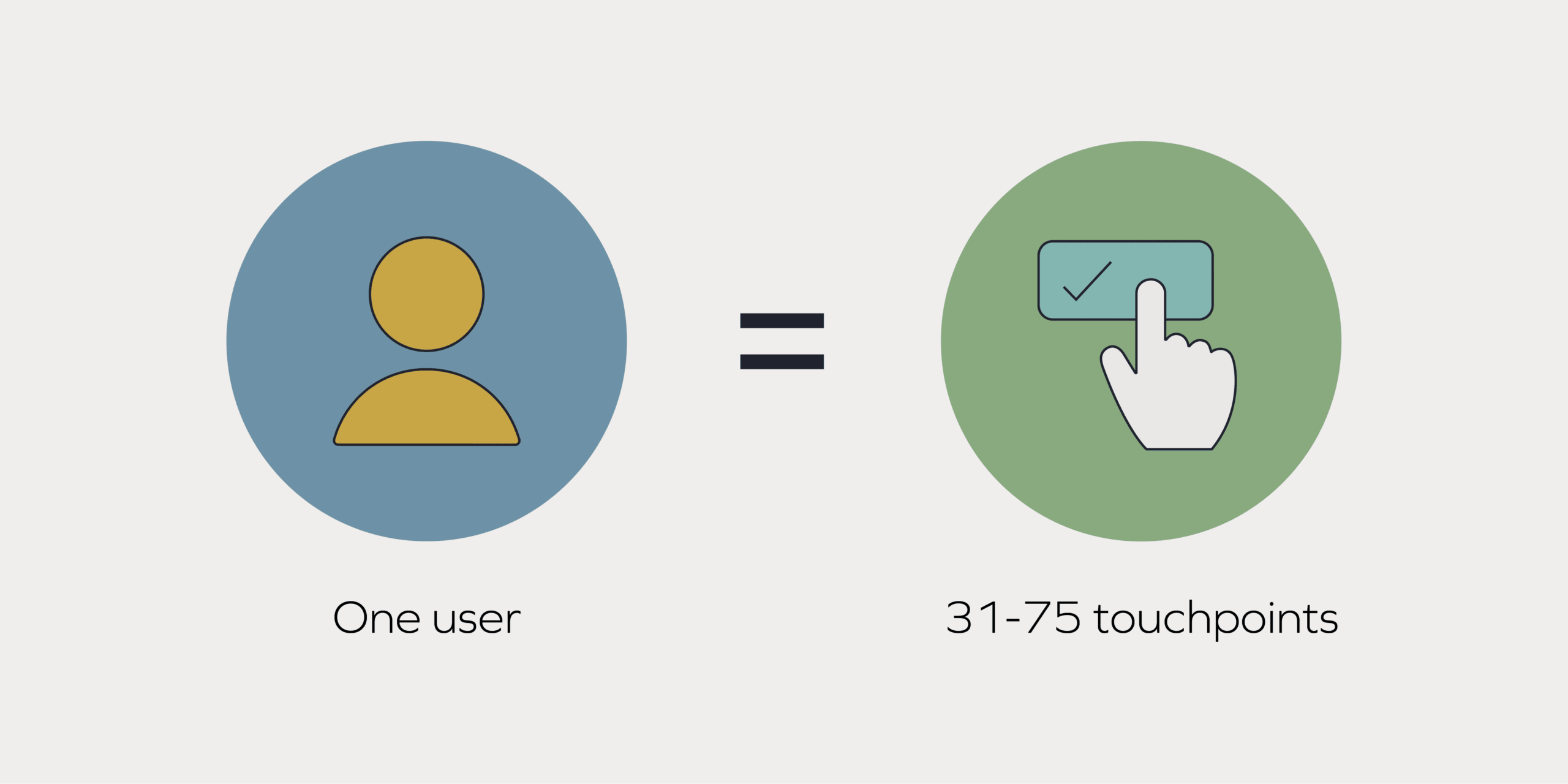
Based on its data, HockeyStack outlines that, depending on the average contract value, a prospect will likely act after 31-75 touchpoints. The trend suggests that lower value contracts will need fewer touchpoints – which makes sense. But even so, 31 touchpoints is significant. Especially, when you want to see results and prove you’re delivering against your KPIs, today.
When looking at your budget, it’s crucial to keep these insights in mind. If you’re not seeing instant action, that doesn’t mean your efforts have been a flop. In fact, they could be inching you closer. As long as you take a holistic look at the varying journeys your prospects could take, and keep their differing needs front of mind, you’ll be making headway.
“ Your ideal customer profile (ICP) should be as specific as it can be. ”
Refine your ICP and stick to it.
With that in mind, your ideal customer profile (ICP) should be as specific as it can be. That’s why one of our core services for our clients is building personas. How can you truly speak to – and reach – someone if you don’t understand their needs and motivations? If you’re looking at how to spend your budget and you don’t have this deep knowledge of your audience, then that’s definitely one sound investment.
Beyond user interviews, another way you can enrich these personas is with data from your CRM (customer relationship management) system. This insightful CRM data can often be underutilised. Leveraging it is sure to help make your budget go further.
Now might also be a good time to review and validate your CRM data. Is everything up to date and have you populated each profile with all the relevant information you have? With this in place, you’ll be giving the whole business a single source of truth for understanding and nurturing your prospects. From learning the core characteristics of existing customers to inform the pipeline to realising what company size or industry is your sweet spot, digging into this data will help you to establish the lifetime value of customers and, as a result, should pay dividends.
“ If you can’t attribute activities to target personas, you’ll likely want to re-evaluate things. ”
Once you have built out these insight-rich personas, as with your CRM data, make sure you use them to lead your future marketing and sales decisions. If you can’t attribute activities to target personas, you’ll likely want to re-evaluate things. Let your users guide your decisions and you can’t go far wrong.
Save budget by repurposing existing marketing materials.
A lot of your content may well have solid foundations, but now, with your ICP firmly cemented, perhaps you can see a disconnect. What you thought was once true has now been disproved, or maybe you just have better user insights that you want to focus on. Rather than starting from scratch, look for opportunities to optimise and refresh what you already have. By doing this, you’ll have more budget to put into your media spend – maximising the reach and the returns.
In fact, we often recommend to our clients a content strategy with an 20-80 split. 20% of your efforts should be spent on crafting high-value content, and the other 80% should be dedicated to distributing it to ensure it gets in front of the right people, in the right format.
So, conduct a content audit to assess what you’re working with. Review performance metrics and speak to your colleagues to understand if there are any content gaps you need to plug.
Create more evergreen content.
When content creation is the way to go, think about how to get more for your money. Topical content has its place but, when purse strings are tightened, opt for collateral that has longevity. Not only does creating an article on an evergreen topic enable you to be relevant for longer, the SEO returns will likely be better too.
Choose your channels – and content – carefully.
Depending on the purpose of your marketing activity, different channels and different media spend splits will be appropriate. Google and LinkedIn ads are safe bets, but as such they’re not cheap. Think about how you can make the most of a PPC campaign by refining the parameters. And it sounds obvious but, you’d be surprised… make sure you’re sending traffic to the best possible page to continue their journey with you. There’s no point paying for them to arrive on a page that’s not been reviewed with this project’s objective in mind. If the content needs to be optimised, do this before you put the campaign live.
Similarly, consider how you can use your owned media on LinkedIn to bolster your paid activity. Remember, your established following is likely to include warmer leads, so think about how their content needs will differ from those you’re reaching with a paid campaign. Should you focus your efforts on picking up more followers with the intent to nurture them with consistently high-quality owned content in the coming weeks and months? Possibly. (We’d prefer to discuss your unique business objectives before saying definitely!)
What’s more, it’s also worth noting that according to this HockeyStack report, some channels can have a detrimental effect on your customers’ journey – a one-step-forward, three-steps-back situation. Display and TikTok ads were some of the worst offenders, adding seven more touchpoints to the conversion path.
“ Topical content has its place but, when purse strings are tightened, opt for collateral that has longevity. ”
Be wary of the hype.
If you’re planning to react to the hot topics do so with caution. For instance, combining AI-written content with TikTok ads could spell disaster. As mentioned, TikTok isn’t necessarily the miracle worker that it’s been built up to be. And with Google’s recent algorithm update penalising AI content within search results, it’s important you don’t make decisions too rashly.
If you are looking to invest in AI to support content creation, remember Google favours expertise, experience, authoritativeness, and trustworthiness (EEAT). So, make sure anything it creates has a human sense-checking it against this criterion.
Research your options and run small-scale, test-and-learn projects to protect your budget, impressions, and rankings.
Accept that right now might not be the right time.
What are the chances that your next campaign captures your audience at the perfect moment when they’re ready to invest? The reason you might not be getting that conversion could be as simple as they don’t want to buy what you’re selling – at that particular moment in time. And that’s fine. That’s one of the many reasons why branded content has its place in a modest budget. Your always-on presence is what will keep your business in the back of their mind. So, when the time is right, they’ll know exactly where to go.
Remember, there’s no hard-and-fast rule.
Yes, we know that getting them to your website is a win. But which page will get them one step closer to a purchase? And what type of content will perform best?
As much as we talk about turning a cold audience into warm leads, the process is far from linear – and it’s certainly not standardised. After all, even in the realms of B2B, we’re still dealing with the unpredictability of human behaviour.
Analysing the data, acting on these insights, and regularly reviewing the performance of updates is the best way forward. But don’t forget to sanity check your optimisation journey against what you know of your prospects. Ideally, you want to look at what the data is telling you through the lens of validated user insights.
Taking an iterative approach not only means you’re using smaller budgets; it also means you’re spending them on optimised content. Ultimately, it’ll make your money go further.
Want to create something extraordinary? Let’s have a chat. Set up a call with our CEO, Andrew.
Stay informed.
Get our latest thinking on how to maximise brand, GTM, pipeline growth and apply AI, plus our agency updates.
How building brand belief can bring long-term B2B success
Andrew 1 min • 13 Mar 2024
A long-term approach to building a genuine, emotional connection between your brand and your customers will deliver more effective marketing, helping you to reach, win and retain more business.
The ever-increasing pressure to deliver immediate leads and quick results has led many B2B marketers to forget about the importance of building a strong brand, one that has the power to positively influence and amplify future success. With soaring costs of digital advertising in 2024 and shrinking marketing budgets, investing in a strong brand is a must, especially if you consider that 95% of your prospects might not be currently in-market for your solution.
Brand is about far more than awareness. Creating trust and belief in your brand shifts your entire proposition from ‘awareness’ to ‘availability’, a point made by Peter Weinberg, Head of Development at The B2B Institute at LinkedIn. In a conversation with Colin Fleming, Senior VP of Global Brands, Events and Customer Marketing at Salesforce he talks about the importance of customers moving away from recognising a brand to considering it for purchase. That’s a shift – in both thinking and action – that many B2B marketers need to make, thinking long term about brand influence rather than just focusing on short-term acquisition.
Making a long-term brand commitment
Long-term thinking and strategy can be a challenge in B2B marketing. You are tasked with generating fast results from marketing strategies, but you need to be able to focus some of your effort and spending on developing brand belief.
As Les Binet and Peter Field say in their book, The Long and the Short of it: “A succession of short-term response-focused campaigns (including promotionally driven ones) will not succeed as strongly over the longer term as a single brand-building campaign designed to achieve year-on-year improvement by business success.”
Successful strategies blend long-term brand building with shorter-term acquisition campaigns.
An interesting report has recently emerged from HockeyStack, a GTM analytics platform for B2B companies, which revealed that it takes on average 700 LinkedIn impressions and 54 touchpoints for a prospect to identify themselves on your website.
The 700 impressions are not coming from one person but rather several people within a company, but these numbers stress the importance of having a well-established brand strategy.
So how do you create a B2B brand that is memorable enough for prospects to easily come back to once they are ready to buy?
“ Many B2B marketers default purely to a rational checklist of practical features, rather than showing how they can address a buyer’s pain point or solve a problem. ”
“ An intelligent mix of creativity and data will activate your brand in a way that resonates with your audiences. ”
Humanising B2B experiences
We shouldn’t underestimate the importance that brand experience plays within the psyche of someone who is working through a drawn-out procurement process. It’s about creative and eye-catching storytelling, matched with professional presentation, proof of performance and deliverability, communication and a personal service.
Those principles work no matter what type of business you are – a traditional business or a very progressive and disruptive one. The trick is to humanise your proposition and use creativity to build and communicate the relevant brand story to the right customers.
Just as emotion is an important factor in the buying journey, so is the customer experience. The way your brand presents itself, communicates and backs up its messages is all part of the experience. You need to have a story to tell – a story that makes people sit up and take notice.
An intelligent mix of creativity and data will activate your brand in a way that resonates with your audiences. Creating distinctive campaigns and digital experiences sends the message: “This business can really solve the problem I have” – and makes both the emotional connection and the rational connection, helping your customer make the case for buying from you.
Ultimately, short-term campaigns are far more effective when they form part of a longer-term brand building strategy. We get better results from day-to-day marketing through this application of bigger thinking, and it’s our role as marketers to challenge businesses to think more broadly than just delivering content through a few channels.
In a nutshell, focusing on building brand belief, using creative methods to be seen and get your story across, and ensuring your brand experience is consistent at every touchpoint will result in more effective marketing, thereby increasing your reach and improving your ability to win business.
Want to create something extraordinary? Let’s have a chat. Set up a call with our CEO, Andrew.
Stay informed.
Get our latest thinking on how to maximise brand, GTM, pipeline growth and apply AI, plus our agency updates.
B2B Social Media Copy: 10 top tips for success
Sandra 1 min • 6 Feb 2024
In the ever-changing world of social media, creating copy for B2B audiences is an art that calls for finesse and a smart strategy. Each platform is a new opportunity – knowing how to make the most of it can really boost your engagement and following. So, let’s break down these strategies together to make sure your B2B social media copy not only talks the talk but also walks the walk – on every platform.
1. The influence of individuals
Your people are the voice of your company, so let them be heard. Encourage your team to share their own content, full of thoughts and opinions, to make your company more relatable. The influential people within your organisation have personal brands that can make a big difference – they can be promoted for Thought Leadership ads on LinkedIn. The more genuine their insights are, the more it adds authenticity to your brand, building trust as well as making your online presence more compelling. It’s not just about your company – it’s about the people behind it, sharing real stories and making connections.
2. Social ads pay off
No matter how good the copy is within your social ads, if people don’t see it, it’ll go to waste. Invest in your paid social media with targeted campaigns. Utilise analytics to fine-tune and optimise the performance of your ads. Paid ads are also a great tool to test the messaging and conduct A/B copy tests to see what resonate with your audience. Ensure that your paid strategies align with the broader goals of your business. This approach helps you to maximise the reach of not only your copy, but the impact of your campaigns.
3. Get to know your audience
You need to know who it is your copy is targeting – you need to grab their attention and keep them engaged on the platform. Begin by conducting thorough audience research to create content that resonates with their interests. Develop compelling and relevant posts that not only capture their attention but also encourage them to stay on your social media channels. Utilise analytics tools to track user behaviour and preferences, allowing you to refine your content strategy based on real-time insights.
4. Hashtags – it’s quality over quantity
Hashtags are an important tool when it comes to getting your content seen by the right people. As a rule, the quality of those hashtags matters a lot more than the quantity. So, select hashtags that are relevant and specific to your content – consider a mix of generic and branded hashtags to boost your brand recognition. Avoid overwhelming your posts with too many hashtags, as this can dilute your message and make it less effective.
5. Call to action
Often overlooked is a Call to Action (CTA) – a must-have when it comes to social media copy. Small but mighty, CTAs work as a signpost, telling your followers what to do next. CTAs involve using powerful action verbs to prompt engagement and drive desired actions. The goal of social media copy is to keep users on your platform, channels like LinkedIn and Facebook reward native content that does so – the more valuable the content the better for keeping your audience hooked. In essence, CTAs are your friendly nudge, inviting your followers to participate and interact in meaningful ways.
6. Time to talk the talk
The way you talk to your audience matters. Make sure that all your brand communications have a consistent tone no matter which social media channel you’re on. Your voice should be instantly recognisable to those viewers. In comparison to B2C copy, B2B copy tends to be more formal and professional but that doesn’t mean dry or boring. You should tailor the tone to connect with your intended audience, finding the right balance between professionalism and relatability.
7. What makes you, you
Your value proposition is what sets you apart, so you need to tell people that. Articulate the distinctive value only your business provides, spotlighting the benefits and solutions you offer to address your customers’ pain points. It shouldn’t be too salesy though – the key is to strike the balance between educational and promotional. The aim is to put your brand in a different league to your competitors, with content that’s value driven.
8. Be a goal-getter
Set clear goals for your B2B social media, and make sure they align with your broader business objectives. Utilise key performance indicators (KPIs) to see the success of your strategies. Regularly dive into the analytics, analysing performance metrics and be prepared to tweak your approach as needed. Continuous assessment ensures your strategies are not just on point but actively boosting your overall business success.
9. Add some personality to AI
As AI technology continues to grow in popularity, it’s important to embrace its efficiency and not get left behind. Whether you’re diving into data analysis, crafting compelling content or planning your social media posts, let AI be your ally. However, you need to make it personal, AI is only as good as the information you feed it with. Tailor AI-generated content to resonate with your brand’s tone of voice. Steer clear of generic automation and opt for that personal touch that makes you authentic. It’s not about being a copy and paster – it’s about letting AI enhance your creativity and efficiency.
10. Get straight to the point
When it comes to your social media content, cut to the chase and steer clear of confusing jargon. Keep it short, snappy and clear. Use specific terminology that resonates with your ICP and say goodbye to unnecessary jargon that leaves your audience scratching their heads. Aim for a message that’s not just clear but compelling – something that grabs attention and leaves a lasting impact.
B2B social media copy demands a tailored touch, there’s no one-size-fits-all solution. It requires continuous analysis, strategic adjustments and a commitment to adaptability. Engaging your B2B audience demands dedication, but the potential rewards are well worth it.
By incorporating these 10 tips into your approach, you can elevate your social media game, ensuring your content resonates across diverse platforms. Embrace the evolving social media landscape to craft compelling B2B copy that stands out. Get ready to witness the impact of your efforts in this digital world.